

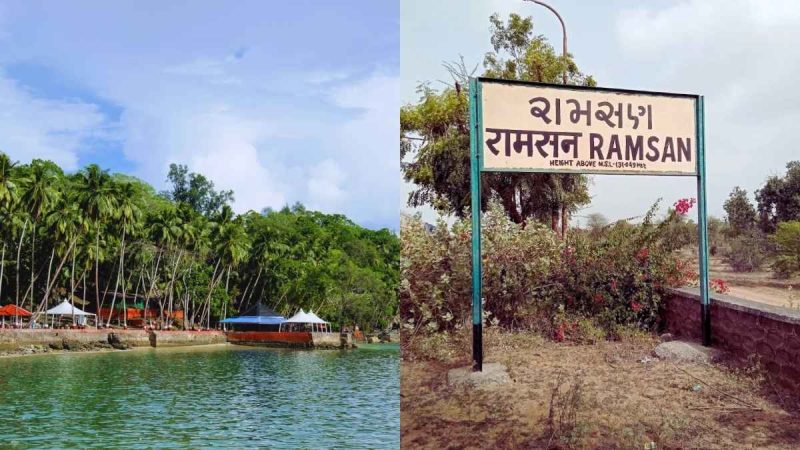
On most March mornings, India wakes up stained pink and green. Loudspeakers crackle, terraces turn into battlegrounds of colour, and streets feel slightly lawless in the best possible way. But drive a few hours away from those colour-splashed towns, and you’ll find something else. There are no bonfire ashes, no water balloons, and no “Bura na maano.” Here are seven places where Holi doesn’t happen, and the reasons are older than the festival noise outside their borders.
7 Places In India Where Holi Is Not Celebrated, What’s The Story?
1. Ramsan Village, Banaskantha, Gujarat
Ramsan does not light a Holika bonfire, and it hasn’t for more than two centuries. Local oral history traces this back to a visit by saints during the reign of a former ruler. The king, villagers say, insulted or mistreated them during the festive period. The saints responded not with argument, but with a curse that the village would never celebrate Holi again.
Older residents still speak of it in practical terms, that if Holi returns, misfortune follows. Whether one believes in curses or not, the social contract is intact.
Also Read: Holi 2026: 8 Traditional Food Items That Complete Holi Parties
2. Durgapur Village, Bokaro, Jharkhand

In Durgapur, Holi is tied to grief. The story, repeated across generations, goes back over a hundred years. On Holi, the king’s son died suddenly. The king, unable to bear it, died soon after. Before his passing, he declared that the village would never again celebrate the festival.
What began as mourning hardened into tradition. Even today, when Bokaro district turns colourful, Durgapur stays restrained. There are no colour smears on doorways. Some families quietly visit relatives elsewhere if they want to celebrate, but inside the village boundary, the decree holds.
3. Kwili And Kurjhan, Rudraprayag, Uttarakhand
In the mountain villages of Kwili and Kurjhan, Holi is not dramatic; it is cautious. The reason circles around Goddess Tripura Sundari, the region’s presiding deity. Locals believe she dislikes loud noise and unruly celebrations. Years ago, villagers reportedly connected episodes of misfortune and natural disturbance with excessive festivity.
Whether coincidence or conviction, the interpretation stayed. So, when the rest of Uttarakhand sings Kumaoni Holi in full chorus, these villages lower the volume. There is no amplified music and no aggressive colour play. The Alaknanda and Mandakini rivers meet nearby in steady flow, and the village rhythm matches that quietness.
4. Pondicherry (Old French And Tamil Quarters)
Walk through White Town in Pondicherry during Holi and you may not even realise the festival is underway elsewhere. The older Tamil neighbourhoods and the French colonial quarters never historically centred Holi in their cultural calendar. The region evolved through Dravidian temple traditions and centuries of French influence. Neither tradition placed colour-throwing spring rituals at the core.
Today, beachside resorts and newer residential pockets organise small Holi events. But inside the older streets, the mustard walls, and the blue shutters, the day often passes like any other.
Also Read: 6 Holi Experiences You’ll Only Get In Vrindavan Like Dauji Huranga & Phoolon Wali Holi
5. Lake Pulicat Communities (Tamil Nadu-Andhra Border)
Around Lake Pulicat, fishing communities move to a different festive rhythm. Their calendar highlights Masi Magam, a significant temple festival marked by ritual sea immersions and deity processions. It often falls in the same lunar window as Holi, but the tone is devotional, and not playful.
Holi never embedded itself here in the way it did in North India. There is no story of a ban and definitely no dramatic curse. It is just a cultural divergence shaped by geography, livelihood, and longstanding coastal traditions. For many families around the lagoon, Holi is something seen on television.
6. Lakshadweep
In Lakshadweep, the explanation is demographic rather than legendary. With a vast Muslim population, the islands organise their social year around Islamic festivals such as Eid. Holi does not carry religious significance here, and it never became a community ritual. The festival simply never took root. Coral islands, coconut groves, and Friday congregational prayers define the public calendar instead.
Also Read: Indian Coast Guard & Assam Rifles Conduct Scuba Diving Training In Lakshadweep; Pics Inside
7. Indigenous Regions Of The Andaman and Nicobar Islands
Among indigenous tribes such as the Jarawa, Onge, and Sentinelese, Holi has no cultural lineage. Their traditions predate mainland Hindu festivals and developed independently. Ritual practices, seasonal observances, and social structures evolved within their own cosmologies.
In Port Blair and settler communities, Holi appears with colours, gatherings, and music. But in tribal territories, it does not. The absence reflects autonomy and continuity, not rejection.
Also Read: Mumbaikars, You Won’t Be Able To Spot Penguins At Byculla Zoo From June To August!
Holi is often described as a unifying festival, but that description only tells half the story. India’s diversity doesn’t just show up in how festivals explode into colour; sometimes it shows up in restraint as well. It shows up in a village that chooses not to light a fire, not to throw a handful of pink powder, and not to join the chorus. And that choice, too, is part of the country’s story.
Cover Image Courtesy: charan_admirer/X and ephotocorp/Canva Pro
For more such snackable content, interesting discoveries and the latest updates on food, travel and experiences in your city, download the Curly Tales App. Download HERE.
FAQs
Where is Holi not celebrated in India?
Ramsan Village, Gujarat; Durgapur Village, Jharkhand; Kwili And Kurjhan, Uttarakhand; Pondicherry; Lakshadweep, Lake Pulicat communities, and indigenous regions of the Andaman and Nicobar Islands.
Why is Holi not celebrated in Durgapur Village, Jharkhand?
Centuries back, on Holi, the king’s son died suddenly. The king, unable to bear it, died soon after. Before his passing, he declared that the village would never again celebrate the festival.