

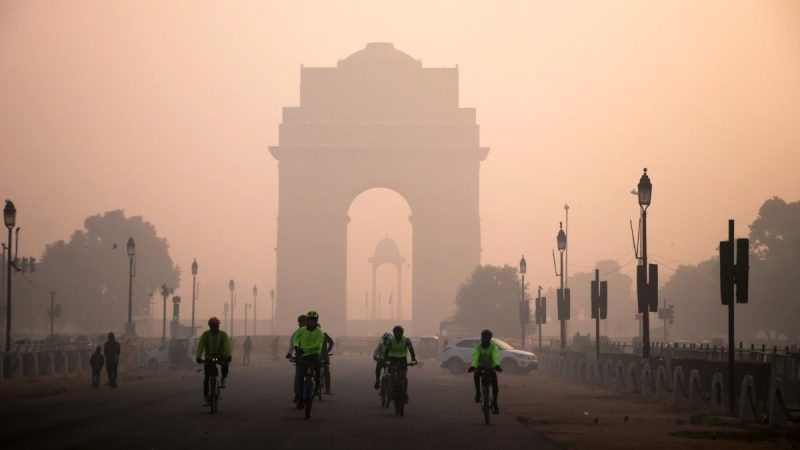
We are not unaware of Delhi’s pollution problem. Every winter, people struggle to breathe, step out in smog, and deal with health issues. This week, the situation has worsened again, with air quality in Delhi moving dangerously close to the ‘severe’ category. Scroll down to know more!
Delhi’s AQI Close To ‘Severe’
On Saturday, Delhi’s air quality worsened sharply. According to The Indian Express, the capital’s average AQI rose to 385 from 333, as reported by the Central Pollution Control Board (CPCB). This pushed Delhi into the ‘very poor’ category and close to ‘severe’. The most polluted cities in the country were all from the National Capital Region. Noida recorded the highest pollution level with an AQI of 409. Ghaziabad followed at 404, while Greater Noida stood at 395. Gurugram showed slight improvement, with its AQI dropping from 312 to 299.
By Sunday morning, pollution levels increased further. Delhi recorded an AQI of 391 early in the day. Dense smog covered many parts of the city and reduced visibility. As per Zee News, Anand Vihar and Akshardham slipped into the ‘severe’ category, with AQI touching 445. India Gate recorded an AQI of 378. Other pollution hotspots also reported ‘very poor’ to ‘severe’ air quality, including Wazirpur at 433, Rohini at 424, and Patparganj at 424.
Out of 39 air quality monitoring stations across Delhi, 20 recorded ‘severe’ pollution levels. Only NSIT Dwarka showed relatively better air, with an AQI of 214, which falls under the ‘poor’ category.
Also Read: Delhi AQI Turns ‘Severe’ At 413; GRAP-III Stage Enforced, Schools Turn Hybrid
Causes Of Pollution In Delhi
Data from the Indian Institute of Tropical Meteorology (IITM) shows that vehicles remain the biggest source of PM2.5 pollution, contributing 16.22%, reported The Indian Express. Industries add 8.4% to the pollution levels. Emissions from homes account for about 4%. Waste burning, construction work, and road dust together contribute nearly 5%. Pollution is also coming from nearby areas. Jhajjar is the largest external contributor at 17.59%, followed by Sonipat and Rohtak.
Weather conditions have made the situation worse. Winds are blowing slowly at just 4–5 kmph. The India Meteorological Department (IMD) recorded minimum temperatures between 7.6 and 7.8°C and has issued a yellow alert for dense foggy conditions. Experts say these weather conditions may continue till January 1. The Air Quality Early Warning System has warned that Delhi’s air quality is likely to stay in the ‘very poor’ category for the next several days.
What are your thoughts on this? Tell us in the comments below!
Also Read: Delhi Opens 45 Atal Canteens Serving ₹5 Meals Twice A Day; What’s In The Thali?
Cover Image Courtesy: Canva Pro/ undefined undefined