

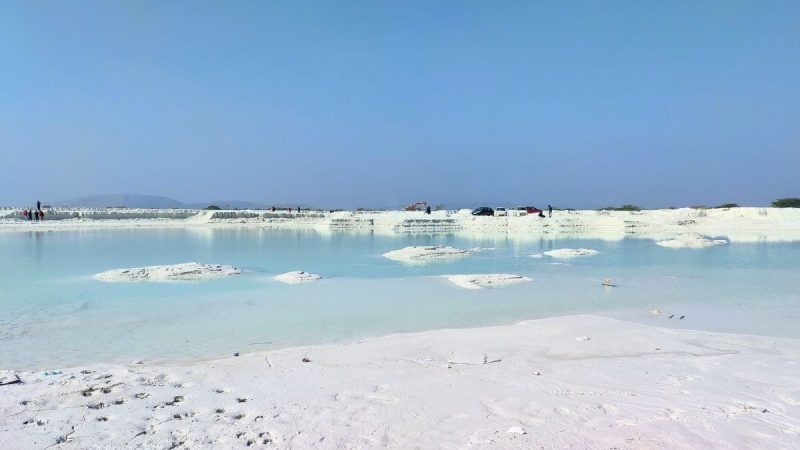
We’ve all come across social media posts showcasing a surreal white getaway in Rajasthan, which is often compared to Salar de Uyuni or even Switzerland’s snowy landscapes. This striking location is Kishangarh, situated in Rajasthan’s Ajmer district, and home to Asia’s largest marble waste dumping site. While social media has turned it into a viral tourist spot, experts are urging caution. Scientific studies conducted by the Central University of Rajasthan have flagged the area as a potential health and ecological hazard, raising serious concerns about its picture-perfect appeal.
Experts Flag Kishangarh’s White Plains
Once a vast dumping ground for marble slurry, Kishangarh in Rajasthan has turned into a viral tourist hotspot in recent years. According to Business Today, the white waste site is spread across 350 acres, and while its surreal landscape has taken social media by storm, experts have raised concerns about the environmental and health risks linked to the surge in tourism.
The report notes that the site draws nearly 5,000 people daily, with footfall surging to over 20,000 on weekends and holidays. Its popularity extends beyond tourists, with several songs and films shot here, further boosting its appeal. For the comfort of tourists, the area now features a helipad, changing rooms, restaurants, and designated recreational zones.
While there is no entry fee, visitors are required to obtain a pass. Additional charges apply for photography and filming, with fees starting at ₹500 for a digital camera, ₹5,100 per day for pre-wedding shoots, and going up to ₹21,000 for commercial productions.
Also Read:“India Is Not For Beginners,” Two JCBs Used To Prepare 65,000 Kg Prasad In Rajasthan!
White Beauty Or Health & Ecological Hazard?
Business Today reported that studies conducted by Central University of Rajasthan have called Kishangarh a “toxic tourist destination.” Researchers flagged serious environmental concerns, noting that total dissolved solids in groundwater were found to be nearly 10 times above the safe limit within a six-kilometre radius. Soil and water samples also showed unusually high levels of hazardous substances.
Despite this, tourism continues to thrive. Restaurants operate nearby in a chaupati-style setup, where visitors dine even as fine marble dust drifts through the air. Tankers arrive every few minutes to dump more slurry, while tourists continue to pose for photos across the site. Now, the National Green Tribunal has been notified about this. The judicial body has constituted a joint committee with pollution control authorities to examine the situation.
Also Read: Is There A Right Way To Eat Dal Baati Churma? Rajasthan’s Dy CM Diya Kumari Teaches Us!
What are your thoughts about this? Let us know in the comments.
Cover Image Courtesy: Wikimedia Commons
For more such snackable content, interesting discoveries and the latest updates on food, travel and experiences in your city, download the Curly Tales App. Download HERE.FAQs
Why is Kishangarh, Rajasthan, famous?
The place is famous for its huge marble dumping site, which is also Asia's largest dumping yard.