

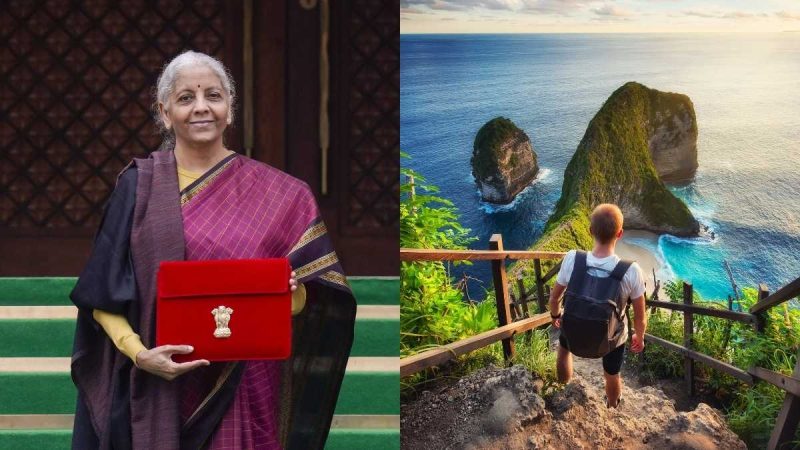
After weeks of speculation, the Union Budget 2026 is finally here, with Finance Minister Nirmala Sitharaman unveiling key announcements for the travel, food, and hospitality sectors. From a reduction in TCS on international tour packages to the proposal of seven high-speed bullet train corridors across the country, the budget introduces several significant changes. But how are industry experts reacting to these developments? Here’s a closer look.
Rajesh Magow, Co-Founder & Group CEO, MakeMyTrip
“The Budget reinforces the government’s sustained focus on travel and tourism as a long-term growth driver. The rationalisation of TCS on overseas tour packages is a welcome step that addresses the upfront liquidity impact on Indian outbound travellers. The government’s infrastructure-led investments have played an important role in supporting the growth of domestic tourism, and it is encouraging to see this momentum being sustained. Continued focus on regional connectivity and destination development, along with an emphasis on skilling and the creation of a national digital repository for destinations, will help improve destination discovery and enhance the overall traveller experience.”
Also Read: Budget 2026: International Travel To Get Cheaper As Tax On Tour Package Reduced To 2%
Gaurav Malik, Country Director, Indian Subcontinent & Indian Ocean Islands, Agoda

“Agoda welcomes the Union Budget and congratulates the Government on placing travel and tourism firmly within India’s next phase of growth. The Budget recognises the travel sector as a practical engine for jobs, skills, and regional participation, while responding to how traveller preferences are changing across the country.
The focus on capability-building and destination readiness stands out. Measures such as setting up a National Institute of Hospitality, upskilling guides at iconic sites, and creating a National Destination Digital Knowledge Grid show a holistic approach that combines talent, technology, and storytelling. At the same time, investments in experiential destinations, sustainable nature-based trails, cultural sites, and global wildlife engagement reflect a clear intent to broaden travel beyond large cities and enable year-round demand across emerging destinations.
Overall, the Budget sends a clear message that tourism plays a role not only in economic expansion, but also in shaping how people explore India and the world. Agoda looks forward to supporting this momentum by improving discovery, choice, and booking ease for travellers as travel across India becomes broader and more experience-led.”
Also Read: Union Budget 2026: Astro Tourism To Bird-Watching Trails,10 Big Changes For India’s Tourism
Karan Agarwal, Director, Cox & Kings
“What stood out for me in this Budget is that it doesn’t treat travel as a one-sided story. Outbound travel needed a course correction, and cutting TCS on foreign tour packages to 2% does exactly that; it takes away a friction that travellers were feeling every time they planned a trip. On the inbound side, the intent is clearly longer-term. What stands out is the emphasis on cultural and experiential travel, whether through developing archaeological sites, strengthening Buddhist circuits, or building skilled local guide networks, which tells us the focus is finally shifting to how India is experienced, not just how many people arrive. If this is executed well, it could move Indian tourism from being crowded and transactional to curated and experience-led.”
Rikant Pittie, CEO & Co-Founder, EaseMyTrip
“One of the most significant measures welcomed by the travel industry is the reduction in Tax Collected at Source (TCS) on overseas tour packages to a flat 2%, easing the upfront financial burden on travellers and encouraging outbound travel. This move is expected to improve booking sentiment and enhance affordability for Indian travellers planning international trips.
The budget also places strong emphasis on connectivity and infrastructure, announcing new air routes, seven high-speed rail corridors, expanded inland waterways, and incentives for seaplane operations to improve access to remote and scenic destinations. These initiatives are expected to strengthen both domestic and inbound tourism by reducing travel time and improving last-mile connectivity.”
Also Read: Union Budget 2026: India To Get 7 New High-Speed Rail Corridors Between THESE Cities
Manju Sharma, Managing Director, Jaypee Hotel And Resorts
“The Union Budget 2026 clearly recognises tourism and hospitality as key drivers of employment, foreign exchange, and regional growth. The proposed National Institute of Hospitality, through the upgradation of NCHMCT, will significantly strengthen talent development and service excellence across the sector. The pilot upskilling programme for tourist guides is a timely move towards delivering consistent, high-quality experiences at India’s most iconic destinations.
The creation of a National Destination Digital Knowledge Grid is a particularly forward-looking step, combining heritage preservation with digital enablement and opening new avenues for research, content creation, and destination storytelling. The focus on sustainable nature and eco-tourism across trekking, wildlife, birding, and coastal trails demonstrates a balanced approach that aligns tourism growth with environmental responsibility.”
Aviral Gupta, CEO, Zostel & Zo World
“The Union Budget 2026 recognises tourism as a strategic pillar of India’s growth story. With tourism contributing nearly 7–8% of GDP and driven by strong domestic and international travel demand, the sector is now firmly anchored within an infrastructure-led growth approach. The proposed ₹12.2 trillion capital expenditure across roads, railways, airports and regional connectivity will significantly improve access to heritage, mountain, coastal and emerging tourism circuits.
The Budget’s reduction of the tax on overseas tour programme packages from 5% to 2% is a positive step that simplifies outbound travel and reflects the growing scale of global tourism activity. The focus on experience quality through the training of 10,000 certified tourist guides, investments in hospitality education, and the development of 15 archaeological and cultural sites into experiential destinations marks a clear shift towards value-led tourism. For Zostel, this aligns closely with rising demand for trekking, hiking and nature-led travel, improved connectivity to remote and coastal regions, and destination development across Himachal Pradesh, Uttarakhand, Jammu & Kashmir, the Western Ghats and coastal India. The announcement of medical tourism hubs further strengthens India’s international tourism appeal.
Together, these measures will encourage more international tourists to visit India, support employment and local entrepreneurship, and showcase the country’s natural and historical richness on a global stage.”
Shaaz Mehmood, Founder, Medijourn Solutions Private Limited
“I commend Finance Minister Nirmala Sitharaman on the Union Budget 2026–27 for recognising the strategic importance of medical tourism in India’s healthcare growth story. The announcement of five regional medical tourism hubs is a strong and timely step that will enhance India’s position as a global medical value travel destination. By integrating modern healthcare with AYUSH systems, diagnostics and rehabilitation, the budget lays the foundation for a more coordinated and patient-centric ecosystem. The emphasis on private sector participation and strengthening healthcare capacity will improve service delivery and scalability. While further policy support over time can accelerate global patient inflows, the budget clearly demonstrates a forward-looking approach to building a competitive and resilient medical tourism ecosystem that contributes to economic growth.”
Also Read: 1 In 4 Now Destination Weddings, Jaipur Leads India’s Wedding Budget Spend At ₹73 Lakh & More
Rohit Kapoor, CEO, Swiggy Food Marketplace
“This Budget makes strong strides towards strengthening India’s consumption engine and building a Viksit Bharat by 2047. The Budget’s focus on urbanisation, productivity, skilling, and easier access to credit for small businesses reinforces confidence across the services and MSME ecosystem that underpins everyday consumption. The emphasis on enabling women entrepreneurs and continued investments in digital public infrastructure and AI innovation further strengthen the foundations of a more inclusive, formalised economy. At Swiggy, we remain committed to support India’s “Reform Express”, leveraging technology, investing in people, and supporting ecosystem resilience at scale”
Arjun Toor, Co-Founder, RollsKing
“The Union Budget’s focus on skilling, employment generation, and inclusive growth is a positive step for labour-intensive sectors such as Hospitality, QSR and Food & Beverages. With focused transformation, we are hopeful these sectors will offer task-oriented and process-driven roles, making them well-suited to create dignified livelihood opportunities for Divyangjans through customised and role-specific training.
Additionally, the focus on hospitality education, destination-led tourism, and improved infrastructure will drive consumption across dine-in and delivery formats, while GST rationalisation remains a key industry expectation. By strengthening industry-relevant training and encouraging participation across diverse ability groups, the Budget can enable sustainable job creation and create a supportive environment to scale responsibly, especially in emerging Tier-2 and Tier-3 cities.”
Manoj Verma, COO, Bikaji Foods International Ltd.
“The Union Budget 2026 reinforces a macro-economic framework focused on consumption stability, execution discipline and supply-chain efficiency, all of which are critical for the packaged foods sector. The emphasis on realistic fiscal planning, outcome-based monitoring and infrastructure-led development strengthens the operating environment for food processing companies that depend on consistent demand, efficient logistics and predictable regulatory systems. As disposable incomes benefit from broader economic stability and formal employment generation, demand for trusted, branded food products is expected to remain resilient. At an industry level, this supports investments in capacity expansion, quality assurance and distribution reach, while at a macro level it contributes to value-added manufacturing, employment generation and the strengthening of India’s organised food processing ecosystem.”
Also Read: Travelling On A Budget? 10 International Destinations Indians Can Enjoy Under ₹50K
Let us know your thoughts about the budget in the comments.
Cover Image Courtesy: X/@BJP4India & Canva Pro/Biletskiy_Evgeniy