

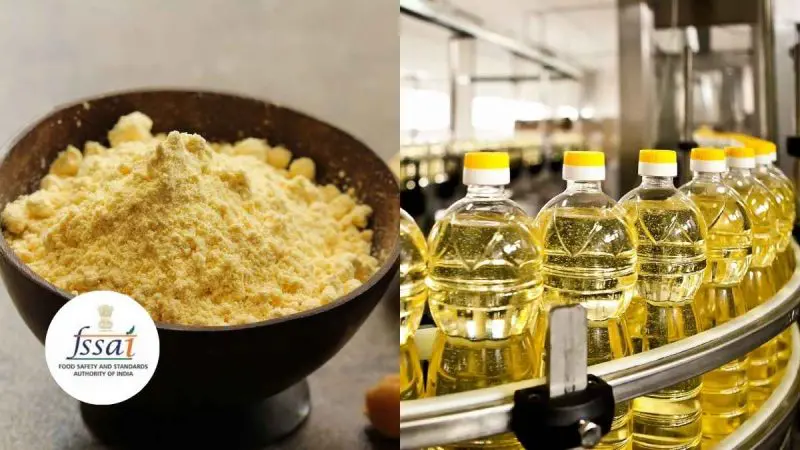
Every day, we hear alarming reports of food adulteration and contamination that raise concerns about the quality of the food we consume. Addressing these growing concerns, the Food Safety and Standards Authority of India (FSSAI) has issued updated guidelines and revised safety standards for several commonly consumed food items in Indian households. Here’s everything you need to know.
FSSAI Updates Safety Rules For Commonly Used Food Items
According to the Times of India, FSSAI has tightened safety standards for several commonly consumed food items amid growing concerns over adulteration. The updated rules expand testing for contaminants such as heavy metals, toxins, and antibiotic residues, while also introducing stricter quality checks for everyday food products and newer edible items.
The revised rules apply to several everyday food items, including besan, edible oils, seafood, including prawns, cold-pressed seed oils and other seed-based products. Effective from December 1, 2026, the updated standards broaden contamination checks for heavy metals such as lead and cadmium, extending them to pulse flours like besan and packaged mixes, in addition to pulses.
Also Read: Do Delhi Restaurants Need Both FSSAI Registration And A Health Trade Licence? MCD Clarifies
Here’s All You Need To Know About This
The revised norms also update permissible limits for aflatoxins, the toxic compounds produced by fungi, in oils, oilseeds and ready-to-eat oilseed products. New testing standards have also been introduced for arsenic in fish oils and saffrole levels in foods containing nutmeg and mace.
In another significant move, FSSAI has proposed limits on antibiotic residues such as trimethoprim and oxolinic acid in seafood, including prawns, shrimp and fish, amid rising global concerns over antimicrobial residues entering the food chain.
Health experts have welcomed the move, noting that prolonged exposure to contaminants like lead, arsenic and cadmium can increase the risk of serious health issues, including kidney damage, neurological disorders and certain cancers.
Also Read: Detergent In Ice Cream? Karnataka FDA Exposes Alarming Adulteration In Popular Treats
Stay tuned to Curly Tales for more such updates.
Cover Image Courtesy: Canva Pro/vm2002, Canva Pro/Sarymsakov & Wikimedia Commons
For more such snackable content, interesting discoveries and the latest updates on food, travel and experiences in your city, download the Curly Tales App. Download HERE.FAQs
What are the new food safety rules introduced by FSSAI?
The updated rules strengthen testing standards for contaminants such as heavy metals, toxins and antibiotic residues in commonly consumed food products.
Which food items are covered under the revised norms?
The new standards apply to products such as besan, edible oils, prawns, cold-pressed seed oils, seed-based products, fish oils and packaged pulse mixes.
What are aflatoxins and why are they harmful?
Aflatoxins are toxic compounds produced by certain fungi. Long-term exposure may increase the risk of liver damage and other serious health problems.