

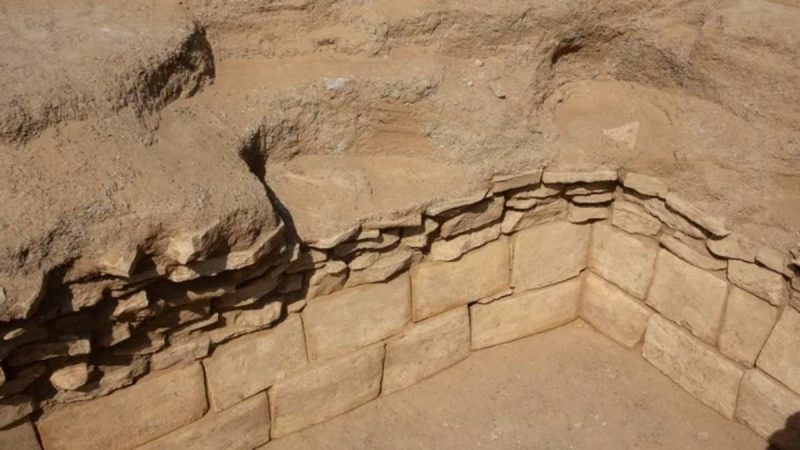
The Department of Culture and Tourism – Abu Dhabi (DCT Abu Dhabi) has announced the discovery of a rare Late Bronze Age tomb at the Qattarah Necropolis in the Al Ain Region, shedding new light on the UAE’s earliest history. The subterranean tomb chamber measures approximately 11 by 2.5 metres and served as a communal burial site for hundreds of individuals over a span of at least 1,000 years. Its use dates back to the Wadi Suq period, roughly 2000 BCE, and continued right through to the Iron Age, making the communal burial tomb close to 4,000 years old at its earliest origins in Al Ain.
A Tomb Built From Older Stones
What makes this find particularly striking is its construction. The tomb was constructed mainly of re-used ashlar blocks from even older Umm an-Nar funerary monuments, dating to c. 2700-2000 BCE. In other words, the people who built this tomb were already reusing structures from a civilisation that had come before them. A stone door weighing over 200kg, carefully shaped from an earlier monument, marked the threshold between the world of the living and the ancestral realm.
The entrance was also introduced from the east, possibly to let in the rising sun to illuminate the interior, a detail archaeologists say shows intentional ritual and symbolic thinking associated with renewal and ancestor veneration. Inside, the tomb yielded a rich funerary assemblage, including vessels, weapons and personal ornaments.
Also Read: Khorfakkan To Get New Heritage Market Around A 15th-Century Archaeological Site
Why This Matters
The Qattarah Necropolis has previously yielded several major discoveries, including earlier Wadi Suq to Late Bronze Age communal tombs, Iron Age individual shaft tombs, and Late Pre-Islamic tower tombs. This latest find stands out for its exceptional state of preservation.
His Excellency Mohamed Khalifa Al Mubarak, Chairman of DCT Abu Dhabi, said the discovery provides a window into the earliest chapters of the UAE’s story and strengthens the link to the formative years that formed the region’s identity. The discovery also boosts Al Ain’s UNESCO World Heritage Site status and its importance as one of the country’s richest archaeological sites.
Also Read: Al Ain Tower Secures Guinness World Record For The Highest Running Track On A Building
For now, the tomb adds another chapter to the story of the earliest societies of the Arabian Peninsula. Archaeologists say a more detailed analysis of the artefacts recovered is expected to shed more light on the people who once called this land home.
Cover Image Courtesy: AD Media Office/Website
FAQs
Where was the tomb found?
It was discovered within the Qattarah Necropolis in the Al Ain Region, a UNESCO World Heritage Site.
How old is the tomb discovered in Al Ain?
The tomb dates back to the Wadi Suq period, around 2000 BCE, making parts of it close to 4,000 years old, and remained in use until the Iron Age.