

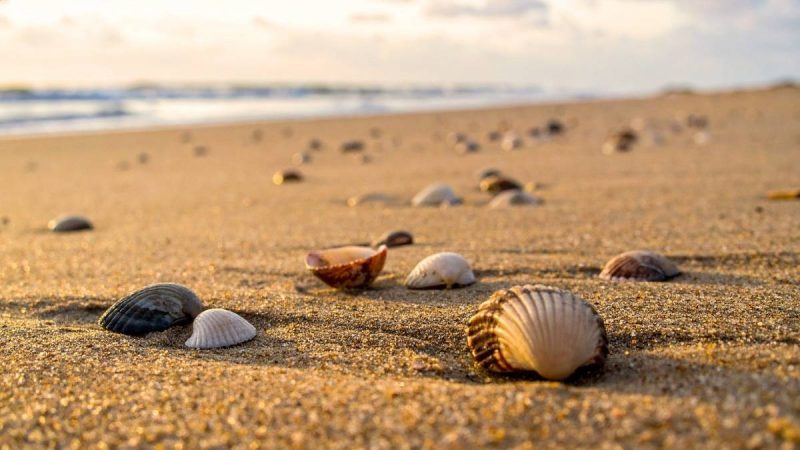
That handful of colourful seashells you picked up as a beach souvenir this summer in Kuwait might be more than just a keepsake; it could be an environmental violation with a fine attached. According to Kuwait’s Environment Public Authority (EPA), collecting seashells, sea snails, and shellfish from Kuwait’s beaches falls under Article 100 of the Environmental Protection Law, and violators can face fines ranging from KD 250 to KD 5,000.
Why Picking Up A Shell On Kuwait’s Beaches Could Cost You Up To KD 5,000
Article 100 prohibits killing, hunting, catching, collecting, harming, possessing or transferring wild and marine organisms, whether alive or dead, along with harming their young, eggs, nests or habitats. In other words, even an empty shell lying on the sand technically falls under legal protection.
Why A Shell Matters More Than It Looks

Mahmoud Ashkanani, environmental projects manager at the Kuwait Dive Team, explained, as reported by Kuwait Times, that the shell-producing organisms and other coastal species play a far bigger role than most beachgoers realise. He noted that losing even one species from this chain can eventually trigger a ripple effect across marine life. Molluscs like sea snails and shellfish are not just scenery;
they are part of the marine food chain. They feed on dead organic matter, helping to keep coastal areas clean, and they are a food source for fish and other marine creatures.
The shell still has its own use after the creature inside has gone, offering a home and a place for smaller sea creatures. Taking it from the shore can reduce the habitat for these animals. Many of these animals live in the intertidal zone, the coastal area exposed at low tide and covered again at high tide, and so are more vulnerable to human activity. As Ashkanani put it, the coast functions as a gateway to the sea, meaning changes on the shoreline eventually ripple outward into the wider marine environment.
Also Read: Kuwait Announces Rules For Expats To Settle Traffic Fines & More Before Exiting The Country
The Bigger Threat: Plastic, Not People Picking SeaShells
Shell collecting is just one piece of a larger conservation picture. Ashkanani pointed to pollution as the bigger long-term threat facing Kuwait’s coastline. The Kuwait Dive Team regularly runs cleanups across beaches, intertidal zones and coral reefs and finds that consumer plastic waste left behind by beachgoers makes up 75 to 80 per cent of what’s collected. Alongside plastic, the team also removes abandoned fishing nets, wooden boards, oil spills, chemical contamination and even sunken boats and fibreglass debris that threaten marine habitats.
The takeaway for residents and visitors: enjoy the beach, but leave the seashells where they are.
Cover Image Courtesy: CanvaPro/Truecreatives from TrueCreatives
FAQs
Why are shells important to the ecosystem?
Shells and the organisms that produce them support the marine food chain, help clean coastal areas, and provide habitats for smaller marine life.
What's the fine for collecting shells in Kuwait?
Fines range from KD 250 to KD 5,000, depending on the violation.