
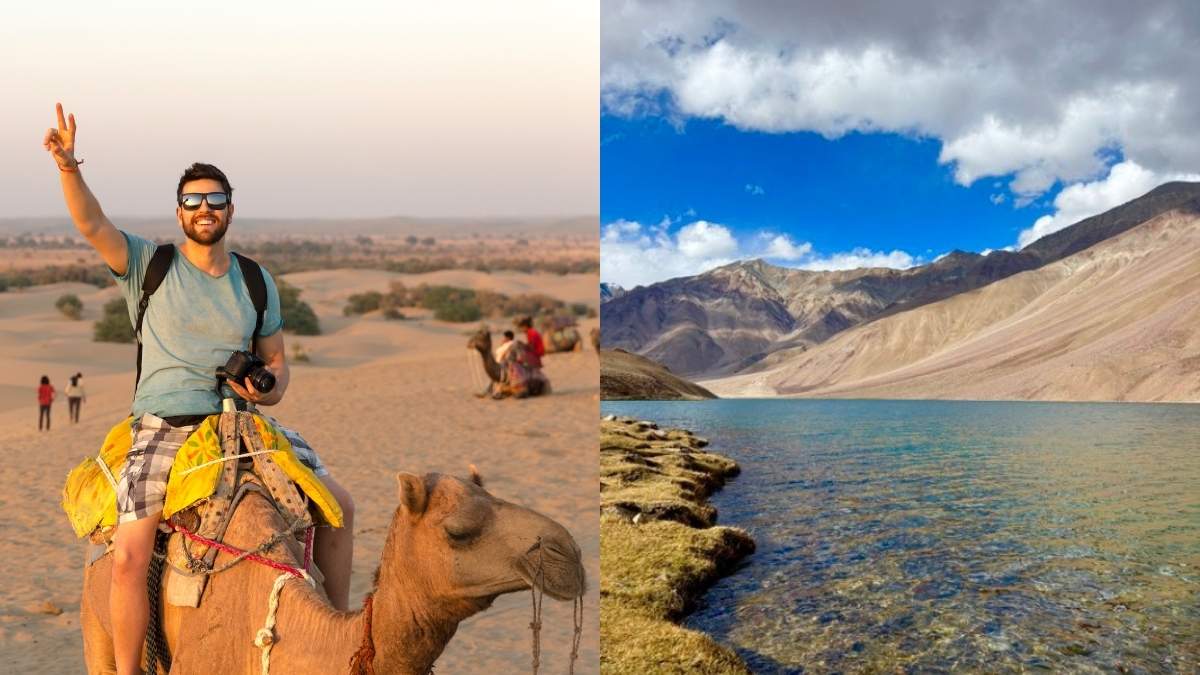


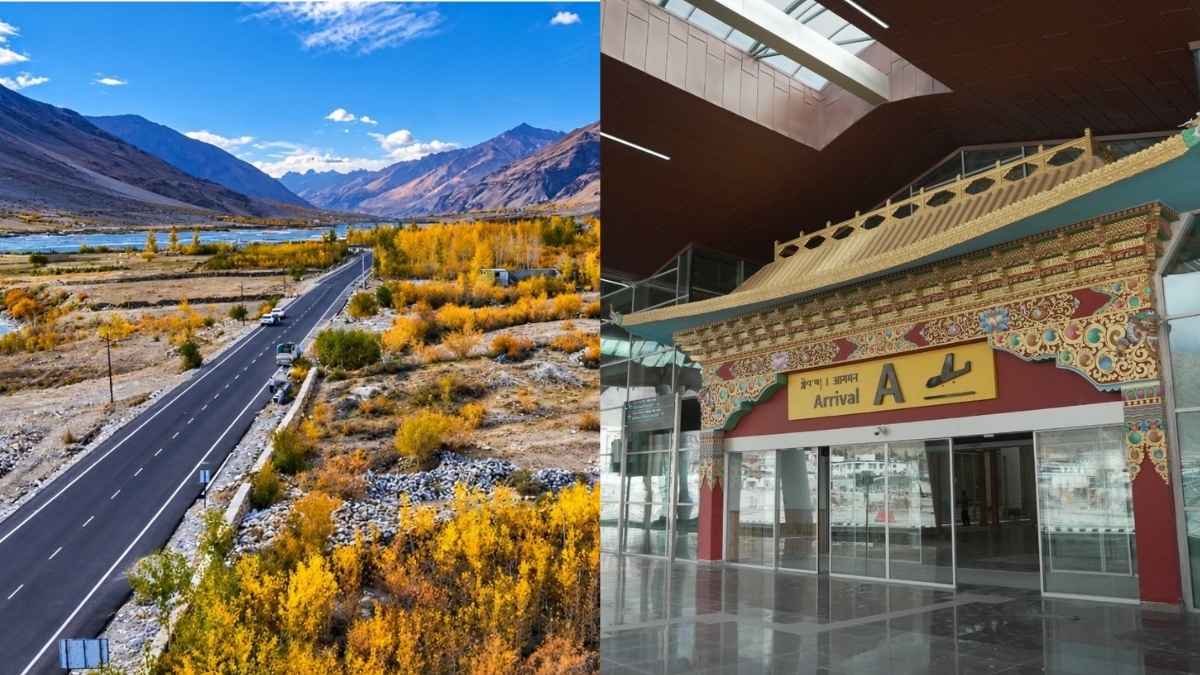
Deserts in India don’t always throw themselves with dunes. Sometimes they arrive subtly, through thinning air, through a landscape that slowly loses colour, through a road that keeps climbing until trees disappear and only rock, dust, and sky remain. If you’ve only imagined deserts as endless sand, these Indian deserts will unsettle that idea in the best way possible.
8 Indian Deserts That Don’t Look Like Deserts
1. Rann Of Kutch
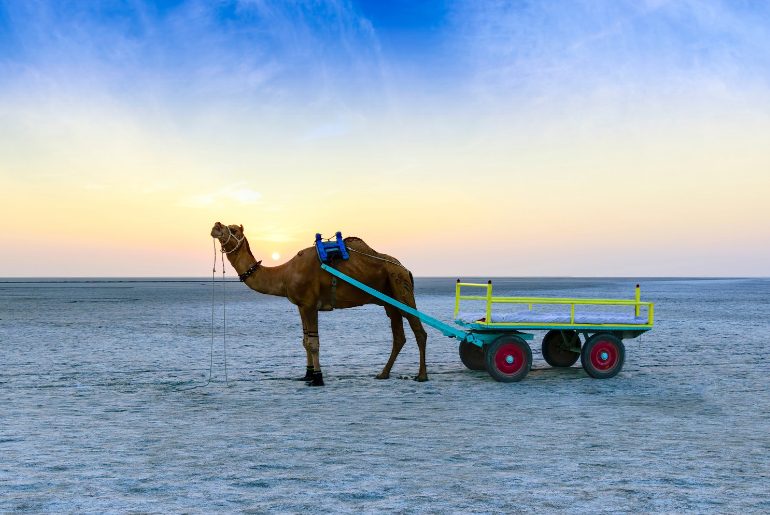
It does not feel like a desert at first! It feels like a mistake in the landscape, as if someone drained an ocean and left behind a white crust that stretches without interruption. Stand on the White Rann near Dhordo and you realise there is no texture to hold onto. The experience changes depending on when you go. During the Rann Utsav, the region is unexpectedly alive, with temporary tent cities, folk music in the evenings and craft stalls that bring colour back into an otherwise bleached world.
Move away from the festival and it shifts again. Villages like Hodka and Nirona feel slower and more rooted. Artisans still make Rogan paintings by hand, copper bells are shaped in small workshops, and embroidery patterns carry generations of memory. A short drive to Kalo Dungar (Black Hill) gives you height, and suddenly the white desert looks even more unreal, like a flat horizon drawn with a ruler. Nights are the real surprise here! Under a full moon, the ground glows faintly, and you can walk without a torch.
Also Read: Mesmerising Video Shows Flamingos Painting Kutch Pink; 5 Best Places To Spot Them In India
2. Spiti Valley
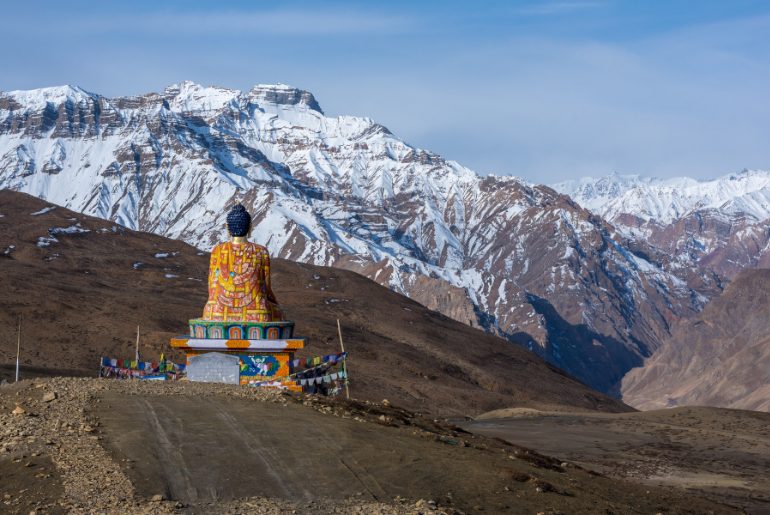
The road into Spiti is long enough to change your sense of distance. By the time you reach Kaza, the idea of “nearby” has already stretched. Villages like Langza and Hikkim don’t look like settlements built for comfort; they look like decisions made out of necessity.
In Langza, people casually point out fossils embedded in the ground; they are remnants of a time when this was under an ancient sea. Hikkim’s post office, sitting at an altitude where even walking feels deliberate, still sends letters the old-fashioned way. Monasteries shape the rhythm of the region. Key Monastery is impossible to ignore, layered like a fortress, while Dhankar Monastery clings to a cliff as if gravity is optional.
3. Ladakh
Ladakh is often spoken about as if it were one place, but it rarely behaves like one. Leh gives you an entry point with cafés, markets and the familiar sight of Shanti Stupa overlooking the town, but step out and the terrain keeps changing. Pangong Lake doesn’t ease into the landscape; it interrupts it with colour so intense that it feels edited. Tso Moriri, quieter and further out, replaces spectacle with stillness.
Monasteries like Hemis, Thiksey, and Alchi are not just stops on an itinerary; they are active spaces where rituals continue and where murals have survived centuries of dry air. Roads cross passes like Khardung La, where altitude becomes a physical presence, and movement becomes part of the experience itself.
Also Read: Over-Tourism Is Real: 8 Smarter Alternatives To India’s Most Crowded Destinations
4. Nubra Valley
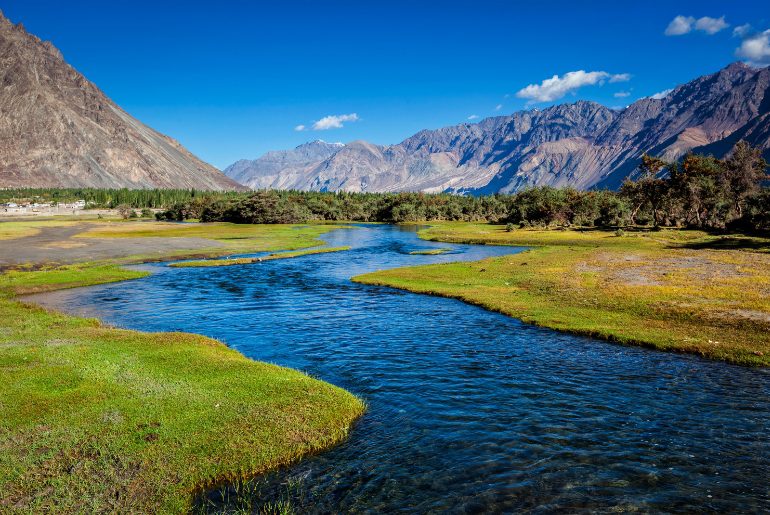
Sand dunes at this altitude seem misplaced, as if they were transported from somewhere else. The Hunder dunes are where most people go first, often for the double-humped Bactrian camel rides; this is a reminder of the old Silk Route that once passed through here.
Diskit Monastery overlooks the valley, and the large Maitreya Buddha statue seems to watch everything calmly. Travel further to Turtuk and the mood shifts! The architecture changes, the language softens, apricot orchards appear, and suddenly the desert feels less harsh and more intimate.
Also Read: What Is Ladakh’s Apricot Blossom Festival That Turns The Entire Valley Pink?
5. Zanskar Valley
Getting to Zanskar is part of the experience, not a hurdle. Roads open only for a few months, leading to Padum, which feels more like a pause than a destination. Monasteries such as Karsha and Phugtal provide sweeping views and spiritual teachings. Phugtal, carved into a cliff, requires a trek that makes you aware of every step you take.
Winter changes everything here! The frozen Zanskar River becomes the route itself; it is called the Chadar Trek. Walking on ice through a valley that rarely sees movement reshapes how you think about both travel and terrain.
6. Pin Valley
Pin Valley feels quieter even by mountain standards. The landscape opens into wide and muted stretches where the Pin River cuts through with understated presence. Mudh village marks the last point of easy access, beyond which the terrain becomes increasingly raw. Wildlife exists here in ways that are easy to miss; there are snow leopards and ibex.
Also Read: India’s Only Valley Rope Jump Debuts In Rishikesh With Extreme Freefall Experience
7. Lahaul
Lahaul doesn’t feel as stark as Spiti, but it carries the same quiet dryness. The Chandra and Bhaga rivers shape much of the region. Keylong acts as a centre, while Jispa offers slower, riverside stays. Guru Ghantal Monastery sits calmly, and Suraj Tal, one of India’s highest lakes, feels less like a tourist stop and more like a pause in a much larger landscape.
8. Banni Grasslands
Here, the land stretches in subtle gradients with grass and dust settlement. Villages like Dhordo, Bhirandiyara, and Hodka are built to endure, not impress. Circular mud houses called bhungas reflect a deep understanding of climate and survival. Craft is not decorative here; it is a livelihood.
Embroidery, leatherwork and weaving, each piece carries history. Nearby, the Kutch Desert Wildlife Sanctuary adds another layer, with migratory birds and the Indian wild ass moving across the open land.
So, which of these will you bookmark first?
Cover Image Courtesy: seokjinah070/X and fgtrade/CanvaPro
For more such snackable content, interesting discoveries and the latest updates on food, travel and experiences in your city, download the Curly Tales App. Download HERE.FAQs
What are the most unique desert destinations in India beyond sand dunes?
Rann of Kutch, Spiti Valley, Ladakh, Nubra Valley and Zanskar Valley are among the most unique desert regions.
What is a cold desert in India?
Cold deserts like Spiti Valley and Ladakh are high-altitude regions with low rainfall, extreme temperatures and minimal vegetation.
Why is the Rann of Kutch different from other deserts in India?
Rann of Kutch is a salt desert that appears white and reflective, especially under moonlight, unlike sandy deserts.
Can you see sand dunes in high-altitude deserts in India?
Yes, Nubra Valley has sand dunes despite being surrounded by mountains.


