
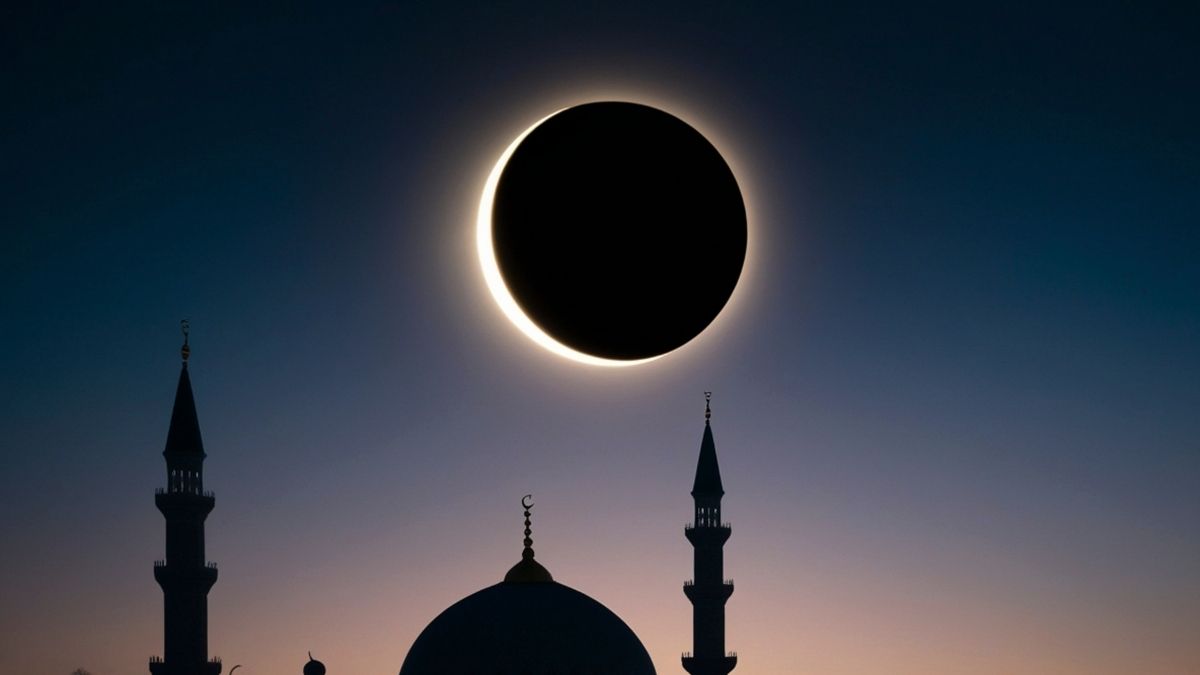


Get ready, India! You’re about to witness one of the most fascinating sights of your life — a solar eclipse! Yes, the first solar eclipse of the year is almost here, and excitement is building worldwide. People everywhere are eager to see this rare “ golden ring of fire” phenomenon. Scroll down to know more!
First Solar Eclipse Of The Year
Solar eclipses are honestly one of nature’s most amazing views to witness. Basically, they happen when the Moon slides between the Earth and the Sun, blocking some sunlight. As per The Free Press Journal, in 2026, the first big one is an annular eclipse happening on February 17. Unlike a total eclipse, the Moon won’t fully cover the Sun this time. Instead, it’ll leave a glowing ring around the edges—the famous “ golden ring of fire.” For this eclipse, about 96% of the Sun will be covered, and the best spots will catch the view for roughly 2 minutes and 20 seconds.
The main show of this eclipse will happen between 11:42 am and 12:41 pm UTC. During that time, people in the right spots along the eclipse path will get to see the full “ring of fire” for almost an hour. And fun fact—this is just the first of two solar eclipses in 2026. The next one will be a total solar eclipse in August,
Also Read: Mumbai’s Masque Wins Art Of Hospitality Award 2026 For 18 Months Of Standout Service
Where Can You See The Eclipse?
According to The Times of India, the full annular eclipse will be seen over Antarctica and parts of the Southern Ocean. The path starts near Antarctica and drifts across remote ocean areas before fading. Moreover, in South America, the southern Atlantic and the Pacific people don’t get disappointed; you can also catch a partial eclipse. The Sun won’t be fully covered, but you’ll still see it peeking out behind the Moon. Since it’s happening in such far-off spots, some astronomers are joking that this one is basically “for penguins.”
In India, we won’t be able to see this eclipse. The Moon’s shadow won’t pass over the country, so we’ll miss the ring of fire. That also means the usual Sutak rules won’t apply this time. Temples will stay open, and all daily rituals and pujas can go on as usual on February 17, 2026.
However, people in other countries, get ready to witness this amazing view!
Also Read: First Lunar Eclipse Of 2026 On Holi? Check Out Date, Where To See, And Other Details
Cover Image Courtesy: Canva Pro/ Sumali Ibnu Chamid