
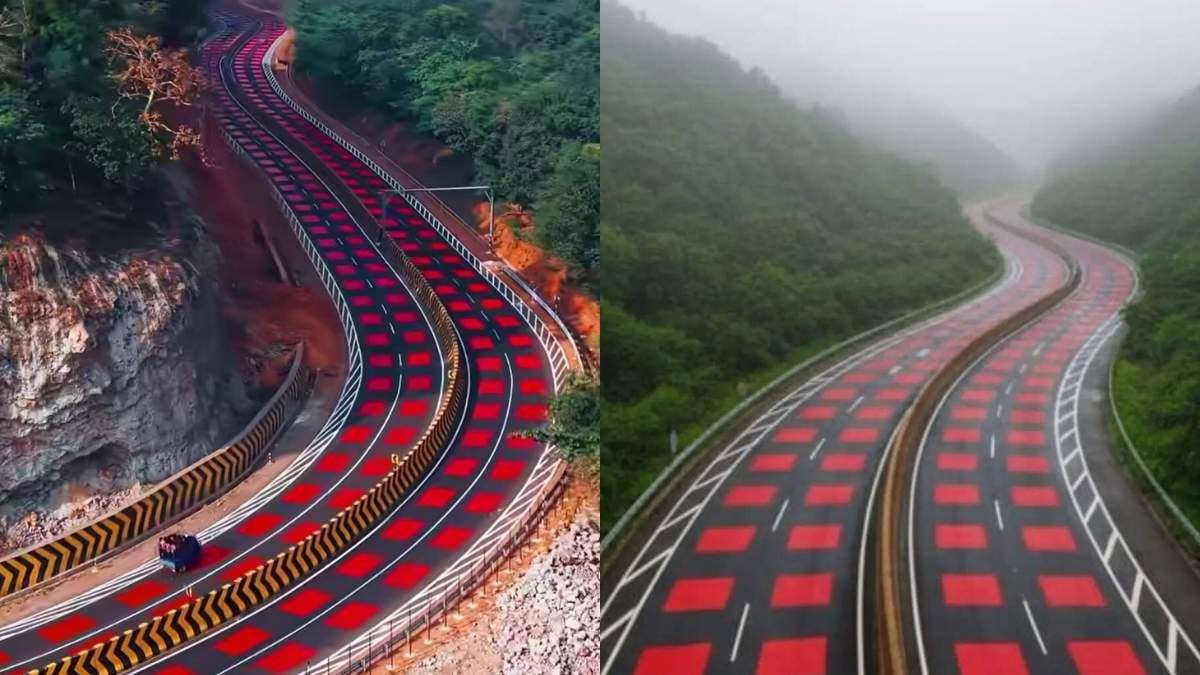



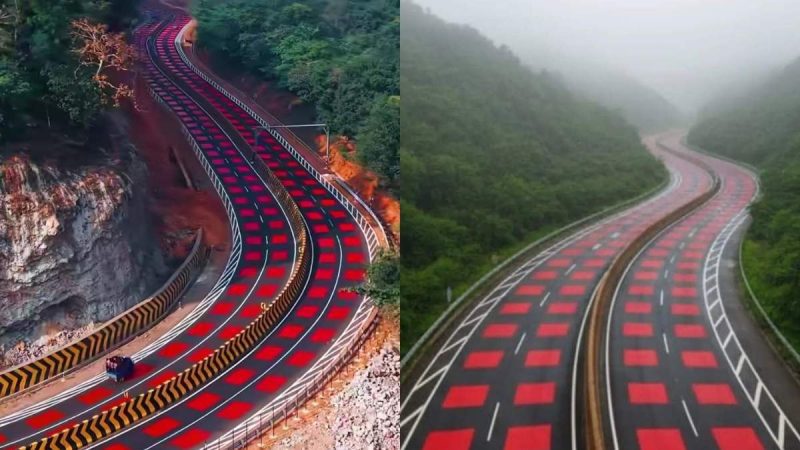
Indians have another development to get excited about, as India has launched its first wildlife-safe road on National Highway 45 (NH-45) in Madhya Pradesh. But what surprised everyone was the bright table-top red marking along the highway. Many might think it’s just for aesthetics—but it holds a much deeper purpose. Scroll down to find out!
India Launches Wildlife-Safe Road On National Highway
This highway runs through Madhya Pradesh’s most ecologically sensitive regions, passing the Nauradehi Wildlife Sanctuary and the Veerangana Durgavati Tiger Reserve.
The textured red surface is not for aesthetics but for behaviour control. The red surface creates subtle… pic.twitter.com/exri0XS74d
— Incognito (@Incognito_qfs) December 15, 2025
India has rolled out its first wildlife-safe road on National Highway 45 (NH-45) in Madhya Pradesh. As per NDTV, this stretch runs through areas like the Veerangana Durgavati Tiger Reserve and Nauradehi Wildlife Sanctuary.
However, the feature that caught everyone’s attention is the table-top red marking. Don’t be fooled—it’s not just for aesthetics. This 5 mm-thick, bright red layer with a slightly raised texture is like a subtle nudge for drivers. It signals that they’re entering a wildlife zone and encourages them to slow down smoothly, without any sudden brakes or jolts.
This idea is inspired by Dubai’s Sheikh Zayed Road, backed by international research and guidelines. The bright, thermoplastic layer has been added to danger zones along a 2 km ghat section of the 11.96 km highway passing through the tiger reserve.
Also Read: Mumbai–Pune Highway Turns Into Standstill As Map Shows Red Zone; Netizens: ‘Traffic Festival’
Other Measures To Protect Animals
Other than red markings, the government has also taken other measures to ensure the safety of animals. According to NDTV, animals can move freely beneath the highway as 25 underpasses have been built. Also, an 8-foot-high fence runs along the road to guide animals toward these underpasses and prevent them from entering traffic lanes.
The authorities have also installed speed detection devices to remind drivers to maintain safe speeds. Cameras on minor bridges, which also serve as animal crossings, monitor wildlife movements. These steps aim to protect both animals and motorists, reducing accidents and improving safety on the highway. This initiative is part of NHAI’s Green Highways program, which promotes eco-friendly and sustainable infrastructure development.
What are your thoughts on this? Tell us in the comments below!
Also Read: Mumbai To Lose Over 700 Trees, Including Pink Trumpets, To Ghatkopar-Anand Nagar Highway Project
Cover Image Courtesy: X/@CivilEngDis & X/@Pankajmittl7