
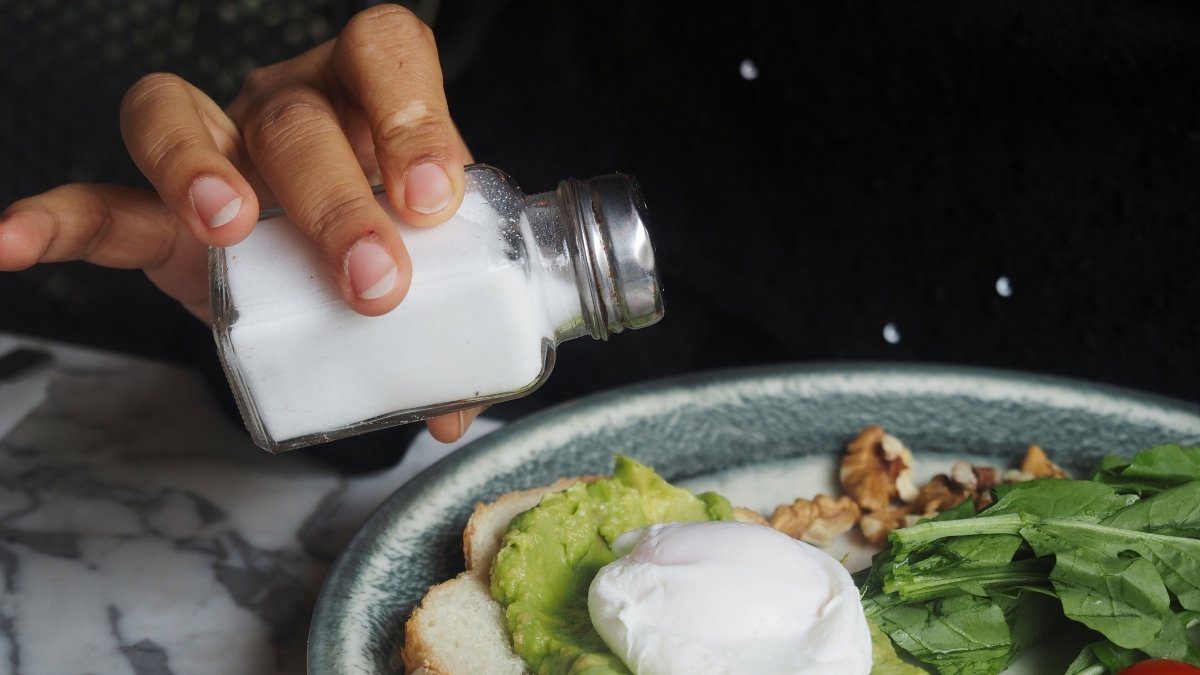


If you’re dining out in Abu Dhabi soon, the salt on your table might not be what you’re used to. The Department of Culture and Tourism – Abu Dhabi (DCT Abu Dhabi) has issued a new circular requiring hotel restaurants and eligible food and beverage outlets to swap standard table salt for a potassium-enriched alternative, and it’s not a minor tweak; it’s a full policy shift with a real enforcement deadline attached.
What The New Rule Actually Requires
Under Circular No. 8/2026, any salt offered to diners after their food is served, whether it’s in a salt shaker, a sachet, a packet, or any other after-service format, now has to meet a specific standard: a minimum of 25% potassium chloride (KCl) as a substitute for standard sodium chloride (NaCl). Restaurants aren’t actually obligated to offer salt seasoning at all if they’d rather skip it, but if they do offer it, it has to be the potassium-enriched version. Regular table salt is only allowed if a customer specifically asks for it themselves; establishments can’t proactively nudge diners toward requesting it, and they’re not required to ask guests about health conditions or dietary needs to justify serving it either way. The circular is also clear that the responsibility for individual dietary choices stays with the diner, not the restaurant.
Who It Applies To (And Who’s Exempt)
The rule covers any restaurant, café, bar, or hotel room service outlet holding a valid DCT Abu Dhabi Tourism Licence. It doesn’t apply to retail spaces selling food that isn’t meant for immediate consumption, so your neighbourhood supermarket’s salt aisle is unaffected. The policy officially took effect on July 1, but DCT Abu Dhabi built in a three-month grace period so businesses could adjust their supply chains and menus without facing penalties.
That grace period ends October 1, when full compliance and enforcement kick in. From that date, DCT Abu Dhabi can request documentation proving an establishment is purchasing and using compliant salt or a formal declaration that no discretionary salt is being offered at all. Non-compliance can lead to regulatory or administrative action, potentially affecting a business’s Tourism Licence.
Also Read: From Pink Salt Waters To Deep Blue Shores, These MENA Lakes Feel Unreal
What This Means If You’re Eating Out In Abu Dhabi
For the average diner, this shouldn’t change much about the eating-out experience beyond what’s actually on the table. Potassium-enriched salt carries less sodium than the regular kind, and public health bodies, including guidance referenced from the World Health Organisation, have increasingly pointed to lower-sodium salt substitutes as a practical way to help reduce blood pressure and cardiovascular risk at a population level.
Also Read: Did You Know Banana With Lemon & Salt May Help Improve Your Gut Health?
Restaurants are being encouraged, though not strictly mandated, to let customers know potassium-enriched salt is in use so diners can make informed choices at the table. This isn’t an isolated move either; it follows an earlier DCT Abu Dhabi circular requiring hotel restaurants and eligible outlets to offer a minimum number of healthy menu options, and it’s being rolled out in coordination with the Abu Dhabi Healthy Living Sector at the Department of Health. Taken together, it’s part of a broader, ongoing push to fold public health priorities directly into how Abu Dhabi’s hospitality sector operates.
Cover Image Courtesy: CanvaPro/ towfiqu barbhuiya
FAQs
Why is potassium-enriched salt considered healthier?
It has lower sodium content than regular table salt. Public health guidance, including WHO guidelines, increasingly points to lower-sodium salt substitutes as a practical way to help lower blood pressure and cardiovascular risk.
Can I still ask for regular table salt at a restaurant?
Yes. Regular table salt is permitted if a customer proactively requests it, as long as the establishment hasn't prompted that request.
When does the rule take full effect?
The policy took effect on July 1, 2026, with a three-month grace period. Full compliance and enforcement begin on October 1, 2026.


