

Water in the Middle East does strange things sometimes. Not every lake stays blue; some turn silver by sunset. Others shift from green to pink in a few hours, depending on heat, salt, wind or even how the sun hits the surface. And honestly, photos barely capture it properly. Across parts of the Middle East and North Africa (MENA), there are lakes and wetlands that feel almost alive. Always changing, never looking the same twice.
For Travellers Tired Of Ordinary Beach Views
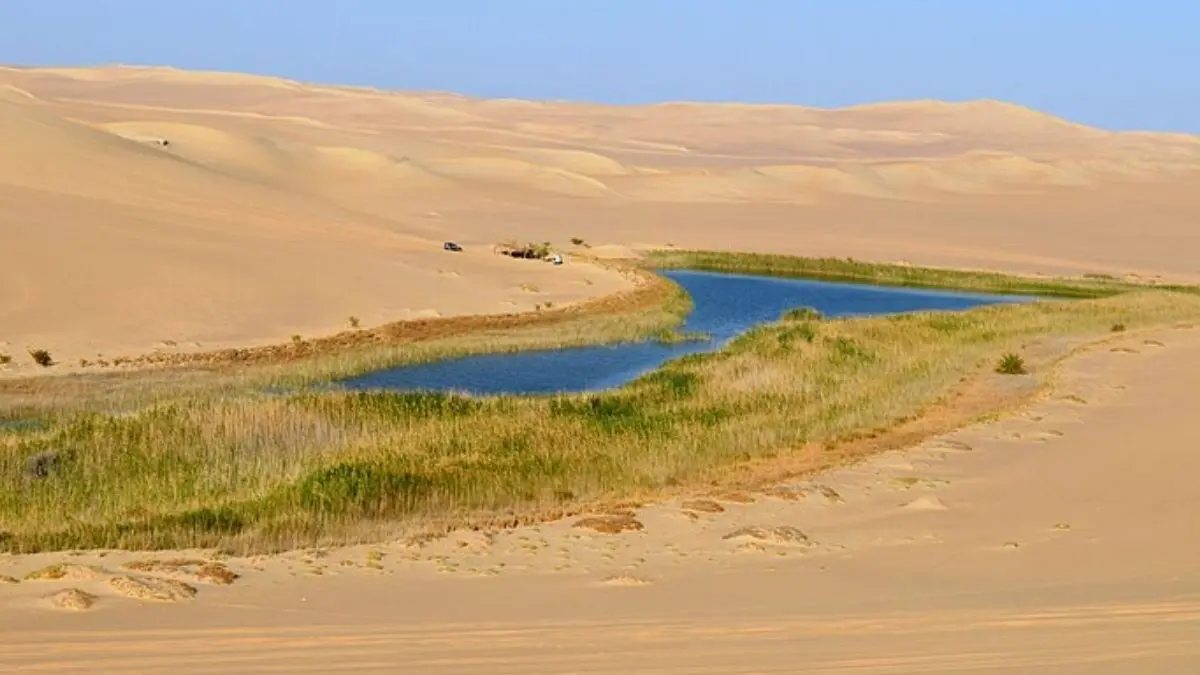
Take the salt lakes in Siwa Oasis, for example.
By midday, the water looks icy blue-white, almost too bright to stare at properly. But later in the day, pink tones start slipping in through the minerals under the sunlight. Some parts look turquoise. Other corners go soft rose-gold.
Around the lakes, there are palm groves, old mudbrick homes and ruins connected to the ancient Oracle of Amun. According to legend, even Alexander the Great once visited here.
Where The Water Moves Like Light
Up in Musandam Fjords, the sea cuts between giant cliffs and changes colour almost hourly.
Morning water can look pale green. Then, suddenly, the metallic silver by noon once the limestone cliffs start reflecting sunlight into it. By sunset, darker blues take over.
Small dhow boats still move through these waters carrying tourists and locals between fishing villages. Some of those villages are only reachable by sea even now.
That said, this is probably one of the calmest places in the region to just sit quietly and watch water do its thing.
The Lake Where Floating Feels Normal
The Dead Sea changes mood constantly, too. Early mornings make it look grey and flat like steel. Later, the minerals pull brighter blue shades out of the surface. Then sunset arrives and suddenly everything softens into dusty pink and silver. Also, people don’t just come here for the views. The salt levels are so extreme that floating feels effortless.
Also Read: 10 Visa-Free Destinations UAE Residents Should Bookmark For Eid al-Adha 2026 Getaway
Desert Lakes That Appear And Disappear
In Saudi Arabia, Al-Asfar Lake almost behaves like a temporary guest in the desert. Rainfall and underground water levels decide whether it appears fully or slowly disappears back into the sand. Sometimes it glows green with algae. Other days, it looks silver after storms.
Meanwhile, Al Wathba Wetland Reserve outside Abu Dhabi shifts between shallow reflective pools and cracked white salt flats depending on the season.
And then there’s Lake Qarun, where colours swing between olive green, gold and dull silver depending on wind and algae movement. For many travellers, these places become less about sightseeing and more about timing. You never quite see the same version twice.
Cover Image Courtesy: Wikipedia/Mohamed.ibr.abdelraouf
For more such snackable content, interesting discoveries and the latest updates on food, travel and experiences in your city, download the Curly Tales App. Download HERE.
FAQs
What’s special about Al-Asfar Lake?
It appears and shrinks depending on rainfall and underground water levels.
Why do these lakes change colour?
Things like sunlight, minerals, algae, salt levels and wind all affect how the water looks during the day.
When is the best time to visit these places?
Early mornings and sunset usually show the strongest colour changes.


