
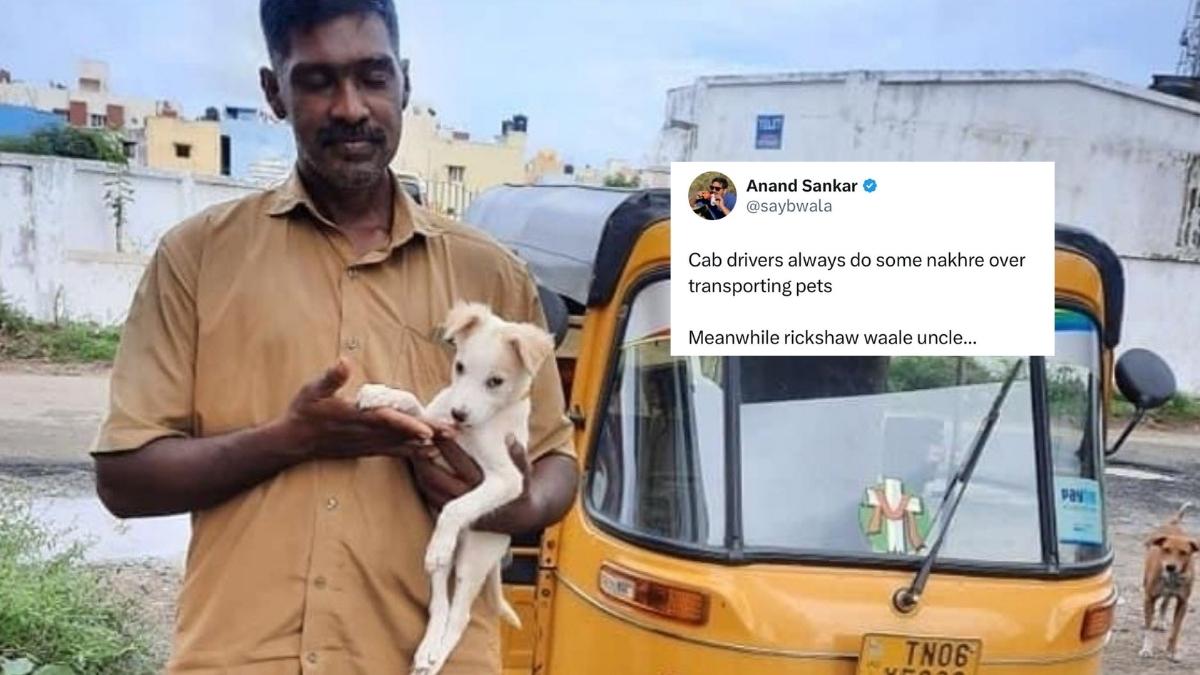


Some travel observations don’t come from guidebooks or itineraries but from passing conversations, shared anecdotes, and the internet’s quieter corners. One such thought has been circling recently, about how differently people respond when animals become part of the journey. In Indian cities, that difference often reveals itself mid-commute, in the small exchanges between passengers and drivers, where a ride turns into something more than just getting from one place to another. An X post reveals about auto drivers’ animal compassion and compares it to an average cab driver’s experience.
Cab Vs Autorickshaw: Who Is More Compassionate Towards Furry Companions?
Cab drivers always do some nakhre over transporting pets
Meanwhile rickshaw waale uncle…
Achha aapka billi hai?
Naam kya hai? Umar kya hai?
Maine bhi billi (or kutta) paala hai. A small story follows…
Isko kya problem hai? Hospital kyun jaana hai? Theek ho jayega….…
— Anand Sankar (@saybwala) January 30, 2026
A traveller on X put it bluntly: cab drivers, for all their air-conditioning and app ratings, suddenly have rules when pets are involved. Extra charges, sudden cancellations and long explanations about “policy”. And then there’s the autorickshaw uncle, leaning out of his seat, asking questions that aren’t transactional at all. Achha aapki billi hai? Naam kya hai? Umar kya hai? Hospital kyun jaana hai? Theek ho jayega, the auto doesn’t just agree to take you, it absorbs the problem.
Anyone who has spent time moving through Indian cities recognises this energy instantly. Autos are porous, here stories slip in and so do lives.
Also Read: Red Panda To Blue Sheep: 6 Rare Animals Call Sikkim’s Khangchendzonga National Park Their Home
Auto Drivers & Animal Compassion: A Beautiful Trail
In Chennai, one such life quietly turned into an animal ambulance. Baskar, an auto driver, began taking injured dogs and cats to vets because nobody else would. What started as one refusal too many slowly became routine. His auto now carries baskets, water, and the expectation that if an animal is hurt, this vehicle might be its first mercy. It is the same roads, same traffic snarls, but a different cargo altogether.
In Bengaluru, the relationship looks softer and almost domestic. An auto driver and his dog, Jackie, have become inseparable. Jackie was rescued when he was barely alive, four days old, and now sits through traffic jams like he owns the city. He naps during rides, surveys passengers without judgement, and waits patiently at signals. People don’t just book a commute; they enter a shared arrangement of driver, dog, destination, and no one’s complaining!
Travel writing loves big revelations, cities that change you, and journeys that transform. But India often reveals itself sideways, in transit, through people who have very little time and even less incentive to be gentle, yet choose to be anyway. Autorickshaws carry more than bodies, they carry concern, reassurance, and unsolicited hope.
Also Read: From Rare Black Panther To Leopards: 5 Animals To Spot In Kabini Wildlife Sanctuary, Karnataka
The traveller on X ended with a line that stings because it’s uncomfortable: compassion, he observed, often increases as you move down the economic ladder. Maybe that’s because those closest to the street understand vulnerability better than anyone else. And if you’re travelling long enough, you start to realise something quietly radical; that sometimes the kindest part of the journey isn’t where you’re going, but who agrees to take you there.
Cover Image Courtesy: drmohandewan/linkedin
For more such snackable content, interesting discoveries and the latest updates on food, travel and experiences in your city, download the Curly Tales App. Download HERE. First Published: February 02, 2026 2:29 PM