
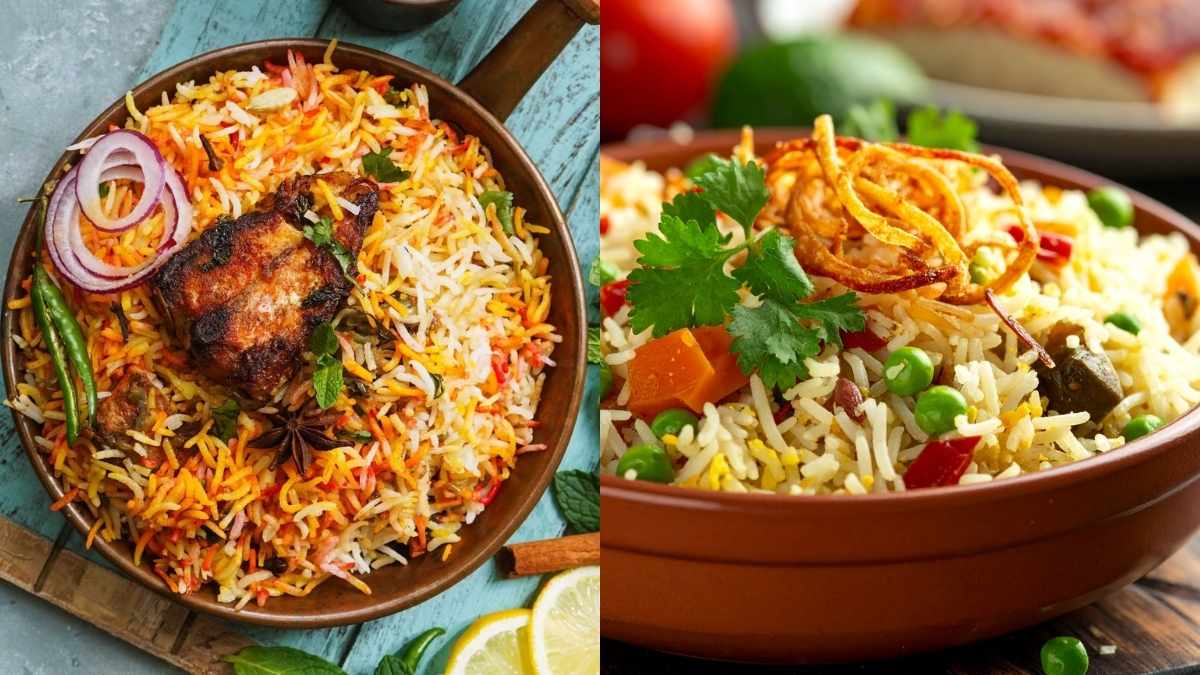


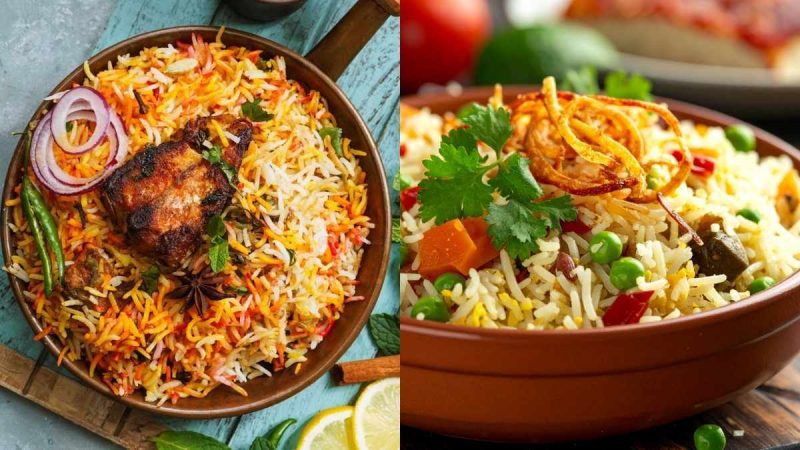
You’d think that two rice dishes, both involving basmati, aromatics, and either meat or vegetables, would sit comfortably in the same category. Yet, few debates in South Asian food culture become as spirited as biryani versus pulao. The comparison isn’t about settling a rivalry; it’s about understanding how two preparations beginning with the same ingredient diverged into opposite philosophies of cooking. Their differences reveal how technique, spice science, regional history, and cultural notions shape taste itself.
Biryani Vs Pulao: How Royal Is Biryani?
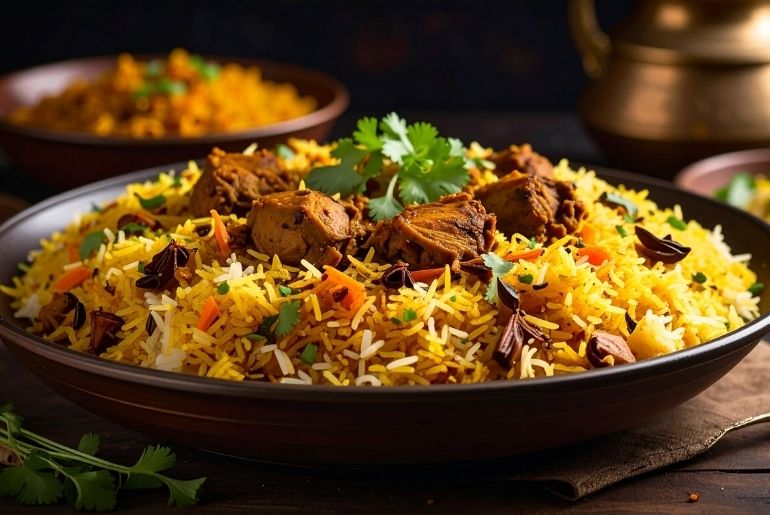
Long before it became the centrepiece of Indian celebrations, biryani travelled through Persian trade routes, entered Mughal courts, and eventually adopted local accents like Hyderabadi, Lucknowi, Kolkata, Karachi, and Malabar. You can practically track the movement of dynasties by following variations of this dish.
What sets biryani apart is the patience embedded in its method. The rice and meat rarely meet until late in the process; each is prepared separately with intention. Meat is marinated. sometimes for hours in yoghurt, chilli, ginger, garlic, fried onions and warm spices. The rice is parboiled until it just resists the tooth. Only then are the two layers sealed and slow-cooked on the dum. The final pot isn’t a uniform blend but more like a topography: some grains are touched with saffron, others are underplayed, some bites are loaded with spice, and others are gentler and fragrant.
Also Read: TasteAtlas Names World’s 50 Best Rice Dishes; India’s Beloved Biryani Ranks…
Taste & Spice Factor Of Biryani
Biryani rarely apologises for its ambition. It is complex, well-spiced, and often fiery depending on the region. Hyderabadi biryani leans into heat and caramelised onion sweetness; Lucknowi biryani softens the edges, depending more on stock and whole spices than chilli; Kolkata adds potatoes and sometimes a hint of attar, creating a lighter, more restrained profile. Pakistan’s Karachi and Sindhi versions incorporate tomatoes and a punchier garam masala, giving them more acidity and spice.
Across these styles, one thing stays constant: biryani is not subtle. Even a mildly spiced one carries layers of flavour, not because of quantity but because of technique.
Biryani Regional Variations That Are Crave-Worthy
A few styles define the category:
- Hyderabadi Kachchi Biryani: raw marinated meat cooked with rice in a sealed handi; intensely aromatic.
- Lucknowi (Awadhi) Biryani: meat cooked first, rice layered later; refined and slightly perfumed.
- Kolkata Biryani: potatoes as iconic as the meat, adapted from Awadhi roots during the exile of Nawab Wajid Ali Shah.
- Sindhi Biryani: tangy, high on masala, and very distinct from Indian variants.
Each variation offers not just a taste difference but a different cooking logic and cultural memory.
Biryani: Where To Find The Best
You go to Hyderabad if you want the benchmark. Paradise and Shah Ghouse are old favourites, but newer kitchens like Bawarchi continue to shape the conversation. Lucknow’s Idris and Kolkata’s Arsalan – each city has its legends, and each version is so specific that comparing them feels like comparing instruments rather than dishes.
Biryani: Price & Accessibility
Because biryani usually involves marination, whole spices, ghee, saffron, and a time-intensive technique, it often sits at a higher price point. ₹400-₹600 will fetch you a good one! Even budget versions require more labour and flame time than pulao. It is the dish people order when they expect a full meal, not an accompaniment.
Biryani Vs Pulao: The Comforting Pulao Propaganda
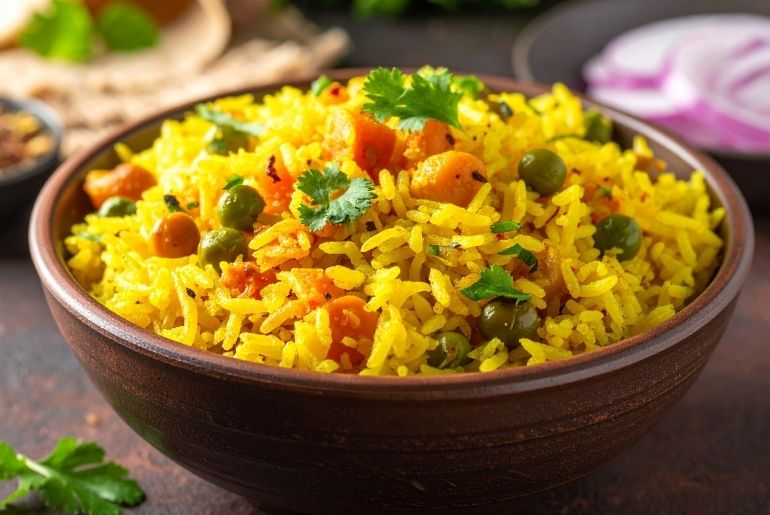
If biryani is fireworks, pulao is architecture. It is older and more widespread, from Central Asian plov to Afghan Kabuli pulao to Kashmiri and Bengali adaptations. But the principle stays the same; the rice absorbs everything in the pot. Nothing is layered, and nothing is hidden.
The technique is elegant! Whole spices are tempered in ghee or oil, meat or vegetables are sautéed briefly, and washed rice is added to toast. Then comes the broth, which is light and sometimes mildly seasoned. The pot is sealed until the grains lengthen and separate, each one carrying a uniform flavour. With pulao, the cook cannot fall back on layering tricks; the seasoning must be precise because the grain has nowhere to hide.
Taste & Spice Factor Of Pulao
Pulao does not like depth; its charm lies in balance. Spice is used only to perfume, not dominate the plate. Even Afghan Kabuli pulao, rich with carrots, raisins and nuts, doesn’t overwhelm the palate; it balances sweetness, savouriness and texture with confidence.
Kashmiri pulao leans floral and fruity; Bengali morog pulao is savoury but gentle on masala; Pakistani yakhni pulao uses stock to produce a comforting and almost buttery depth.
Also Read: Dining With The Kapoors: Junglee Mutton To Truffle Dal, Here’s What Their Khandaan Brunch Looks Like
Pulao: Regional Variations Worth Knowing
- Kabuli Pulao: a sweet and savoury interplay with raisins and nuts.
- Yakhni Pulao: stock-driven depth; flavours that are deep seep into every grain.
- Kashmiri Pulao: uses saffron tones with dried fruits.
- Morog Pulao: chicken cooked in ghee and lightly spiced rice.
None of these aims to shock the palate, their success lies in balance.
Where Pulao Excels
Because pulao is a one-pot method, it lives comfortably in home kitchens. But some regional restaurants, especially Afghan and Kashmiri establishments, have elevated it into signature dishes. In India, pulao is not typically the “main event” in restaurants, which is why a great one surprises you: it carries technique without too much happening on your plate.
Pulao: Price & Accessibility
Compared to biryani, pulao generally costs less to prepare: fewer spices, shorter cooking time, no marination, and no layering. ₹150-₹200 will fetch you a fragrant and elegant version. It’s also versatile, you’ll find it in lunch boxes, banquet spreads, and festive menus where it plays a supporting role to richer gravies.
Biryani Vs Pulao: Who Wins The Royal Bet?
There’s no universal winner, only two philosophies. Choose biryani when you want spice, drama, and the satisfaction of layered cooking. Choose pulao when you want balance and a dish that doesn’t compete with the rest of the meal. Both trace centuries of history, but they answer different questions: biryani asks how many flavours you can stack without losing flavour; pulao asks how much elegance you can extract from simplicity.
Cover Image Courtesy: thehyderabadindiangirl/CanvaPro and truecreatives/CanvaPro
For more such snackable content, interesting discoveries and the latest updates on food, travel and experiences in your city, download the Curly Tales App. Download HERE. First Published: December 31, 2025 12:17 PM