


If someone told you that one of Maharashtra’s most beloved dishes combines chicken and poha, your first reaction would probably be confusion. It sounds like something dreamed up in the age of protein-packed breakfasts and bizarre food experiments. But in Virar, this pairing has lived and thrived for generations. Long before social media began celebrating unexpected food combinations, people in Agashi were lining up for Bhujing.
Meet Bhujing, Virar’s Most Unique Comfort Food
View this post on Instagram
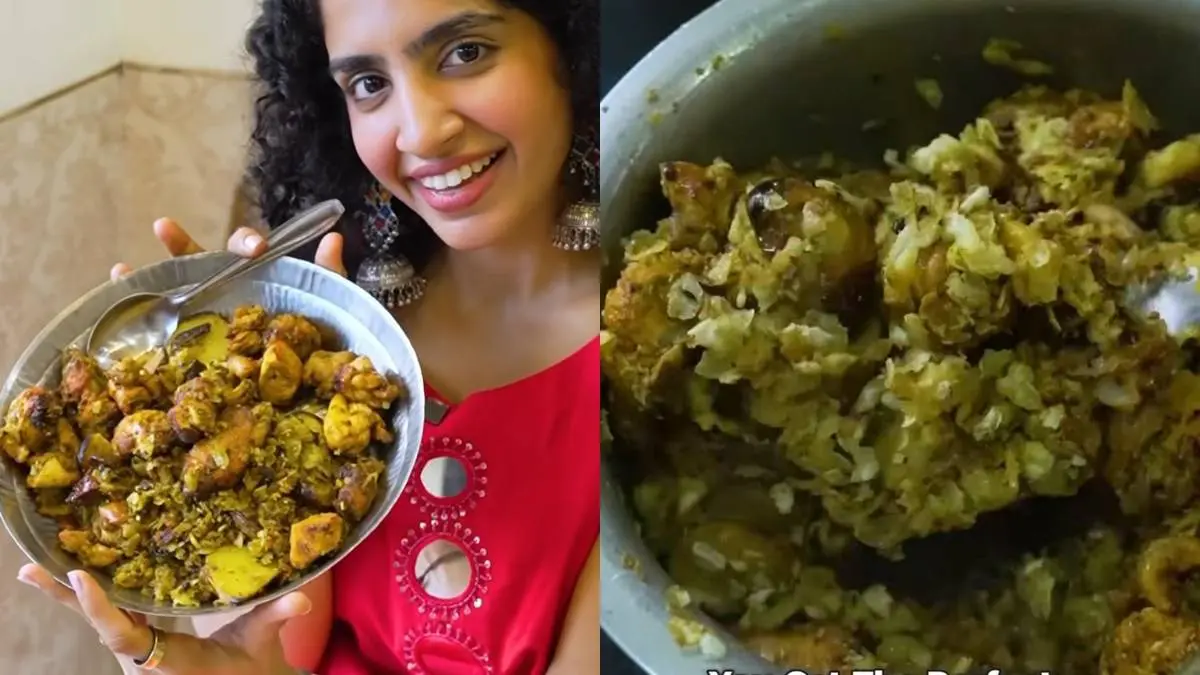
The story begins in the 1940s, when Babu Hari Gawad laid the foundation for what would eventually become one of the Vasai-Virar region’s most iconic, crazy dishes. His family ran a business serving tadi, or palm wine, and customers often wanted something filling, spicy and satisfying to eat alongside it. Instead of reaching for the usual snacks, Gawad started experimenting. He roasted chicken over charcoal, added potatoes, tossed everything with onions and a fragrant homemade masala, then mixed it with nylon poha, a thinner variety of flattened rice known for soaking up flavours beautifully.
That single experiment never really changed again. More than 80 years later, Agashi Bhujing Centre continues to prepare Bhujing using the same recipe that has been handed down through the Gawad family. Today, the eatery is run by the third generation, but the cooking philosophy remains firmly rooted in the past.
The chicken is still roasted over charcoal, and the potatoes are cooked alongside the meat, allowing them to absorb every bit of the smoky juices. The nylon poha is folded in only at the end so it drinks up the oil, spices and meat stock without becoming mushy.
Also Read: Mumbai Gets A Taste Of Naples As Vincenzo Capuano Opens 1st India Outlet In Lower Parel
Why Chicken And Poha Are A Match Made In Maharashtra
The family’s spice blend is perhaps the biggest mystery behind Bhujing. It reportedly contains ingredients such as dry coconut, garlic, cloves, cinnamon, cardamom and chillies, but the complete recipe has never been revealed. Over the years, several people have tried to recreate the famous masala, yet the original remains exclusive to the Gawad family.
Even the name has a story. Bhujing is believed to come from the Marathi word “bhujne,” meaning to roast, a nod to the charcoal cooking technique that defines the dish.
What makes Bhujing memorable isn’t the shock value of chicken and poha. Once you taste it, the pairing makes a delicious kind of sense. The delicate nylon poha absorbs the smoky chicken juices, the potatoes add softness, the onions bring freshness, and the family’s secret masala ties everything together with layers of heat and aroma.
Also Read: An Engineer’s California Dishwasher Job Led To Mumbai’s Mexican Eatery Numero Uno
Where: Agashi Bhujing Centre, Shop No. 3 & 4, Shrutika Apartment, Agashi Bhandarwada, Virar West, Vasai-Virar, Maharashtra
When: 8 am-1 pm and 4 pm- 9 pm
Cost: ₹300 for two approx.
So the next time someone dismisses chicken poha as another internet-born food experiment, Virar has a gentle correction.
Cover Image Courtesy: Internal
FAQs
What is Bhujing?
Bhujing is a traditional dish from Agashi in the Vasai-Virar region of Maharashtra. It combines charcoal-roasted chicken, potatoes, onions, a secret spice blend, and nylon poha to create a smoky, flavour-packed local specialty.
Where did Bhujing originate?
Bhujing originated in Agashi near Virar during the 1940s. It was created by Babu Hari Gawad to serve as a hearty accompaniment to tadi (palm wine).
What does the name 'Bhujing' mean?
The name is believed to come from the Marathi word bhujne, which means "to roast," referring to the traditional charcoal-roasting technique used to prepare the chicken.


