



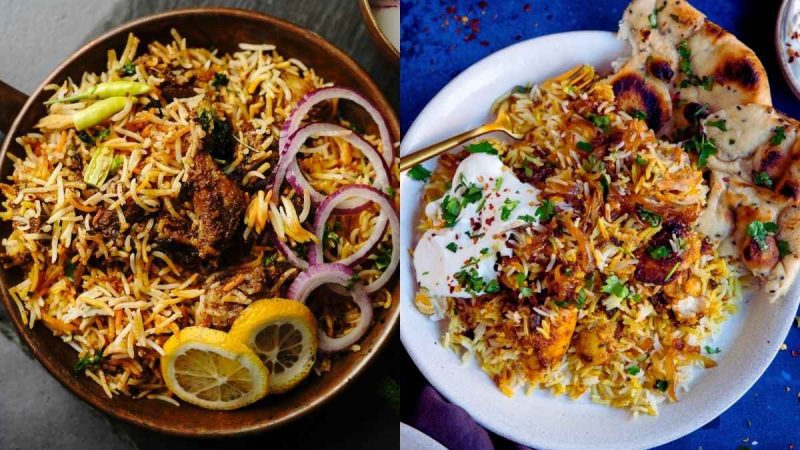
The reason Hyderabadi Biryani and Lucknowi Biryani keep getting compared isn’t that one is better than the other. It’s because they sit at opposite ends of the same royal table. Both are descendants of Mughal culinary traditions, both were shaped in courts rather than common kitchens, and both treat biryani not as “rice with meat” but as a culinary era. Yet, they disagree on almost everything: how loudly flavours should speak, how visible spices should be, and how the spice should hit. At a basic level, both dishes rely on long-grain basmati rice, slow cooking, and carefully chosen aromatics. Beyond that shared foundation, their paths diverge sharply. One grew in the Deccan’s heat and intensity; the other evolved in the polite and perfume-heavy culture of Awadh. Understanding them side by side explains why biryani in India is never just one thing.
Hyderabadi Biryani Vs Lucknowi Biryani
Hyderabadi Biryani
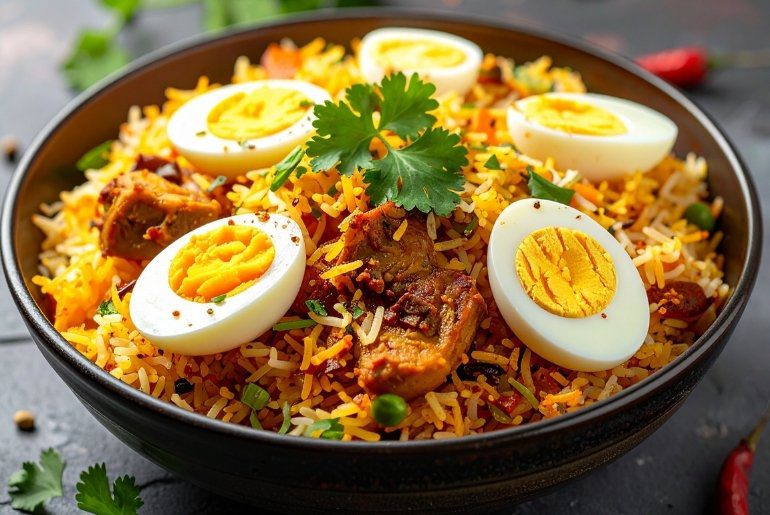
Hyderabadi Biryani comes from the kitchens of the Nizams of Hyderabad, where Persian techniques met local ingredients and a strong preference for spice. This biryani doesn’t wait to impress you, it does so immediately and on the spot.
Flavour Profile
The first mouthful tells you exactly where you are. There is heat, but it’s not reckless. Green chillies bring sharpness, red chilli powder gives body, and garam masala provides warmth that feels just the right amount of HOT. Yoghurt adds tang, fried onions add a kurkura magic, and fresh mint and coriander cut through the richness. The flavours overlap and collide, which is precisely the point.
Preparation Method
The defining feature of Hyderabadi Biryani is the kacchi method. Raw, heavily marinated meat, most often chicken or mutton, is layered with partially cooked rice and sealed for dum cooking. As the pot heats, meat juices rise, rice absorbs them, and the two finish cooking together. There is very little room for correction here. If the marination is off or the heat poorly judged, the biryani fails. When done right, it feels seamless and almost instinctive.
Also Read: Biryani Rules NYE Parties: 2 Lakh+ Orders With 1,336 Per Minute, Followed Closely By Pizza
Spice Factor
This biryani does not apologise for its spice level. The heat builds gradually and stays with you. It’s not just about chilli; it’s about density. Every bite carries masala, oil, and aroma in equal measure.
Texture & Visual Appeal
Hyderabadi Biryani looks as assertive as it tastes. You’ll see streaks of masala-stained rice, chunks of meat coated in thick gravy, and caramelised onions woven throughout. The rice remains separate, but rarely pristine white. It wears its flavour openly and as royally as possible.
Also Read: Biryani Vs Pulao: What’s The Difference, And Which Dish Deserves The Royal Crown?
Price & Accessibility
Because it’s widely cooked and deeply popular, Hyderabadi Biryani spans every price bracket. From modest street joints to heritage restaurants, it’s one of the most accessible royal dishes in the country.
Cultural Personality
This is biryani meant for appetite, not sophistication. It mirrors the city it comes from; it is direct, generous, and intense. You eat it hot, quickly, and usually more than you planned to.
Hyderabadi Biryani Vs Lucknowi Biryani
Lucknowi Biryani
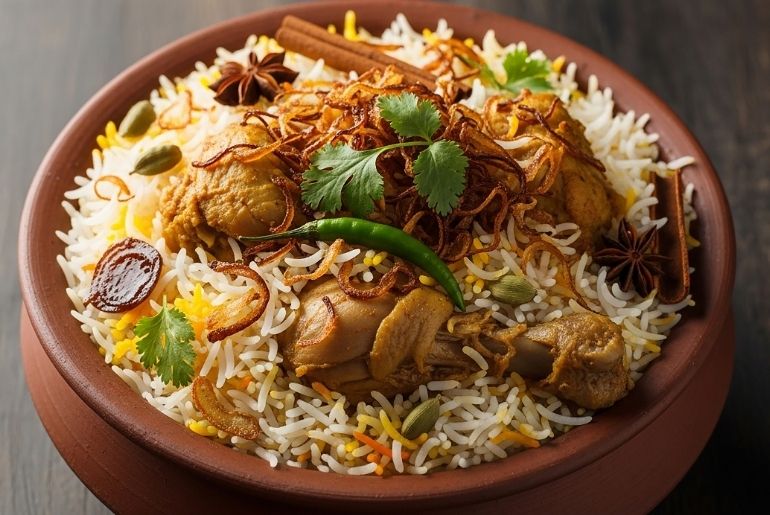
Lucknowi Biryani belongs to the courtly traditions of Lucknow, where food was expected to show manners.
Flavour Profile
The taste is restrained but worthwhile. Whole spices dominate with cardamom, cloves, cinnamon and bay leaf taking centre stage. They are used carefully so no single note dominates. Saffron, rose water, and kewra appear lightly, just enough to leave a fragrance rather than a statement. There is richness, but it comes from ghee and stock.
Preparation Method
Lucknowi Biryani follows the pakki method. Meat is cooked separately, often in a gently spiced broth, until it gets tender. Rice is parboiled with aromatics. Only then are the two layers finished on dum. This method allows precision as texture, salt, and aroma are all controlled rather than surrendered to chance.
Spice Factor
Heat is minimal by choice. The warmth comes from whole spices, not chillies. You notice flavours unfolding rather than hitting all at once.
Texture & Rice Quality
Here, rice takes centre stage. Each grain is long and separate, lightly coated in ghee. The meat is soft, clean-tasting, and never masked by masala. Nothing bleeds into anything else unless intended.
Also Read: CT Exclusive: Period Cravings Decoded! What Women At Curly Tales Crave During ‘That Time Of Month’
Price & Exclusivity
Lucknowi Biryani is usually priced higher. The reliance on premium basmati, ghee, saffron, and slow, careful cooking makes it less suitable for mass production and more associated with specialist kitchens.
Cultural Personality
This biryani reflects Lucknow’s culture of restraint and etiquette. It’s eaten slowly, often in silence, and appreciated for what it doesn’t do as much as what it does.
Hyderabadi and Lucknowi biryanis aren’t rivals so much as opposites shaped by history. One believes flavour should be layered, visible, and intense. The other believes it should be controlled and fragrant. Choosing between them isn’t about taste alone, it’s about mood. Some days call for heat, weight, and spice. Others ask for balance, aroma, and quiet satisfaction. Indian cuisine is richer because both exist, refusing to meet in the middle, and insisting, correctly, that biryani can mean more than one thing at once.
Cover Image Courtesy: vm2002/canva pro and kushika_twt/X
For more such snackable content, interesting discoveries and the latest updates on food, travel and experiences in your city, download the Curly Tales App. Download HERE. First Published: January 20, 2026 7:18 PM