

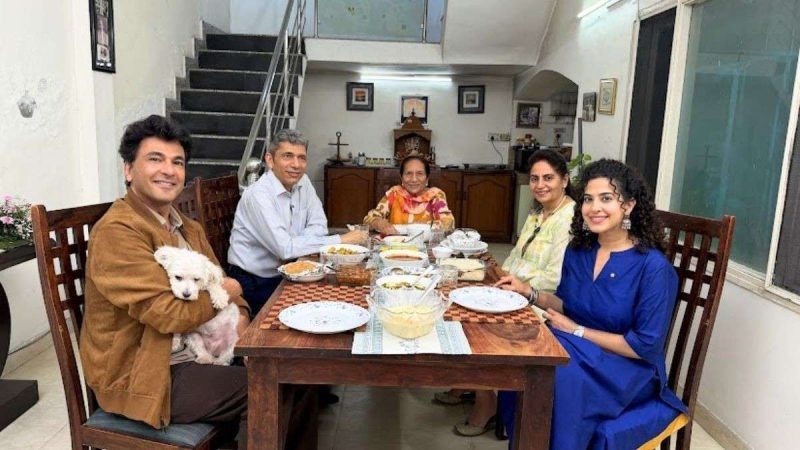
Even the best cooks have dishes that don’t go according to plan, and chef Vikas Khanna is the first to admit it. During Sunday Brunch with Kamiya Jani, where he and his family recreated a hearty Amritsari spread, swindling with classic Punjabi flavours, the conversation drifted away from recipes and landed on something every home cook relates to: those tiny kitchen disasters that we keep making without warning. Instead of complicated chef hacks, Vikas shared the kind of practical fixes people can actually use at home, while his family happily jumped in with a few tried-and-tested remedies of their own.
Vikas Khanna Shares Kitchen Hacks For Every Homecook
The first situation was too painfully familiar. You’ve seasoned the curry, tasted it, and instantly realised you’ve gone overboard with the salt. Vikas Khanna didn’t suggest starting over. His answer was simple; that is to…add a potato. Yes! He explained that it works as a neutraliser and helps soften the impact of the extra salt, bringing the flavours back into balance. Before the conversation with Kamiya Jani could move on, one of his family members offered another old-school kitchen trick. A small ball of gunda hua aata dropped into the dish, they said, can also help absorb some of that excess salt.
Then came the question every roti maker dreads! What if the chapati has turned stiff by the time it’s ready to eat? Vikas smiled and admitted the trick wasn’t even his own discovery. He had once watched someone rescue a hard roti in the most creative way possible. They lightly dipped it in water, wrapped it in paper, and heated it in the microwave. The trapped moisture softened the chapati, making it taste freshly made instead of dry and chewy.
Also Read: Inside Vikas Khanna’s Amritsar Home: A Warm, Homely Space Filled With Family Memories
His Simple Tips Come From Years In The Kitchen
Sticky rice was next, but Vikas wasn’t interested in calling it a mistake. In fact, he challenged the assumption altogether. Some of the world’s most-loved rice dishes, he pointed out, celebrate exactly that texture. The grains cling together, and the layer that sticks to the bottom of the pot is often considered the best part of the meal. Sometimes home cooks spend so much energy trying to “fix” rice that doesn’t need fixing at all.
The final question was about potato sabzi that turns watery instead of coating the potatoes nicely. Vikas Khanna answered it with a memory from his own early days in the kitchen. The first few times he made kadhi, he wanted it thick and silky, but it ended up much thinner than he had imagined. Instead of giving up, he prepared a simple slurry using rice and stirred it into the pot. It thickened the kadhi beautifully, and the same trick, he said, works when a potato sabzi has more water than you’d like.
Also Read: “Indian Food Was Always Meant To Heal,” Vikas Khanna Shares His Thoughts On Indian Cuisine
Watch the Sunday Brunch episode on the Curly Tales App or the Curly Tales YouTube Channel.
Cover Image Courtesy: Internal
For more such snackable content, interesting discoveries and the latest updates on food, travel and experiences in your city, download the Curly Tales App. Download HERE.FAQs
How do you fix curry that has too much salt?
Vikas Khanna suggests adding a potato to the curry, as it helps neutralise the excess salt. His family also shared another traditional trick of adding a small ball of kneaded dough (gunda hua aata) to absorb some of the salt.
How can you soften hard rotis?
According to Vikas Khanna, lightly dipping the roti in water, wrapping it in paper and heating it briefly in the microwave helps restore its softness.
Is sticky rice always a cooking mistake?
No. Vikas Khanna explained that many popular rice dishes around the world intentionally have sticky grains, and even the crispy layer at the bottom of the pot is considered a delicacy in several cuisines.
How do you thicken watery potato sabzi?
Vikas Khanna recommends using a simple rice slurry to thicken the gravy. He shared that he discovered this trick while learning to make kadhi.