
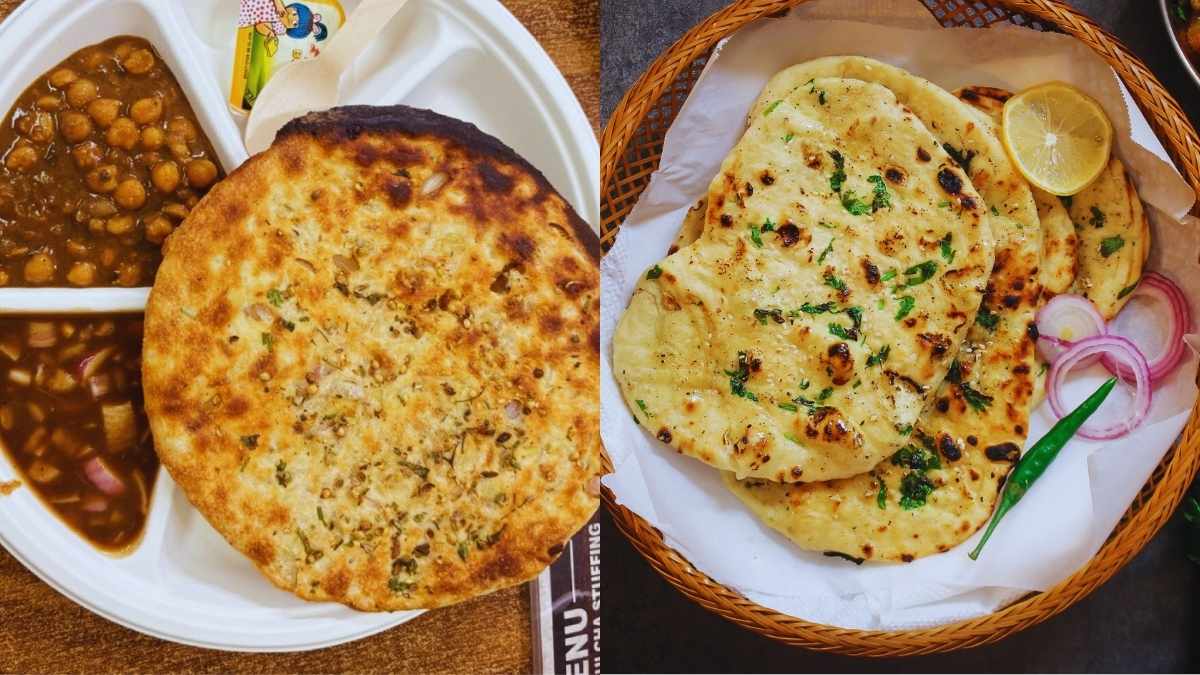

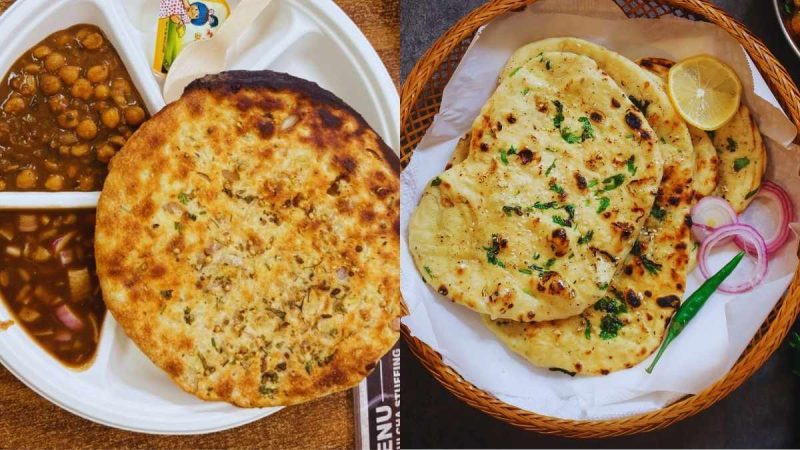
On the surface, Amritsari kulcha and Delhi naan look like close relatives, both leavened, both tandoor-cooked and both inseparable from North Indian food culture. Yet the comparison only exists because these breads were never meant to do the same job. One was born to be a meal in itself, shaped by Punjab’s appetite for fullness and heat. The other evolved as a companion, shaped by Delhi’s long history of flavourful and just-the-right-amount-of-spice kind of dining. Comparing them is less about which is “better” and more about understanding what each was designed to deliver.
Amritsari Kulcha Vs Delhi Naan
What Is Amritsari Kulcha & What Makes It Special?
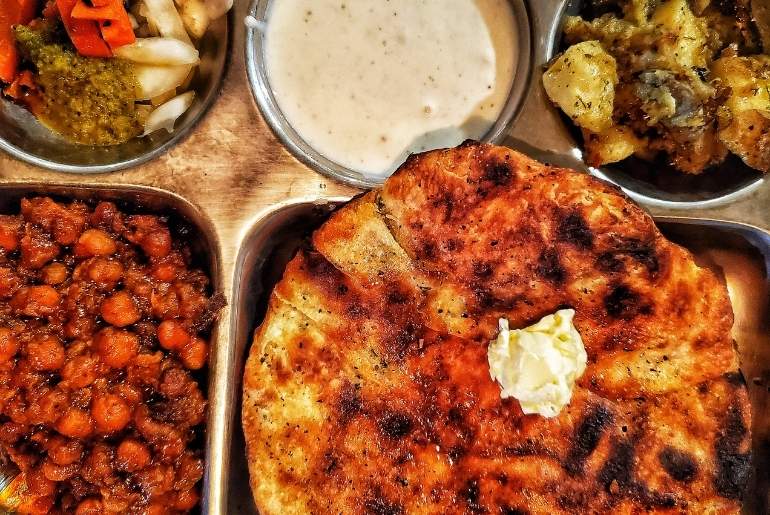
Amritsari kulcha belongs to a food culture that values density heavily. In Punjab, bread was expected to satisfy hunger first and impress later. The kulcha emerged as a logical solution; take refined flour dough, ferment it lightly, stuff it generously, and cook it hot and fast. The Amritsar version pushed this idea to its extreme. The stuffing, usually potato but aggressively seasoned with green chillies, onions, coriander, amchur, cumin, and garam masala, is not subtle by design. It is meant to be the MAIN CHARACTER.
What makes the Amritsari kulcha distinct is its proportion. The bread is thick, the filling is heavy, and the butter on top is unapologetically triumphant. It does not rely on gravies for identity. In fact, the kulcha is the anchor of the plate.
Also Read: You Can’t Say No To This New Naan Burger Now Available Here In Dubai For AED10 For Ltd Time!
Where To Eat The Best
To understand kulcha properly, it has to be eaten in Amritsar, preferably from shops that have been doing something right for decades.
- Pehalwan Kulcha Shop (Ramgarhia Gate) is known for crisp bases and stuffing that holds its spice even after butter is added.
- Kulcha Land (Ranjit Avenue) offers a slightly more polished version but retains the original heft.
- Monu Kulcha Hut (Lohgarh Gate area) is often cited for its balance between spice and tangy facade.
These places don’t experiment much, and that’s the point.
Price And Value: Amritsari Kulcha
In Amritsar, kulcha remains honest food. One kulcha usually costs between ₹40 and ₹80. Outside Punjab, prices inflate rapidly.
Spice And Heat: Amritsari Kulcha
Spices are high, occasionally confrontational. This is bread for people who enjoy green chilli heat and sour notes from dry mango powder. It does not attempt to accommodate sensitive palates.
Traditionally served with spicy chole, raw or pickled onions, and green chutney. Butter on top is standard. The accompaniments support the kulcha; they do not define it.
Who It Appeals To
People who like bold and filling food with lots of punjaabiyat and spicy masalas. Those who eat with their hands and expect bread to do the heavy lifting are the ones this dish is a perfect cut-out for.
Amritsari Kulcha Vs Delhi Naan
What Is Delhi Naan & What Makes It Delhi’s Beloved?
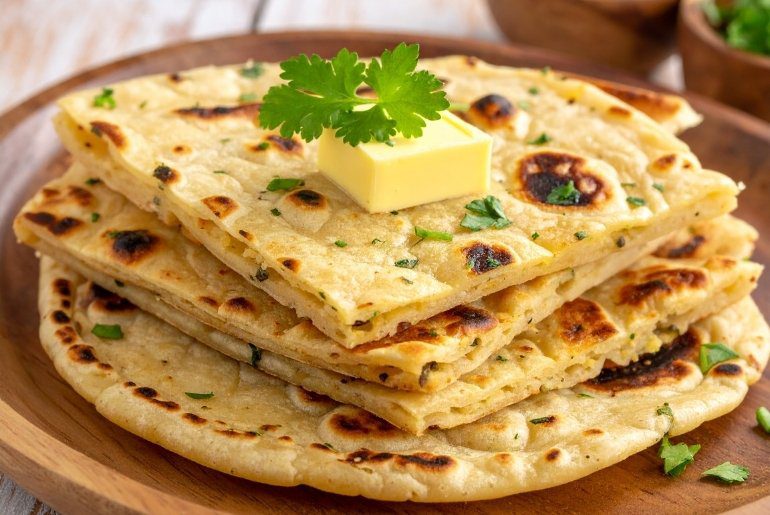
Naan’s journey into Delhi came through Persian and Mughal kitchens, where it began as elite bread, it is soft, enriched, and cooked in high-heat tandoors. Over time, as royal food filtered into public eating spaces, Delhi transformed naan into something far more aesthetic. What survived was not excess spice but technical refinement with fermentation, elasticity, and balance.
Delhi naan is intentionally restrained. It exists to absorb gravies, to temper richness, and to hold together dishes that would otherwise overwhelm the palate.
What Makes It Different: Delhi Naan
Unlike kulcha, naan is rarely stuffed in its classic form. The dough, made with refined flour and yoghurt or milk, is kneaded for stretch, rested properly, and slapped onto the walls of a tandoor. Butter or garlic is added after cooking, not before. The flavour stays mild so that the bread never competes with the dish it’s paired with.
Where To Eat The Definitive Versions: Delhi Naan
In Delhi, naan changes character depending on where you eat it.
- Karim’s (Chandni Chowk) serves naan that are traditional, slightly dense and ideal with rich Mughlai gravies.
- Moti Mahal (Daryaganj) represents the classic post-Partition Punjabi restaurant naan, which is soft, buttered, and dependable.
- Bukhara (ITC Maurya) elevates naan into a cinema; this version is oversized, impeccably fermented, and designed for soul-filling meals.
Each reflects a different layer of Delhi’s dining culture.
Price And Accessibility: Delhi Naan
Naan spans a wide economic range. Street-side dhabas sell it for ₹50-₹80. Restaurants price it anywhere between ₹120 and ₹300, depending on the setting and additions like garlic or cheese.
Spice And Heat: Delhi Naan
Low spice in the bread itself. All heat comes from the curry or kebab it accompanies. This neutrality is deliberate.
People who enjoy composed meals like multiple dishes, shared plates, and gravies need a soft, reliable carrier.
Also Read: From Sarson Ka Saag To Kulcha: Best Winter Food Trails In Amritsar
Amritsari kulcha is assertive, self-contained, and rooted in street culture. Delhi naan is adaptive, masalaledaar, and rooted in shared dining. One satisfies hunger directly; the other completes a meal. Choosing between them isn’t a matter of taste alone, it’s a matter of choice and context too. If you want a bread that is the meal, kulcha wins. If you want a bread that lets everything else shine, naan does its job quietly and well. And that, more than dough or tandoor, is what truly separates them.
Cover Image Courtesy: vm2002/CanvaPro and criplydelight/X
For more such snackable content, interesting discoveries and the latest updates on food, travel and experiences in your city, download the Curly Tales App. Download HERE. First Published: January 07, 2026 11:11 PM