

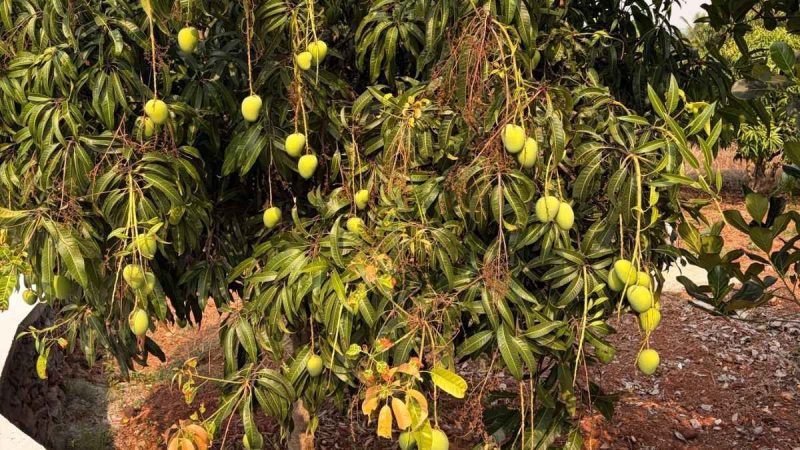
There are places in India known for mangoes, and then there is Malda, a city where mangoes are not just grown, but lived with. Come summer, and conversations here revolve around ripening fruit, orchard timings, market arrivals, and which variety has peaked that week. In West Bengal’s Malda district, mango season is not a side story; it is the main event. That is exactly why Malda is widely celebrated as the Mango City of India!
Why Is Malda Called The Mango City Of India?
The title has not appeared out of thin air. Malda has spent generations building this identity through scale and an astonishing range of the fruit. While many regions are known for one signature mango, Malda’s strength lies in abundance. This is a place where orchard culture runs deep, where family knowledge about grafting, harvesting, and preserving trees has travelled across generations like heirloom wisdom.
What gives Malda its edge is the sheer number of mangoes it grows. The district is known for producing well over a hundred varieties, making it one of the richest mango-growing belts in the country. That means markets here do not offer one flavour profile; they offer a spectrum. Some mangoes are honeyed and delicate, some are lush with pulp, and others are elegant enough for gifting.
Then come the stars! Fazli is perhaps the most dramatic of them all. Large and generous in pulp, it is the kind of mango that fills a kitchen with aroma before it is even sliced. It is loved for desserts, shakes, preserves, and households where one fruit can serve many.
Lakshmanbhog is a whole other category. It is refined, sweet, premium, and often spoken of with a certain pride. Many mango lovers consider it among the finest table mangoes produced in eastern India.
Himsagar, with its fibreless flesh and intense flavour, has a fan following of its own. Smooth and rich, it is the sort of mango that disappears quietly because nobody wants to waste time talking while eating it.
Also Read: Obsessed With Mangoes? Try Mango Rasayana This Summer; Full Recipe Inside
The Story Behind India’s Mango City
Malda’s success is rooted in geography. The fertile alluvial soil of the Ganga basin gives orchards strong natural support, while favourable climate conditions help trees thrive. Farmers here have not relied only on heritage methods or only on modern science, but they have blended both.
And mangoes here are never just fruit! They move money, labour, trade, transport, and tourism. During peak season, local mandis surge with activity. Entire livelihoods are tied to the harvest. Malda’s reach stretches far beyond West Bengal. Its mangoes travel across India and are increasingly appreciated in overseas markets too, strengthening the city’s reputation in the wider fruit economy.
For travellers, visiting Malda in mango season is not simply about eating well. It is about seeing orchards at work, wandering through packed markets, tasting varieties rarely found elsewhere, and understanding how one city became inseparable from India’s favourite summer fruit.
Also Read: Good News For Mango Lovers In Mumbai! Get GI-Tagged Ratnagiri Alphonso Mangoes Delivered At Home
India has many mango legends. Ratnagiri has Alphonso, Malihabad has Dasheri, but Malda offers something extraordinary! It has a culture built around the king of fruits. That is why the name has stayed and that is why the title feels earned.
Cover Image Courtesy: nihilismpro/X
FAQs
Which city is known as the Mango City of India?
Malda in West Bengal is widely known as the Mango City of India.