

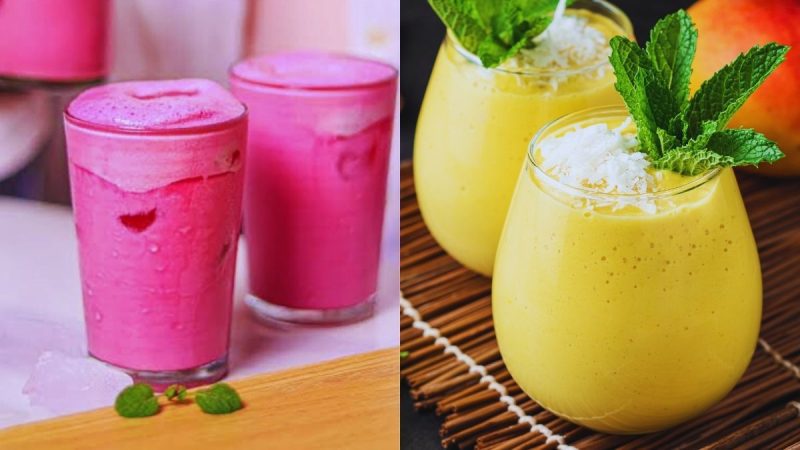
Lassi has never been a background drink. In North India, especially across Punjab and Rajasthan, it occupies the centre stage, served thick, slow to pour, and impossible to rush. What started as churned curd meant to cool the body gradually picked up layers of flavour and ritual. Over time, lassi stopped following rules. It adapted to seasons, festivals, health trends, and even café culture. The result is a drink that can feel ceremonial, functional, aromatic, or experimental, sometimes all at once. Here are 7 variants that are anything but ordinary.
7 Lassi Types You May Not Have Tried Yet (But Definitely Should!)
1. Kesar Lassi
Kesar lassi is the equivalent of freshness in a glass. Saffron strands are soaked carefully, releasing colour and aroma before being blended into dense curd. The flavour is subtle but unmistakably refreshing, often finished with pistachios or almonds. This lassi appears during celebrations and special meals, not daily lunches. It carries the quiet confidence of something once associated with royal kitchens and festive tables, where excess was refined rather than overwhelming.
2. Masala Lassi

Masala lassi exists for a purpose, and a chatpata purpose at that. Roasted cumin, black salt, and sometimes ginger or mint cut through the creaminess of curd, making it sharp and cooling. Common across Rajasthan and Punjab, it is ordered after heavy meals, not before them.
3. Mango Lassi
Mango lassi gained international fame, but its original charm lies in seasonality. Made with ripe summer mangoes, not bottled pulp, it’s thick enough to border on dessert. The sweetness is natural, and the texture is indulgent. Its familiarity makes it approachable, yet it still feels special, perhaps because it tastes like summer itself.
4. Rose Lassi
Rose lassi is as much about aroma as flavour. Rose syrup or rose water gives it a pale pink tone and a lingering fragrance that instantly feels celebratory. Often served at weddings, religious gatherings, or festive lunches, it’s carefully garnished with petals or nuts. This is a lassi designed to be noticed before it’s tasted.
5. Bhang Lassi
Bhang lassi carries ritual and regulation. Prepared using a paste made from cannabis leaves, it is traditionally consumed during festivals like Holi in select North Indian regions. Its preparation follows age-old methods and cultural rules. More than a beverage, it functions as a ritual offering, one that is deeply specific to place and occasion.
6. Chocolate Lassi
Chocolate lassi belongs firmly to the present. Cocoa or chocolate syrup blended with curd creates a drink that feels half-a-dessert and half-a-drink. Found mostly in urban cafés and modern menus, it reflects how traditional Indian drinks continue to absorb global flavours without losing their base identity.
7. Avocado Lassi
Avocado lassi signals a health-conscious turn. Blended with curd, honey, and sometimes nuts or seeds, it’s creamy and filling, but bonus: it is also rich in healthy fats. This version speaks to modern diets and evolving preferences, proving lassi can adapt without becoming too complicated.
Also Read: 12 New Menus In January Across India Serving Classic Plates, Comfort Food & Winter Favourites
Lassi survives because it refuses to stay fixed. From saffron-infused magic to spiced functionality and modern experimentation, every version carries an AURA. It cools, nourishes, celebrates, and evolves, remaining unmistakably itself, no matter how many forms it takes.
Cover Image Courtesy: nadiasphoto/CanvaPro and iamatrneet/Instagram
For more such snackable content, interesting discoveries and the latest updates on food, travel and experiences in your city, download the Curly Tales App. Download HERE.