

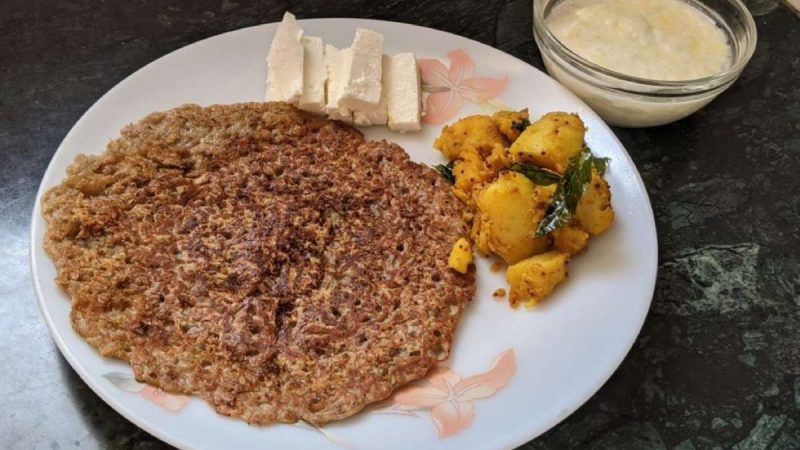
There are festivals where food is the main character. Janmashtami is slightly more complicated. You spend the day surrounded by fruits, milk, potatoes, nuts, sweets and sabudana. Then midnight arrives, bells start ringing, Krishna’s birth is celebrated and the vrat finally gets its grand finale. For millions of devotees, fasting is one of the central practices of Janmashtami, but it is not simply about skipping meals. The fast is traditionally observed as an act of devotion and self-discipline, with devotees spending the day in prayer and anticipation before celebrating Krishna’s birth at midnight.
Why Do People Fast On Janmashtami?

Janmashtami marks the birth of Lord Krishna, who is traditionally believed to have been born at midnight on the eighth day, or Ashtami, of the dark fortnight of the Hindu month of Bhadrapada. That midnight timing is important because the day is built around anticipation: devotees fast, pray, visit temples, sing bhajans and wait for the moment when Krishna’s birth is ritually announced.
Fasting is seen as a way of turning the focus inward and practising restraint. For some devotees, that means a strict nirjala vrat, where neither food nor water is consumed. Others follow a more flexible phalahar fast, eating fruits, milk, nuts and permitted vrat ingredients.
The rules are not identical in every household, and that is worth remembering before declaring someone’s sabudana khichdi “not fasting enough.”
Also Read: Janmashtami 2026: 8 Trips In India For An Unforgettable Midnight Celebration Of Lord Krishnas Birth
So What Can You Actually Eat During A Janmashtami Vrat?
This is where Indian fasting gets wonderfully specific. Regular grains such as wheat and rice are generally avoided during Janmashtami vrats, while ingredients considered suitable for fasting take their place.
Sabudana, kuttu flour, singhara flour, potatoes, fruits, dairy, nuts and makhana become the unofficial all-stars of the day. Salt may also be replaced with rock salt, or sendha namak, depending on the tradition being followed.
The result is a menu that sounds more like a carefully curated Indian snack festival. The exact rules can differ based on family customs, regional practices and the type of vrat a person observes, so there is no single “official Janmashtami thali” followed by everyone.
Also Read: From Goa To Bali, Where Are Indians Heading For Rakshabandhan And Janmashtami Long Weekends?
Sabudana Is Basically The Celebrity Of Vrat Food
Ask someone to name one fasting food and there is a very good chance they will say sabudana.
The tapioca pearls appear in everything from sabudana khichdi to crispy vadas, usually teamed with potatoes, peanuts, green chillies and spices that are permitted during the fast. Sabudana is popular partly because it is filling and easy to turn into both savoury and snackable dishes.
During Janmashtami, a plate of sabudana khichdi can quietly become the meal you have been thinking about since breakfast. It is also one of those foods that has successfully escaped the boundaries of fasting and become an everyday favourite across India.
Kuttu And Singhara Flour Take Over The Kitchen
When wheat flour is off the table, Indian kitchens do what they do best: improvise. Kuttu, or buckwheat flour, is commonly used during fasting to make puris, rotis and pakoras. Singhara flour, made from water chestnuts, is another popular choice.
Kuttu puris with a potato curry are particularly beloved because they somehow manage to feel indulgent despite being part of a vrat.
Singhara flour can also be used for puris and other preparations. The larger point is that fasting does not necessarily mean abandoning familiar textures and flavours. It simply means changing the ingredients that get you there.
Fruits, Milk And Curd Keep Things Simple
For devotees following a lighter fast, the menu can be much simpler. Fruits, milk, curd, buttermilk, nuts and dry fruits are common choices. Bananas, apples, pomegranates and seasonal fruits can make up a fruit-based meal, while milk and curd provide familiar dairy options.
Krishna’s association with cows, butter and dairy also gives these foods an especially fitting place in Janmashtami celebrations. Many households prepare offerings involving milk, curd and butter as part of the bhog.
So if your idea of a festival offering involves a bowl of creamy homemade curd, Janmashtami is very much your moment.
Also Read: Janmashtami: A Guide To Fasting, Vrat Recipes, And Bhog Preparations For Lord Krishna
Potatoes, Makhana And Peanuts Become Surprisingly Important
Potatoes have an extraordinary ability to survive every Indian food restriction, and vrat cuisine proves it once again. They appear in simple curries, fried snacks and fillings for fasting breads. Makhana, meanwhile, can be roasted and seasoned for a crunchy snack or turned into richer preparations.
Peanuts and other nuts add texture and make simple dishes more substantial. Together, they form the supporting cast of the Janmashtami kitchen.
There is also something distinctly Indian about turning a handful of permitted ingredients into ten different dishes and then insisting, with a straight face, that this is a “simple fast.”
And Then There Is Makhan-Mishri
If there were ever a festival where butter deserved a starring role, it would be Janmashtami. Krishna’s childhood stories are famously filled with tales of stealing makhan, or butter, from the homes of Gokul.
That association has made butter-based offerings particularly significant during Krishna celebrations. Makhan-mishri, a combination of fresh butter and sugar crystals, is commonly offered as bhog in many traditions.
Panchamrit Is Another Important Offering
Panchamrit, which literally means “five nectars,” is traditionally made with five ingredients–milk, curd, honey, ghee and sugar. It is associated with Hindu worship and is commonly used during Krishna puja.
It is also often given as prasad after the ritual. Alongside panchamrit, households may prepare kheer, peda, laddoos and other sweets for the occasion.
Also Read: Why Are Cucumbers Cut At Midnight On Janmashtami?
Why Does The Fast End Around Midnight?
Because, according to tradition, that is when Krishna was born. Janmashtami celebrations build towards the midnight hour, known as Nishita Kaal. Temples and homes may mark the moment with prayers, bhajans, bells and the ceremonial bathing and dressing of Krishna’s idol.
The deity is often placed in a decorated cradle, reflecting the celebration of his birth. Depending on the tradition, devotees may break their fast after the midnight rituals, while some observe the vrat until a specific time the following day.
For devotees, the point of fasts is more about devotion, restraint and anticipation. Food simply becomes part of that ritual. Some people may go through the day on fruit and milk, others may eat a full sabudana-and-kuttu spread, while those observing a strict fast may consume nothing at all. And then comes midnight, when the waiting ends, Krishna’s birth is celebrated and the food finally returns to the conversation. Because if there is one thing Indian festivals have mastered, it is making even fasting feel like a celebration.
Cover Image Courtesy: crackles/Canva Pro
FAQs
What can you eat during a Janmashtami fast?
Common vrat foods include fruits, milk, curd, sabudana, kuttu flour, singhara flour, potatoes, makhana, nuts and rock salt, depending on the fasting tradition.
Can you eat sabudana during Janmashtami vrat?
Yes. Sabudana is one of the most popular foods consumed during Janmashtami fasting and is commonly prepared as khichdi or vadas.
Can you eat rice and wheat during Janmashtami vrat?
Many fasting traditions avoid regular grains such as rice and wheat. However, specific rules can vary between households and traditions.
What is makhan-mishri?
Makhan-mishri is a combination of fresh butter and sugar crystals and is commonly offered to Krishna because of his association with butter in childhood stories.