

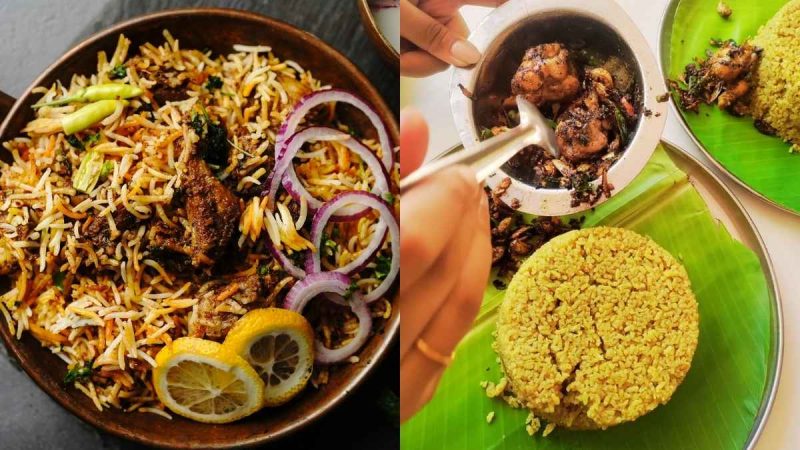
There are very few dishes in India that inspire the kind of loyalty biryani does. It is not just food people eat, it is food people argue over, crave on bad days, plan train journeys around, and remember long after the last grain is gone. At its simplest, biryani is rice cooked with meat or vegetables, layered with spices, herbs, and aromatics. But in practice, it is never that simple. The ingredients can include saffron, fried onions, mint, yoghurt marinades, whole spices like cloves and cardamom, and rice varieties that change from one state to the next. The taste is always multi-dimensional with warm, fragrant, rich, sometimes fiery, sometimes almost delicate notes. If you ever wanted to understand India through food, follow the biryani trail.
Which Biryanis Have You Tried Out Of The Treasure Trail?
1. Hyderabadi Dum Biryani (Telangana)

Hyderabadi Dum Biryani announces itself before you even lift the lid, with steam carrying saffron, fried onions, mint, and spice into the air. This is the biryani most people picture first, and for good reason. Cooked using the dum method, where marinated meat and rice are sealed together and slow-cooked, it is built in layers: spice at the base, fragrance in the middle, richness everywhere. The ingredients are classic but powerful with basmati rice, yoghurt marinade, saffron milk, caramelised onions, and a spice blend that does not hold back. It is typically eaten with mirchi ka salan and onion raita, because the heat demands something cool beside it.
Who Will Love It: Anyone who believes biryani should feel dramatic, indulgent, and unapologetically bold.
Also Read: Japanese Ambassador ONO Keiichi Eats Biryani The Right Way At This Iconic Andhra Spot In Delhi
2. Lucknowi Or Awadhi Biryani (Uttar Pradesh)
If Hyderabadi biryani is a celebration, Lucknowi biryani is poetry. Awadhi cooking is famous for restraint, and this biryani follows that philosophy. The spices are present, but they do not fight for attention on the plate. Instead, you notice aroma first with saffron, kewra water, cardamom, perhaps even a faint floral softness. Often, the rice and meat are cooked separately before being layered, so each grain stays distinct, each flavour clear. The taste is refined, gently spiced, and elegant rather than fiery. It is usually served with a light raita or simple gravy that does not compete with the biryani’s fragrance.
Who Will Love It: People who prefer subtle richness over spice overload, and want their biryani to be graceful.
3. Kolkata Biryani (West Bengal)
Kolkata biryani has one detail that makes it instantly recognisable: the potato. This is not an afterthought, it is tradition. Born during the Nawabi era, Kolkata’s version is lighter on heat, softer in spice, and slightly mellow in character. Alongside tender meat, you often find boiled eggs, and the potato sitting proudly, having absorbed all the flavours around it. The rice is fragrant, the spices are gentle, and the overall taste leans comforting rather than intense. A simple raita or salad usually accompanies it, letting the biryani remain the focus.
Who Will Love It: Anyone who enjoys a milder biryani with unexpected signature elements and old-city charm.
4. Bhatkali Biryani (Karnataka)
Bhatkali biryani comes from Karnataka’s coast and carries whispers of Arabian influence. It is often made with short-grain rice, and the spice profile is gentler, leaning into caramelised onions and aromatics rather than heavy heat. The meat is tender, the flavours are warm and well-spiced, and the biryani feels quieter compared to louder styles like Ambur or Hyderabadi. It is usually served with yoghurt-based sides or curry.
Who Will Love It: Anyone who prefers biryani that is aromatic and comforting rather than aggressively spicy.
Also Read: “You Can’t Dodge The Ammachi Stare,” Elderly Woman In Kerala Stops Man From Misusing Footpath
5. Ambur Biryani (Tamil Nadu)
Ambur biryani does not bother with subtlety. It is direct, spicy, and full of character. Made with seeraga samba rice, it carries a distinct aroma, different from basmati’s perfume. The spice base is bold with red chillies, garlic, and whole spices, creating a biryani that feels earthy, hot, and deeply satisfying. The meat is cooked into a thick masala before meeting the rice, so every bite tastes fully seasoned. It is often eaten with brinjal curry and raita, which softens the heat.
Who Will Love It: Spice lovers who want biryani that hits hard and leaves an impression.
6. Dindigul Biryani (Tamil Nadu)
Dindigul biryani is famous for one thing that sets it apart: its tang. The use of curd and lemon gives it a sharper edge, making the flavour feel brighter than many other southern biryanis. It is made with seeraga samba rice, which holds spice beautifully, and the meat remains juicy, coated in an earthy masala. The taste is slightly sour, deeply aromatic, and incredibly addictive. Onion raita and spicy gravies are common companions here.
Who Will Love It: Anyone who enjoys biryani with a lively, tangy twist rather than pure richness.
Also Read: Good News! Tamil Nadu Records 270 Dugongs; Population Of Vulnerable Mammal Remains Steady
7. Memoni Biryani (Gujarat)
Memoni biryani is not a light meal. It is intense, hearty, and built on strong spice. Originating from the Memon community, it is often made with mutton and a deeply concentrated masala featuring cloves, cinnamon, chillies, and fried onions. The flavour is bold, peppery, and full-bodied, the kind of biryani that demands time and appetite. It is usually eaten with raita or salad, because the richness needs balance.
Who Will Love It: Those who want a heavy, deeply spiced biryani with serious depth and warmth.
8. Sindhi Biryani (Sindhi Influence Across India)
Sindhi biryani is vibrant in the way street markets are vibrant; it is spicy, tangy and full of sharp corners. It often uses tomatoes, green chillies, dried plums, and fresh herbs, giving it a flavour that is hot but also slightly sour-sweet. The taste is lively and layered, never one-note. Cooling raita is almost essential here, because the spice has a real punch. It feels festive, colourful, and full of personality.
Who Will Love It: People who like biryani with bold spice, tang, and a bit of drama in every bite.
Also Read: Biryani Vs Pulao: What’s The Difference, And Which Dish Deserves The Royal Crown?
9. Malabar Thalassery Biryani (Kerala)
Thalassery biryani feels like the coast in food form. Unlike most North Indian styles, it uses kaima or jeerakasala rice instead of basmati with smaller grains. The ingredients often include fried cashews, raisins, ghee, caramelised onions, and warm spices that feel almost sweet-edged. The taste is rich but not heavy, fragrant without aggression, and unmistakably Malabar in spirit. It is commonly eaten with coconut-based sides, pickles, or raita, reflecting Kerala’s culinary landscape.
Who Will Love It: Those who like their biryani aromatic, slightly sweet, and layered with coastal richness.
10. Donne Biryani (Karnataka)
Donne biryani is the kind of dish that belongs to Bengaluru in a way that feels almost stubbornly local. You will not find it trying to be regal or delicate, and that is exactly the point. Its name comes from the way it was originally served, yup, this one is tucked into a humble “donne” or a leaf bowl that makes the whole experience feel street-side, warm, and immediate. This is not basmati territory. Donne biryani usually uses short-grain rice, and the masala carries a distinct green tint from mint, coriander, green chillies, and whole spices ground into something intense and herbaceous. The flavour is bold and almost rustic.
Who Will Love It: Anyone who wants a biryani that feels earthy, herb-forward, and unmistakably Karnataka.
Also Read: Why Has Karnataka Closed Nandi Hills On Valentine’s Day This Year?
What makes biryani extraordinary in India is not just flavour, it is identity. Each of these versions is a regional signature, transformed by history, local rice, spice preferences, and cultural influences. From Hyderabad’s grandeur to Kashmir’s gentleness, biryani is India telling its story through rice, aroma, and fire. You do not just eat biryani across India, you travel through it.
Cover Image Courtesy: vm2002/Canva Pro and aart0705/x
For more such snackable content, interesting discoveries and the latest updates on food, travel and experiences in your city, download the Curly Tales App. Download HERE.
FAQs
Which is the most famous biryani in India?
Hyderabadi Dum Biryani is widely considered the most famous biryani in India, known for its bold spices, saffron aroma, and slow-cooked dum layering method.
Why does Kolkata biryani have a potato?
Kolkata biryani traditionally includes a potato due to Nawabi influences during a time of limited resources, and it became a signature element because it absorbs spices beautifully and adds comfort to the dish.
Which biryani is best for people who don’t like too much spice?
Lucknowi biryani and Kolkata biryani are great options for those who prefer mild, fragrant biryani with gentle spices rather than heavy heat.
Is Biryani Very Pricey?
Not always. Biryani can be one of the most affordable meals in India, especially at street stalls and local eateries where a filling plate often costs between ₹80 and ₹300.