
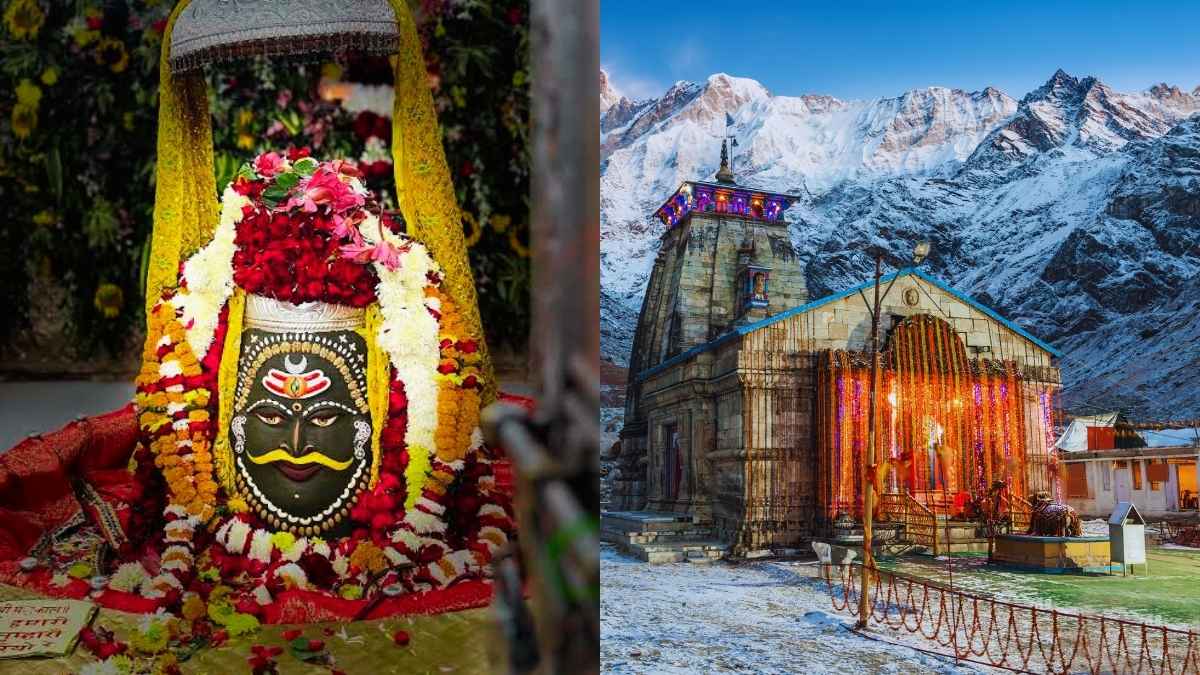


Maha Shivratri means choosing wakefulness, staying conscious through discomfort, silence, cold stone floors, long queues, unanswered prayers. The night asks for alertness not only of the body but of temperament: patience, restraint and attention. Across India, the eight Jyotirlingas described below respond to that night in different ways. Some impose discipline, some overwhelm the senses, while some quieten you until your thoughts feel too loud. What follows is not a checklist but a grounded description of what a visitor actually encounters inside these shrines!
8 Jyotirlingas To Visit This Maha Shivratri To Feel Closer To Shiva
1. Somnath Jyotirlinga
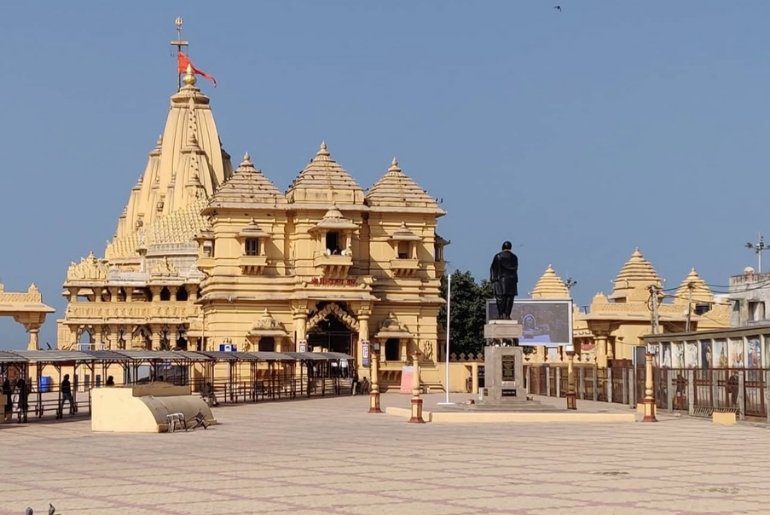
The present-day Somnath temple is an ornate reconstruction, assertive rather than fragile, built in the Māru-Gurjara (Chaulukya) style with clear lines and a strong vertical emphasis. The complex unfolds in levels: pillared mandapas lead toward a tightly held sanctum crowned by a high shikhara. Inside, the jyotirlinga appears as an aniconic, carefully polished lingam placed directly beneath the inner tower. Oil lamps flicker here against stone and marble, throwing moving shadows as priests circle the lingam during abhishekam. Somnath’s long history, cycles of destruction and rebuilding, is not hidden.
Older stone fragments sit embedded within newer walls, creating a visible patchwork that feels earned rather than ornamental. Outside the temple, the Arabian Sea is close enough to hear. Somnath Beach lies a short walk away, as does the Prabhas Patan Museum, which contextualises the site through archaeological remains. Veraval railway station nearby connects easily to Rajkot and Ahmedabad, making onward travel straightforward.
Also Read: National Tourism Day 2026: 7 Spiritual Cities For Soul-Searchers
2. Ramanathaswamy Temple
Rameshwaram is architecture as endurance. The Ramanathaswamy Temple’s corridors stretch with almost unnerving length, lined by granite pillars whose repetition slows the body into ritual pace. Within the sanctum reside two lingams: the Ramalingam, traditionally believed to have been formed of sand by Rama himself, and the Vishvalingam, brought from Kailasa by Hanuman.
Sound behaves differently inside, as footsteps echo, voices linger, and bells arrive late to the ear. Pilgrims move from one to another, drawing water over their heads, carrying the chill with them into the inner corridors where the stone retains moisture and coolness. Outside the temple, Agni Theertham meets the sea, while Dhanushkodi’s wind-swept ruins make for an early morning visit. Rameswaram is well connected to Ramanathapuram and Madurai, but festival days require patience, time, and clothing suitable for repeated ritual bathing.
3. Kedarnath Jyotirlinga
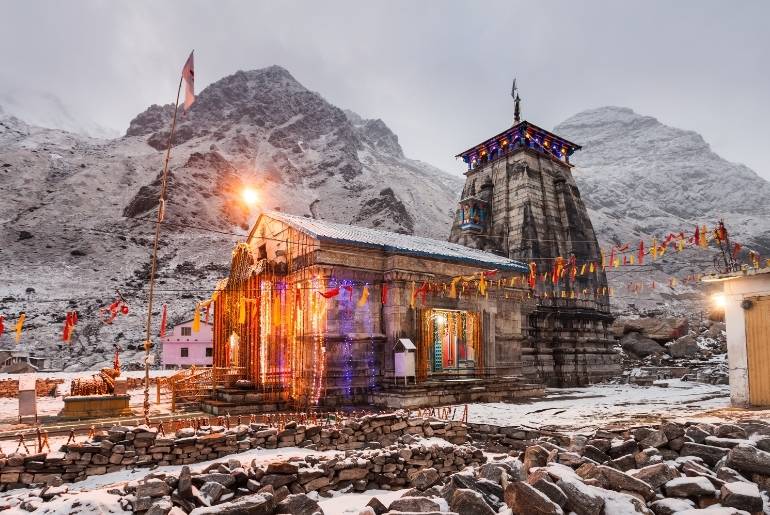
Kedarnath reduces everything to essentials. The garbhagriha is small, built of massive stone blocks, open to weather and altitude in a way few temples are. The lingam here rises in a rough, conical form on a high pedestal, its surface darkened by centuries of touch, snowmelt, and ritual oil. There are carvings of Pandavas, guardians, and deities in the first hall, but they recede quickly from attention. What dominates is the thinness of the air and the way sound disappears into the mountains.
Prayer flags flutter outside, clouds move quickly, and light changes without warning. Kedarnath closes during winter, and the journey involves either a demanding trek or helicopter travel. Altitude preparation, permits, and warm layers are non-negotiable. Nearby, Gaurikund serves as the base point, with hot springs, and those continuing often extend their route to the Panch Kedar temples.
Also Read: Uttarakhand Bans Mobiles & Cameras In Kedarnath & Other Char Dham Temples; No Reels & Videos!
4. Mallikarjuna Jyotirlinga
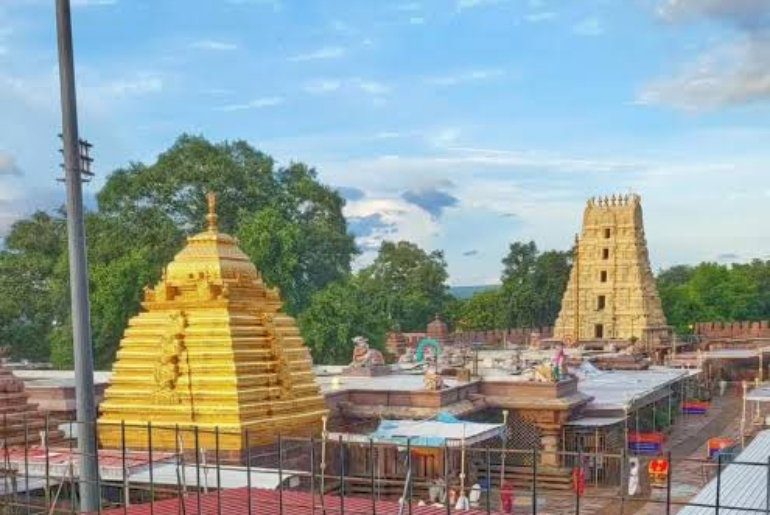
The Mallikarjuna temple at Srisailam announces itself through enclosure. High stone walls surround the complex, and the entry feels gradual rather than immediate. Pillared mandapas guide visitors inward, their carvings repetitive, disciplined, almost meditative in density. The sanctum itself is ancient, with parts dating back to the 7th century.
Inside, Shiva as Mallikarjuna shares the space with Bramarambha, the living presence of Parvati. This dual focus shapes the experience. Mirror halls, subsidiary shrines, and the sahasra linga area encourage circumambulation. The temple’s proximity to the Krishna River adds physical exertion to devotion, as long staircases lead down to Patal Ganga for those choosing ritual baths. The surrounding Nallamala hills offer viewpoints that make it easy to spend an entire day within the precinct.
5. Mahakaleshwar Jyotirlinga
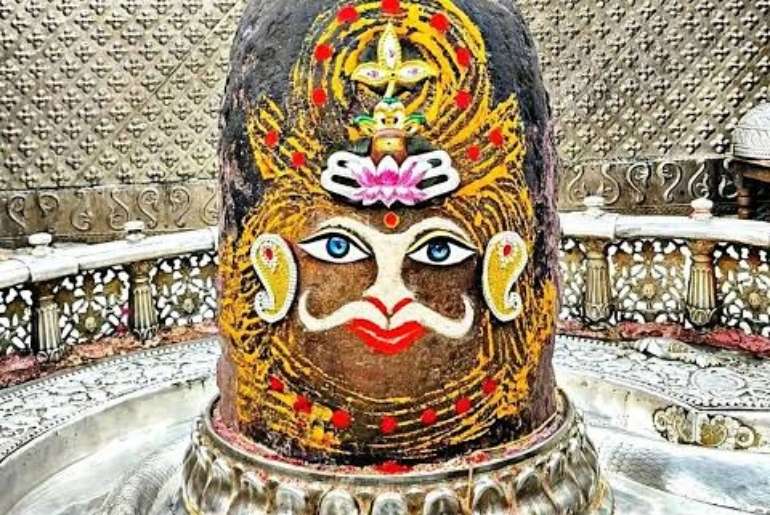
Mahakaleshwar feels compressed, charged, and unapologetic. The sanctum is arranged to control sightlines tightly, drawing the eye straight to the swayambhu lingam at its centre. The Bhasma Aarti, conducted before dawn, replaces flowers with ash, confronting devotees with material reminders of impermanence. Smoke, oil lamps, and chanting fill the enclosed space, leaving no room for detachment. Smaller shrines and idols exist within the complex, but they remain peripheral.
The experience revolves around the lingam and the ritual itself. Outside, Ujjain opens up historically and spatially. The Shipra River ghats lie nearby, and the ancient Jantar Mantar observatory reinforces the city’s long engagement with time and cosmology. During Maha Shivratri, advance booking for ritual access is essential.
Also Read: What Is Thiruvathirai Kali, Its Connection To Lord Shiva, And How You Can Make It At Home
6. Bhimashankar Jyotirlinga
Bhimashankar emerges from the forest rather than the city. The stone garbhagriha sits amid dense Sahyadri greenery, its Nagara and Hemadpanthi influences visible in doorframes and the compact shikhara. The swayambhu lingam stands centrally, framed by carvings that feel worn rather than decorative. Birdsong intrudes into ritual sound; mist settles unpredictably. The experience often feels less designed for humans and more negotiated with nature. Visitors should check for access restrictions during conservation or repair periods and carry basic protection against insects if exploring nearby trails.
7. Vaidyanath Jyotirlinga
Baidyanath Dham operates at scale. The inner shrine houses a large lingam surrounded by multiple smaller temples, creating constant movement and sound. Bells ring continuously, queues advance slowly, and pilgrims carry water for abhishekam with focused urgency. The architecture prioritises function, designed to handle volume rather than contemplation. Outside Deoghar, Basukinath and Trikut Parvat offer quieter extensions to the visit. During Shravan and Maha Shivratri, accommodation fills quickly, making advance planning essential.
Also Read: Will Non-Hindus Be Allowed In Kedarnath And Badrinath Temples?
8. Grishneshwar Jyotirlinga
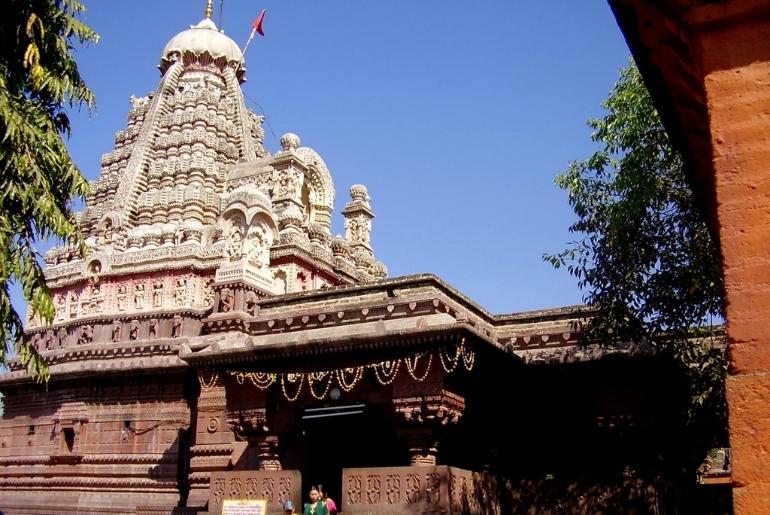
Grishneshwar looks like Shiv bhakti in its soft era. Built in Hemadpanthi stone, the temple is modest in scale, its carvings closer to eye level, its sanctum cool and contained. The jyotirlinga sits without too much spectacle, inviting proximity rather than awe.
The intimacy stands in contrast to nearby grandeur: the Ellora Caves lie barely a kilometre away. Visiting Grishneshwar early in the morning before moving on to Ellora allows both spaces to be experienced without fatigue or crowd pressure.
Also Read: Maha Shivratri 2026: What Foods Are Avoided, And What’s Allowed On Shivratri
Experiencing these Jyotirlingas fully does not require completionism. Choosing two sites in different landscapes, coast and mountain, forest and river, offers a more textured understanding of Shiva than attempting a single exhaustive circuit. Seasonal closures, especially at Kedarnath, festival crowd surges in Ujjain, Deoghar, and Rameshwaram, and ritual-specific timings all need foresight. Clothing should allow movement and modesty; time should allow staying and breathing there. These sanctums are not containers of belief alone, they are lived spaces shaped by weather, repetition, sound, and human patience.
Cover Image Courtesy: andrey/canvapro and mahakal.sevak.ujjain_/instagram
For more such snackable content, interesting discoveries and the latest updates on food, travel and experiences in your city, download the Curly Tales App. Download HERE. First Published: February 13, 2026 6:14 PM