

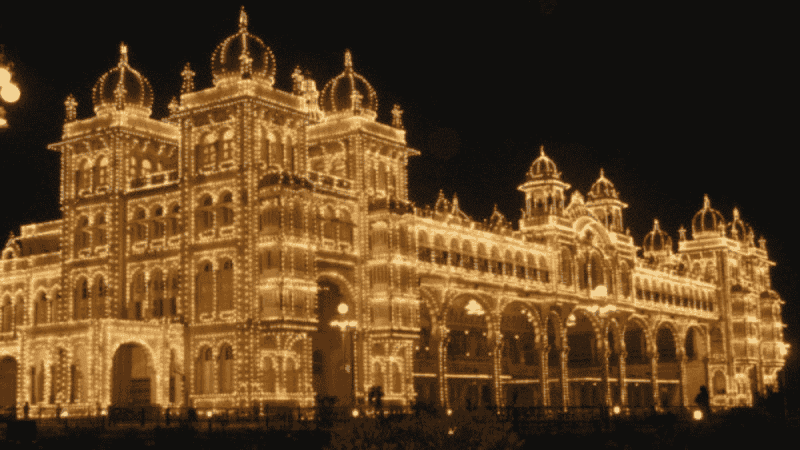
There is Dussehra, and then there is Dussehra in India, where the same festival can mean a royal procession in Karnataka, a gathering of hundreds of village deities in Himachal Pradesh or a 75-day celebration in Chhattisgarh where nobody burns Ravan. The geography changes, the rituals change, and sometimes even the story behind the festivities does. If you’re looking for an excuse to plan a festive getaway, skip the usual checklist of places to visit and build your trip around a celebration instead.
Dussehra In India: 10 Unique Celebrations
1. Kullu Dussehra, Himachal Pradesh

Imagine hundreds of elaborately decorated palanquins arriving in a valley, accompanied by traditional musicians, to pay their respects to one presiding deity. That’s Kullu Dussehra for you. More than 300 local deities, known as devtas, traditionally participate in the celebrations at Dhalpur Maidan.
The festival’s history dates back to the 17th century, when Raja Jagat Singh established the worship of Lord Raghunath in Kullu. Unlike most parts of India, where Dussehra marks the end of the festivities, Kullu begins its week-long celebration on Vijayadashami.
Also Read: Why Is Sendha Namak Eaten Instead Of Regular Salt During Navratri Fasts?
2. Bastar Dussehra, Chhattisgarh
Here’s a Dussehra in India fact that might surprise anyone accustomed to giant effigies and fireworks: Bastar doesn’t burn Ravan. Its celebrations centre on Maa Danteshwari, regional deities and the distinctive traditions of Bastar’s tribal communities.
The festival lasts approximately 75 days, beginning with the Pat Jatra ritual and building towards its main celebrations in Jagdalpur. One of its most striking features is the elaborate wooden chariot procession, which forms part of a larger series of ceremonies rooted in the region’s religious and royal history.
3. Mysuru Dasara, Karnataka
Mysuru knows how to make an entrance. For Dasara, the city’s magnificent palace lights up, cultural performances take over public venues, and the streets prepare for the grand Jumboo Savari procession.
The celebration honours Goddess Chamundeshwari’s victory over Mahishasura and has been associated with Mysuru’s royal traditions since 1610. On Vijayadashami, the procession features the goddess’s idol carried in a golden howdah atop a decorated elephant, accompanied by performers, tableaux and musicians.
4. Kota Dussehra Mela, Rajasthan
If your favourite part of a festival is the atmosphere around the main event, Kota is worth considering. Its Dussehra Mela combines the familiar spectacle of Ravan Dahan with a sprawling fair featuring food stalls, local markets, folk performances and cultural evenings.
The fair’s history goes back to 1723, during the reign of Mahrao Durjanshal Singh Hada. Over the centuries, it grew from royal and religious ceremonies into a major public celebration. The towering effigies of Ravan, Kumbhakarna and Meghnad remain the main attraction, drawing large crowds to Dussehra Ground.
5. Ramnagar Ramlila, Uttar Pradesh
Forget booking a seat in a theatre. At Ramnagar, across the Ganga from Varanasi, the town itself becomes the stage for the Ramayana.
The celebrated Ramlila unfolds over approximately 31 days, with different locations representing places such as Ayodhya, Janakpur, Chitrakoot and Lanka. Rather than watching the entire story from one spot, audiences follow the action as the performances move between locations. The tradition is recognised by UNESCO as part of India’s intangible cultural heritage of Ramlila.
6. Kulasekarapattinam Dasara, Tamil Nadu
At Kulasekarapattinam, in Tamil Nadu’s Thoothukudi district, devotees don’t simply turn up to watch the festival. Many become part of it.
The 12-day Dasara celebration at the Mutharamman Temple involves fasting, elaborate processions and devotees dressing as deities and other mythological figures. Some portray Goddess Kali, while others take on different characters associated with the festival. The goddess is carried in processions on different vahanams, or ceremonial mounts.
Also Read: Navratri 2026: 8 Temples In Mumbai To Seek Goddess Durga’s Blessings This Festive Season
7. Kolkata’s Vijaya Dashami, West Bengal
Kolkata’s Dussehra story revolves around Goddess Durga rather than Ravan. After several days of elaborate pandals, dhak performances, bhog and late-night pandal-hopping, Vijaya Dashami marks the emotional farewell to the goddess.
At many pandals, married women participate in sindoor khela, applying vermilion to the goddess and one another before the idols are carried away for immersion. Processions fill the streets, and the festive mood gradually gives way to the bittersweet feeling of saying goodbye until next year.
8. Proddatur Dussehra, Andhra Pradesh
Proddatur’s Dussehra is sometimes called the “Second Mysore”, and the comparison gives you an idea of the scale of its celebrations. The festival centres on the Sri Vasavi Kanyaka Parameswari Temple, where the goddess receives elaborate daily adornments during Navratri.
The grand finale is the Thotti Meravani, a procession in which the goddess is taken through town alongside deities from more than 20 other temples. The celebrations combine temple rituals, a local fair and a strong sense of community participation.
9. Devaraguttu Banni Festival, Andhra Pradesh
This is one for travellers who want to understand just how varied Vijayadashami traditions can be. At Devaraguttu, the Banni Festival centres on the local tradition associated with Lord Mala Malleswara Swamy and the defeat of the demons Mani and Mallasura.
Its best-known ritual, Banni Utsavam, involves participants from surrounding villages engaging in a traditional stick-fighting ceremony. The event takes place around Dussehra and is deeply rooted in local religious belief.
10. Songadh Fort Dussehra Fair, Gujarat
For a Dussehra in India outing that combines a little history with a local fair, head to Songadh Fort in Gujarat. The historic fort, associated with the Gaikwad era, houses a temple dedicated to Mahakali Mata and draws visitors for its annual Dussehra gathering.
The fair brings together local and tribal communities, with food stalls, toy sellers and handicraft vendors setting up around the fort and its foothills. Reaching the temple involves a hike, so the journey becomes part of the experience rather than just a means of getting to the celebration.
Dussehra in India celebrations don’t fit neatly into one itinerary or even one interpretation of the festival. You can spend a day watching a giant effigy burn, follow the Ramayana through an entire town, or find yourself among hundreds of palanquins in a Himalayan valley. Choose the celebration that speaks to you, check the local calendar before booking, and leave room in your itinerary for the unexpected. That’s often where the best Dusshera in India travel stories begin.
Cover Image Courtesy: Wikimedia Commons
FAQs
Which are the best places to celebrate Dussehra in India?
Kullu, Bastar, Mysuru, Kota, Ramnagar, Kulasekarapattinam, Kolkata, Proddatur, Devaraguttu and Songadh offer distinctive Dussehra celebrations rooted in local traditions.
Which place in India celebrates Dussehra for 75 days?
Bastar in Chhattisgarh is famous for its approximately 75-day Dussehra celebration, which centres on Maa Danteshwari and the traditions of local tribal communities.
Where is Dussehra celebrated without burning Ravan?
Bastar Dussehra in Chhattisgarh does not centre on burning Ravan's effigy. Instead, its rituals focus on regional deities, Maa Danteshwari and the area's distinctive cultural heritage.