

Everyone knows the Red Fort ceremony. It’s the image that appears on television every 15 August, the one that has become shorthand for Independence Day itself. But if you travel across India during the week of Independence Day, you discover something much more interesting. There are towns where people begin decorating streets days in advance. There are grounds where grandparents point to the exact spot where the Tricolour was first unfurled in 1947. If you’ve only experienced Independence Day through a school function or a television broadcast, these places show a very different side of the Tricolour.
Best Tricolour Ceremonies To Witness In India
1. Red Fort, Delhi: where the tradition began

The ceremony at the Red Fort is the closest thing India has to a national ritual. On 15 August 1947, Jawaharlal Nehru raised the Tricolour here, and the ceremony has continued every year since. The fort changes character on Independence Day morning. The area around Chandni Chowk fills with security personnel, schoolchildren, performers, journalists, and people who simply want to be close to the moment.
2. Gandhi Maidan, Patna: Bihar’s public festival of freedom
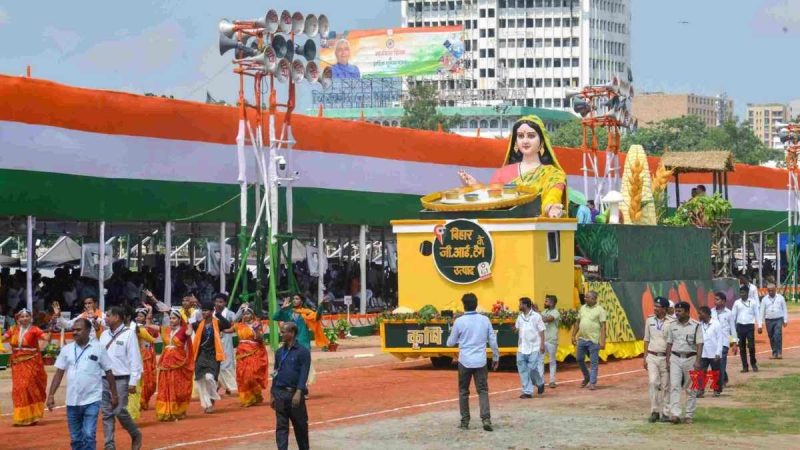
Patna’s Gandhi Maidan has a very different energy. The official flag hoisting is important, but the celebrations don’t end there. Families arrive early, schools organise performances, cultural groups take over the grounds, and the entire space begins to feel like a citywide gathering.
The Maidan is very much tied to the freedom movement, particularly the memory of the Quit India Movement and the martyrs commemorated nearby. That historical connection is why the ceremony still draws people who are not attending out of obligation. They come because it is part of the city’s memory.
Also Read: 15 Independence Day Menus Across India To Eat Your Way Through The Long Weekend
3. Kolkata: where the flag has a longer history than Independence
Kolkata’s relationship with the Indian flag is unusually old. One of the earliest versions of a national flag was hoisted here in 1906, decades before Independence. That history still echoes through the city’s Independence Day celebrations.
In many neighbourhoods, local clubs organise elaborate flag ceremonies, patriotic theatre, music performances, and community meals. The celebrations feel intensely local. Streets are decorated by residents themselves, children participate in cultural programmes, and the day often resembles a neighbourhood festival rather than a formal civic event.
4. Fort St. George, Chennai: a colonial fort reclaimed
There is something very powerful about watching the Tricolour fly over Fort St. George. This was once one of the most important centres of British administration in South India. After Independence, the annual flag hoisting transformed the meaning of the space itself.
The ceremony combines military honours with Tamil cultural performances, which gives it a distinctly regional identity. It is not simply a replication of the Delhi ceremony. It is Chennai’s own Independence Day tradition, shaped by local history and culture.
Also Read: Chocolate Wheel To Gilli Biryani: 5 Food Trends Chennai Is Gatekeeping From Rest Of India
5. August Kranti Maidan, Mumbai: where freedom was demanded
Before it became a site of Independence Day celebrations, this ground was already famous. In August 1942, the Quit India Movement was launched here, making it one of the most significant political sites in modern Indian history.
The celebrations remain closely connected to that legacy. Veterans, students, cultural organisations, and local residents gather not only to celebrate Independence but also to remember the movement that pushed the freedom struggle into its final phase. The atmosphere is less ceremonial and more participatory, with public performances and commemorative events continuing through the day.
6. Hussainiwala, Punjab: the border ceremony that stays with you
Few Independence Day ceremonies are as emotionally charged as the one at Hussainiwala. Located near the India-Pakistan border, the memorial is associated with Bhagat Singh, Rajguru, and Sukhdev.
The flag hoisting is accompanied by military honours, patriotic songs, and large crowds who travel specifically to pay tribute to the martyrs. The border setting changes the mood completely. Celebration and remembrance exist side by side. People cheer, sing, and wave flags, but they are also standing at a place marked by sacrifice.
Also Read: In Pics: Mumbai Airport Marks India’s 80th Independence Day With Stunning Tricolour Lighting
7. Nadia, West Bengal: the Independence Day that happens on a different date
The most unusual tradition on this list comes from parts of Nadia district. Some communities here celebrate Independence Day on 17 and 18 August instead of 15 August.
The reason goes back to 1947. The district’s final boundary with Pakistan was clarified only after Independence had officially been declared. For many residents, the moment they actually became part of India came later. Instead of abandoning that memory, they preserved it.
The celebrations include flag hoisting, processions, cultural programmes, and community gatherings, but they also preserve a historical reality that is often forgotten: Independence and Partition did not unfold in the same way everywhere.
Also Read: Independence Day 2026: For First Time, Vande Mataram To Be Sung Before National Anthem At Red Fort
The Red Fort may remain the national symbol of Independence Day, but these ceremonies reveal something equally important. India did not begin in one place on one morning. It was celebrated, argued over, mourned, and embraced across hundreds of towns and cities, each with its own story. Some of those stories are still being told every August, one flag at a time.
Cover Image Courtesy: shahnuma/X
FAQs
Which is the most famous Independence Day flag hoisting ceremony in India?
The Red Fort Independence Day ceremony in Delhi is the most famous and is attended by the Prime Minister, military personnel, students, and dignitaries every year.
What are the best places to celebrate Independence Day in India?
Some of the best places include Red Fort in Delhi, Gandhi Maidan in Patna, August Kranti Maidan in Mumbai, Fort St. George in Chennai, and Hussainiwala in Punjab.
Why is Hussainiwala important on Independence Day?
Hussainiwala is associated with Bhagat Singh, Rajguru, and Sukhdev, making it one of the most emotional and historically significant Independence Day celebration sites in India.