

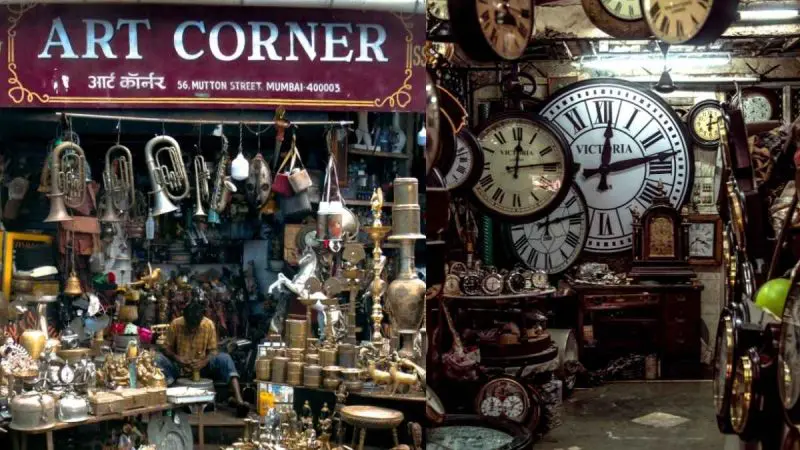
Mumbai has no shortage of places with names that sound like they belong in a crime thriller. But Chor Bazaar, tucked into the lanes around Mutton Street in Bhendi Bazaar, might have the best one. “Chor Bazaar” translates to “Thieves’ Market”. Naturally, this has fuelled the legend that stolen goods somehow find their way here. Except that isn’t really what the market is about. The bazaar has been around for roughly 150 years and is now known for antiques, vintage furniture, gramophones, cameras, clocks, old records, Bollywood posters and the kind of wonderfully random objects that make you wonder who owned them before you. But then, how did the name came into being?
It Might Have Been A Very Different Bazaar
The most popular explanation for the name is very innocent.
According to local lore, the market was once called Shor Bazaar, or the “noisy market”. Considering the relentless bargaining and general chaos of its lanes, this feels almost too accurate. The story goes that British residents struggled with “Shor” and the pronunciation eventually became “Chor”.
There are other versions, though, and none has been conclusively established as the definitive origin. So if you spot a headline confidently declaring that the British definitely renamed it, take that with a pinch of Mumbai street-side masala.
The Queen Victoria Story
One of the more cinematic legends claims that a violin belonging to Queen Victoria was stolen and eventually found its way to Chor Bazaar. It is a fantastic story, but it is also unverified.
And the version that says Victoria lost the violin during a visit to Bombay has one rather inconvenient flaw: Queen Victoria never visited India. The violin tale belongs firmly to the market’s folklore, not its documented history. Still, it has survived because Chor Bazaar is exactly the kind of place where such a story feels believable.
Also Read: The Flea Bazaar Cafe Launches In Mumbai For The Ultimate Binge, Shop & Entertainment Destination
Bollywood Found Its Own Treasure Chest Here: Chor Bazaar
The market’s actual cultural significance is far more interesting than the theft rumours. Film productions have sourced furniture, posters, lamps and vintage objects from its shops to recreate another era without making everything look artificially “vintage”. Raees and Bombay Velvet are among the films reported to have sourced objects from the area.
Then there are businesses such as Dadabhai & Sons, which traces its history to 1904. The family business moved from furniture trading into film props and, eventually, antique restoration. Some of the objects being restored today are practically pieces of Mumbai’s industrial history themselves.
Chor Bazaar has survived rumours, changing tastes and the internet. Its newest challenge is redevelopment. The wider Bhendi Bazaar neighbourhood is undergoing a major transformation, and parts of Mutton Street have already been affected. Some established businesses have moved into new premises while others continue operating amid the construction and change.
Also Read: Where To Celebrate Raksha Bandhan In Delhi, Mumbai & More: 15 Spots For A Sibling Feast
So, what happens when you modernise a place whose charm comes from being gloriously unmodern? Because Chor Bazaar isn’t memorable simply for what sits inside its shops. It is the rummaging, the bargaining, the clutter and that tiny thrill of finding something you weren’t looking for.
Cover Image Courtesy: Wikipedia
FAQs
Why is Chor Bazaar in Mumbai called Chor Bazaar?
The exact origin is unclear. One popular theory says it was originally called “Shor Bazaar”, meaning noisy market, and the name gradually became Chor Bazaar.