

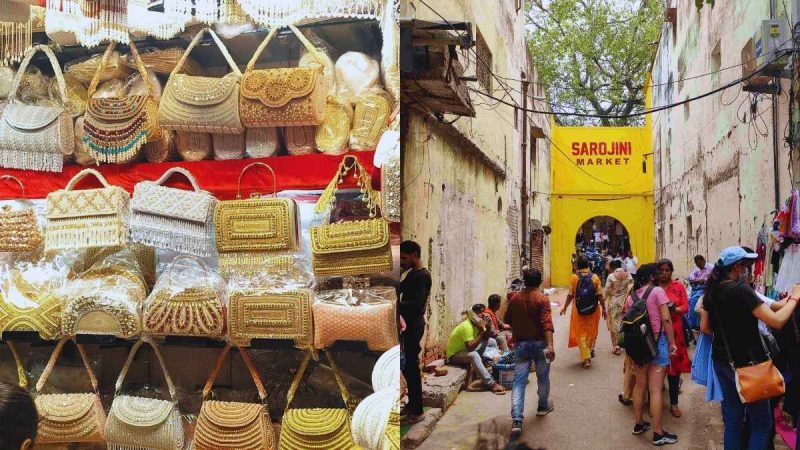
₹200 in Delhi doesn’t feel like loose change. It feels like a challenge. Folded once, maybe twice, sitting in your back pocket, it decides where you’ll eat, what you’ll wear, and how much patience you have to bargain. Delhi’s local markets were built for this amount, small notes, quick decisions and sharp eyes. Here’s what that ₹200 can actually turn into across the city’s most iconic bazaars.
₹200 In Delhi: How To Do Some Smart Shopping?
Chandni Chowk

In Old Delhi, ₹200 disappears fast, but in the best way. You can stand shoulder-to-shoulder at a crowded counter and eat a proper plate of chole bhature or stuffed parathas for under ₹150. Add a small portion of jalebi or rabri, and you’re still within budget. If you skip the sweet, you can even buy a tiny packet of whole spices or dried fruits to take home. It offers no aesthetic plating and maybe no seating comfort too, just hot food, fast service, and the feeling that your money worked overtime.
Sarojini Nagar
Sarojini doesn’t reward impulse buyers; it rewards people who walk, pause, and circle back. With ₹200, you’re not buying a haul, you’re buying one good piece. A trendy top, a cotton kurti, or a basic summer dress if you bargain hard enough. Accessories are easier, you get chunky earrings, hair clips, and sling belts, often between ₹50 and ₹150. Sellers will quote higher, they always do. The real price shows up only after you hesitate and start walking away.
Lajpat Nagar Central Market
Lajpat feels more organised, but don’t mistake that for expensive. ₹200 here usually lands you something small but polished like embroidered jhumkas, a printed cotton stole, a compact sling pouch, or a simple kurta top if you’re lucky. It’s the kind of market where details matter, so watch out for mirror work, stitching, and fabric feel. Bargaining exists, but be cautious. Push too hard, and you’ll lose the deal.
Janpath
Janpath is where ₹200 stretches sideways. Instead of one item, you leave with two or three. A beaded necklace, a cloth wallet, a stack of metal rings, or a hand-printed scarf – you get it all within budget if you buy from street stalls rather than shops. This is also where tourists and locals collide, which means prices fluctuate wildly. The trick is simple: never buy from the first stall you stop at. Walk ten steps and prices change.
Also Read: Delhi Metro Museum Now Open At Supreme Court Station; Check Tickets, Timings, & More
Paharganj
Paharganj runs on volume. With ₹200, you can buy two basic T-shirts, a pair of rubber slippers, or eat a full plate of rice, dal, and sabzi at a no-frills café and still afford chai. Some stalls even sell cheap footwear and bags starting around ₹100. Quality isn’t the selling point here, utility is. Everything is meant to be used, worn, and replaced without regret.
Karol Bagh
Karol Bagh rewards people who show up on the right day. On regular days, ₹200 buys socks, innerwear, or a simple T-shirt. During weekly street markets or seasonal sales, that same ₹200 can stretch to two or even three items, especially kids’ clothes or hosiery. This is a market where locals shop fast and with purpose. Follow them. If a stall is crowded, there’s a reason.
Also Read: For 1 Day Only, Taste Free Snacks From 16 Countries At Snack Transit In Delhi & Mumbai
Palika Bazaar, Connaught Place
Palika is happening, loud, and practical. ₹200 won’t buy you gadgets, but it will buy you accessories like phone cases, basic chargers, wired earphones, sunglasses, or novelty items. Every purchase here requires checking, so plug it in, try it on, and open the packet. Sellers expect this. What you’re paying for isn’t longevity; it’s immediate usefulness.
Why ₹200 Is Still Enough In Delhi
Delhi’s markets weren’t designed for swipe cards or round figures. They were built for negotiation, instinct, and cash folded small. ₹200 works because sellers understand it! They know how to break it into food, fabric, metal, plastic and fun.
Also Read: A Passenger Alleges Physical Assualt By Air India Express Pilot At Delhi Airport!
So…spend it slowly, ask questions and walk away once or twice. Whether you return with a full stomach, a new top, or a bag of mismatched earrings, ₹200 doesn’t leave you empty-handed here. It leaves you with proof that the city still knows how to sell generously and reasonably.
Cover Image Courtesy: sarojinimarket/GoogleBusiness and ajay4up/X
For more such snackable content, interesting discoveries and the latest updates on food, travel and experiences in your city, download the Curly Tales App. Download HERE.