

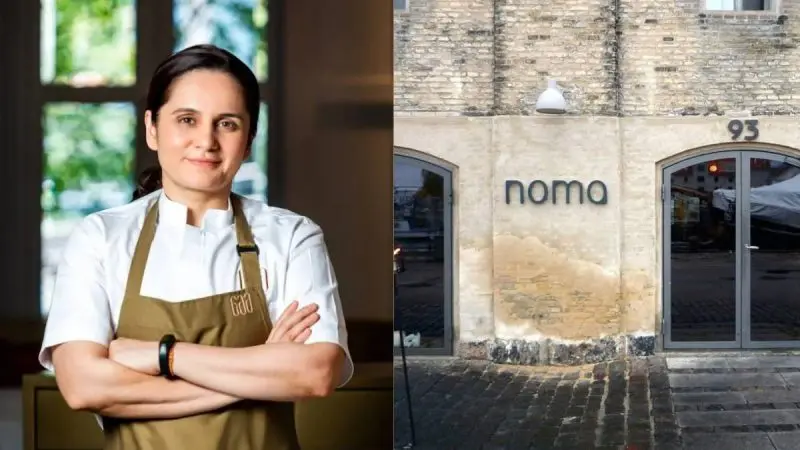
Long before she made her mark with Gaa in Bangkok, Chef Garima Arora found herself in one of the world’s most demanding kitchens: Noma in Copenhagen. On Table 1 with Vir Sanghvi, Chef Arora looked back at her journey from intern to full-time chef at the three-Michelin-starred restaurant and reflected on the pressure, discipline and mentorship that came with working there.
From Unpaid Internship To Chef
For Chef Garima Arora, her time at Noma in Copenhagen was more than just another chapter in her culinary career. It was an experience that shaped the way she looked at food, kitchens and herself as a chef. From arriving at the three-Michelin-starred restaurant as an intern to eventually earning a permanent position, Chef Arora’s journey at Noma was anything but ordinary.
In the upcoming episode of Table 1 with Vir Sanghvi, the chef behind Bangkok’s two-Michelin-starred Gaa opens up about those years and what it was really like working at one of the most influential restaurants in the world.
Her reflections come at a time when the culture of high-pressure professional kitchens is being questioned once again. A New York Times report detailed allegations from former Noma employees about mistreatment by founder René Redzepi. This included claims that physical abuse and public humiliation were part of the kitchen culture.
Against this backdrop, Chef Arora’s own account offers a different perspective on her experience at Noma.
Also Read: Michelin-Starred Chef Garima Arora Curates Royal Dinner For Thailand’s Princess Sirivannavari
Chef Garima Arora Recalls Her Noma Years
Garima Arora initially joined Noma as an unpaid intern in 2013. At the time, the Copenhagen restaurant was regarded as one of the most innovative kitchens in the world. It attracted chefs from across the globe who wanted to learn from Redzepi and his team. Noma’s staging system was famously competitive, with batches of interns coming in for short stints before moving on.
But for Chef Garima, what began as an internship eventually turned into a permanent position, with Redzepi offering her a full-time chef role. She went on to stay at Noma for around three years, an experience that she has spoken about positively in the past.
For her, the intensity was part of what made the experience so valuable. Working at that level demanded complete focus, discipline and resilience, and she understood what she was signing up for. Rather than looking back at the pressure as something she would avoid, she sees it as an important part of her growth as a chef.
During her conversation with Vir Sanghvi, Garima Arora shared that she never experienced any of the physical or verbal abuse that Chef René Redzepi has been accused of at Noma. In fact, she recalls being the only woman in the kitchen. She remembers Redzepi telling her to come to him if she ever felt even slightly uncomfortable. “I’ll take care of it,” he had reassured her.
“This is the René I know. This is the chef I know,” Chef Arora said, adding that despite being an unpaid intern at the time, she would still “do it a hundred times over.”
She did add that the Noma kitchen was tough, as is any kitchen of that level. She recalls facing more pressure from her colleagues than from Chef René Redzepi himself.
Let us know your thoughts on this in the comments.
Cover Image Courtesy: Instagram/arorgarima & Wikimedia Commons
FAQs
What did Chef Garima Arora say about her experience at Noma?
On Table 1 with Vir Sanghvi, Arora spoke candidly about her time at Noma, where she started as an unpaid intern before eventually becoming a full-time chef. She described the experience as tough but deeply formative and said she would do it “a hundred times over.”
Did Garima Arora experience physical or verbal abuse at Noma?
Chef Arora said that she did not experience the physical or verbal abuse that has been alleged by former Noma employees.
What did Garima Arora say about René Redzepi?
She recalled a supportive side of René Redzepi during her time at Noma. She said that as the only woman in the kitchen, Redzepi had told her to approach him if she ever felt uncomfortable, reassuring her, “I’ll take care of it.”