

Hindu culture has many festivals where devotees observe fasts. Some last a day, while others continue for longer. One such meaningful day is Sheetala Ashtami. On this day, devotees pray to Goddess Sheetala and seek her blessings for good health and protection from diseases.
When Is Sheetala Ashtami?
Sheetala Ashtami falls on the Ashtami Tithi (eighth day) of Krishna Paksha, which is the dark fortnight in the month of Chaitra according to the Hindu calendar. Many people also link this day with the time after Holi, as it usually comes about eight days after the festival.
According to Hindustan Hindi News, in several parts of North India, people call this day Basoda. You may also hear it being referred to as the festival of stale food, which might sound unusual at first, but it has an important tradition behind it.
In 2026, devotees will celebrate Sheetala Ashtami on March 11. According to the Hindu calendar, the Chaitra Krishna Ashtami Tithi begins on the evening of March 10, 2026, and continues until the evening of March 11, 2026. The Sheetala Ashtami Puja Muhurat will be from 06:36 AM to 06:27 PM.
Also Read: Will Non-Hindus Be Allowed In Kedarnath And Badrinath Temples?
Traditions Devotees Follow On This Day
What makes Sheetala Ashtami different from many other festivals is its unique ritual. On this day, families do not light the stove or any fire at home. Instead, they eat cold or stale food that they cooked the day before. This tradition is an important part of the festival. These often include sweet rice, rabri, puris, chana dal, and gudiyas (sweet puris). The next day, everyone eats the same food without reheating it, as part of the tradition and devotion connected with this festival.
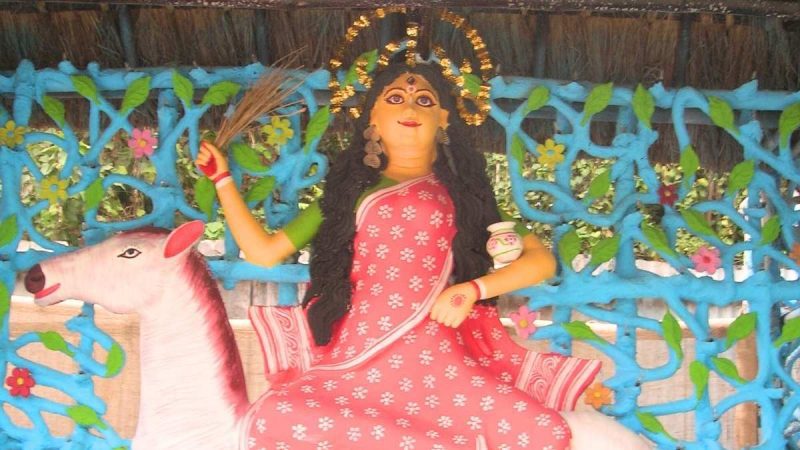
As per Hindustan Hindi News, devotees spend the day worshipping Goddess Sheetala, who is believed to protect people from infectious diseases. According to traditional beliefs, she guards families against illnesses like smallpox, measles, and fever. It is believed that Goddess Sheetala rides a donkey as her vehicle. She carries a broom in one hand and a pot of cool water in the other. The broom represents cleanliness and the removal of disease, while the pot of water stands for coolness and relief. Together, these symbols highlight the importance of hygiene and health.
Many devotees also believe that certain diseases spread more easily during the summer season. That is why people pray to Goddess Sheetala and ask for her protection during this time.
How excited are you to celebrate this day? Tell us in the comments below!
Also Read: France’s 1st Hindu Temple To Open In Paris, Featuring Handcrafted Stonework By Indian Artisans
Cover Image Courtesy: Wikimedia Commons/ Jonoikobangali