
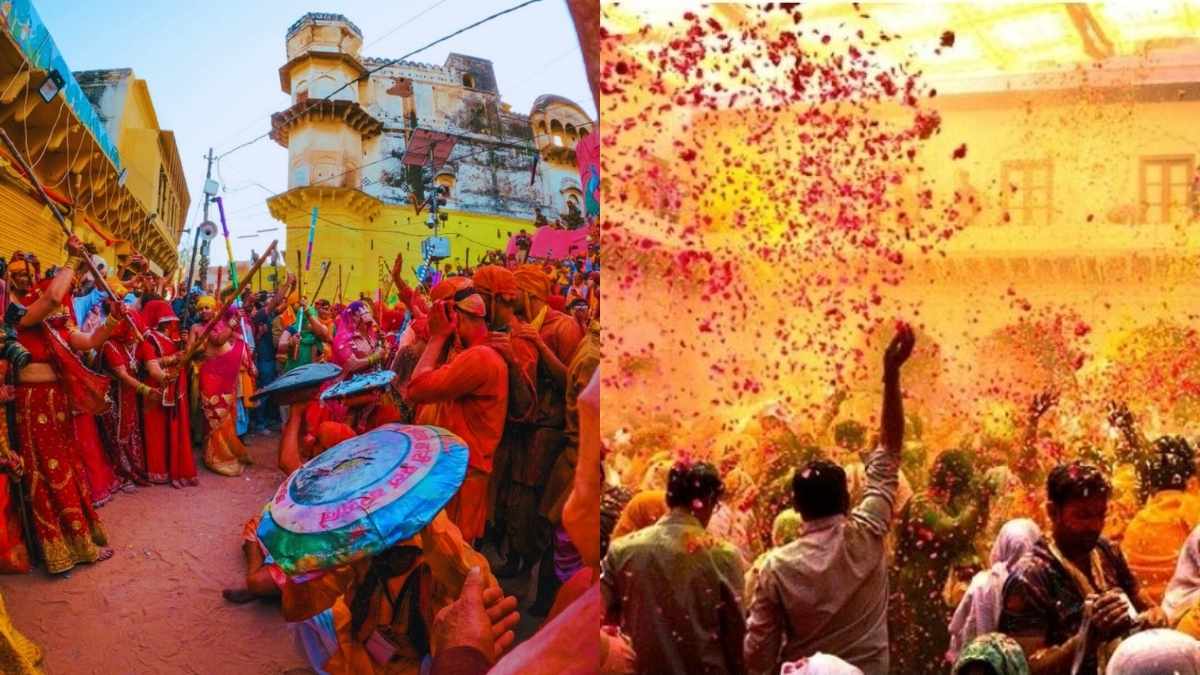



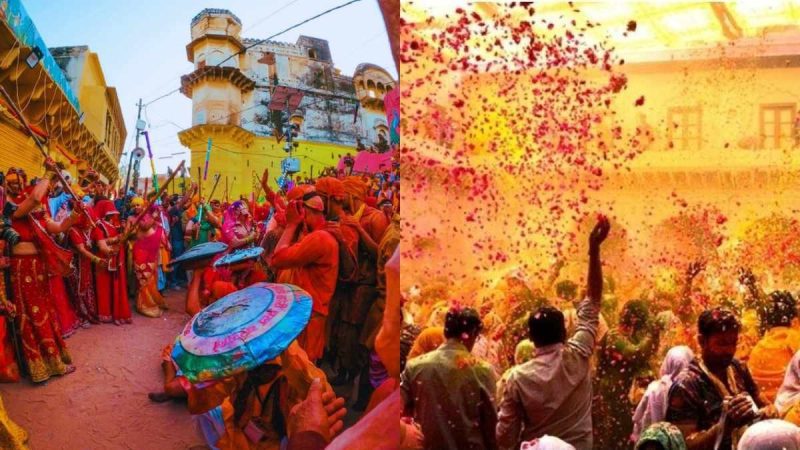
There’s a version of Holi most people know; it is powdered colour in the air, loud music, water balloons and sweets by noon. But travel across India in March and that singular image splinters into dozens of interpretations. In one town, women swing wooden sticks in ritual defiance, while in another, flower petals replace colour entirely! Elsewhere, warriors in indigo robes demonstrate combat drills instead of throwing gulal. If you want to understand Holi rather than simply attend it, these cities reveal how the same festival bends around mythology, politics, poetry, reform, and regional pride.
Which Are The BEST 10 Holi Cities To Have The Time Of Your Life?
1. Lathmar Holi: Mathura & Barsana, Uttar Pradesh
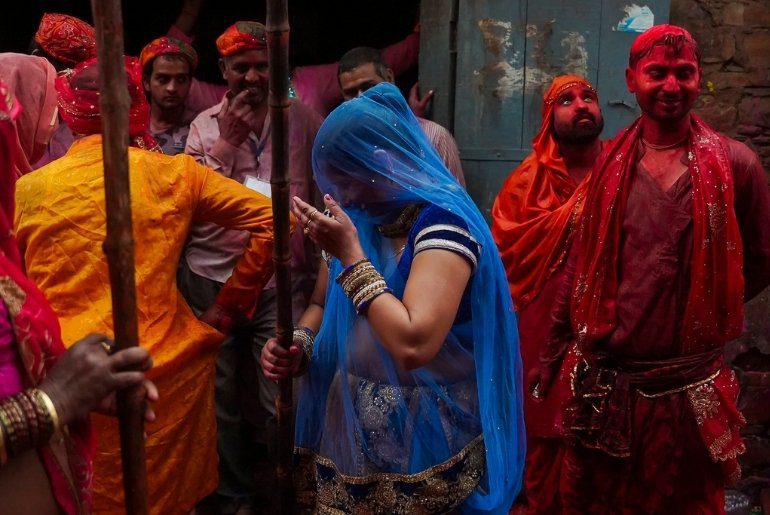
Arrive in Mathura a week before Holi, and you’ll notice the build-up long before colour touches skin. Temple loudspeakers carry devotional songs through the lanes, and pilgrims move between shrines. By the time celebrations reach Barsana, anticipation has hardened into choreography. On the main day of Lathmar Holi, men from Nandgaon enter Barsana’s narrow streets singing provocatively composed “Hori” songs. Women wait, armed with long wooden sticks. What follows looks chaotic from a distance but is deeply ritualised, as the men shield themselves while women strike in symbolic retaliation. It is supervised, timed, and rooted in inherited rhythm rather than aggression.
What’s Special About Holi Here: The ritual reenacts a story from Krishna lore. Tradition holds that Krishna travelled from Nandgaon to tease Radha and her companions in Barsana. In response, Radha and the gopis drove him away with sticks. That playful confrontation is replayed annually. Mathura, regarded as Krishna’s birthplace, and Barsana, identified as Radha’s village, frame the festival as living mythology.
Also Read: No More Full Toll On Incomplete Expressways! Here’s What The Govt Announced
2. Phoolon Ki Holi: Vrindavan, Uttar Pradesh
Vrindavan’s Holi is less like a street eruption and more an immersive devotional cycle. Days before the main festival, temples begin controlled celebrations. At Banke Bihari Temple, priests toss marigolds and rose petals onto packed crowds in a ritual known as Phoolon Ki Holi. The petals fall thick and fragrant, replacing gulal with something gentler. Bhajans run for hours, devotees sway, and colour is present, but reverence shapes the mood. Pilgrims often plan their travel around specific temple timings rather than peak party hours.
What’s Special About Holi Here: Vrindavan is believed to be where Krishna spent his childhood, and Holi is seen as an extension of his playful leelas with the gopis. The use of flowers aligns with Vaishnav devotional traditions that prioritise offering and surrender. In recent years, widows living in the town, once socially excluded from festive participation, have publicly played Holi, marking a subtle but powerful social shift within a deeply traditional space.
Also Read: Why Is Varanasi’s Most Indulgent Winter Mithai Called ‘Palang Tod’?
3. Hola Mohalla: Anandpur Sahib, Punjab
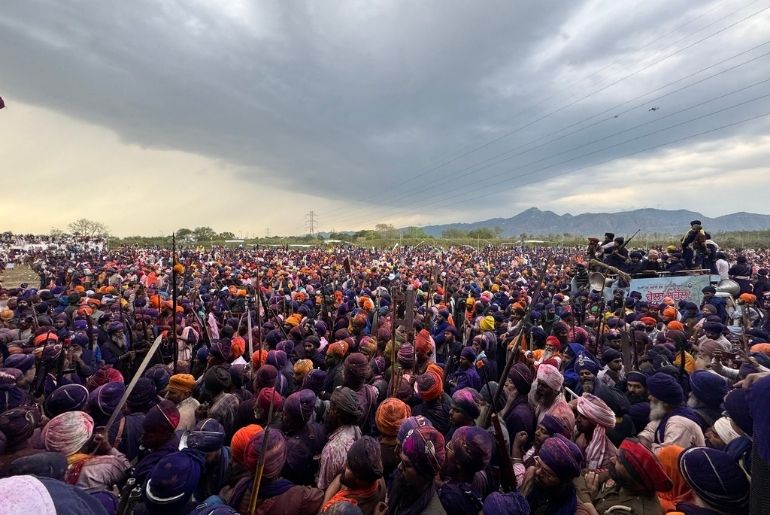
If you arrive expecting colour clouds, Anandpur Sahib will surprise you. The day after Holi, the town hosts Hola Mohalla, a Sikh festival established in 1701 by Guru Gobind Singh. It was not created for celebration in the carefree sense; it was structured as training. The grounds are filled with Nihang warriors in deep blue robes and towering turbans. Mock battles unfold, and Gatka martial arts displays draw serious attention. Horses rear and pivot in controlled demonstrations, and the energy, WOAH, it is very charged but disciplined too.
What’s Special About Holi Here: Guru Gobind Singh instituted Hola Mohalla during a period of political instability to prepare the Khalsa for combat readiness. Instead of indulgence, the emphasis was on resilience and unity. Over three centuries later, the martial core remains intact. It is perhaps the only Holi-adjacent festival in India where preparedness replaces playfulness as the central theme.
4. Basant Utsav: Shantiniketan, West Bengal
In Shantiniketan, Holi unfolds on a university campus rather than a temple courtyard or city street. Basant Utsav, introduced by Rabindranath Tagore at Visva-Bharati University, feels choreographed in the best possible way. Students wear yellow, which is the colour of spring. Rabindra Sangeet fills the open grounds, and dance performances precede the gentle application of colour. The atmosphere leans artistic, measured, and observant.
What’s Special About Holi Here: Tagore reframed Holi as a cultural welcome to spring rather than a chaotic colour exchange. His interpretation foregrounded poetry, music, and seasonal symbolism. Basant Utsav still follows that vision. It remains one of the few places where Holi is introduced through performance before participation.
5. Urban Event Holi: Delhi
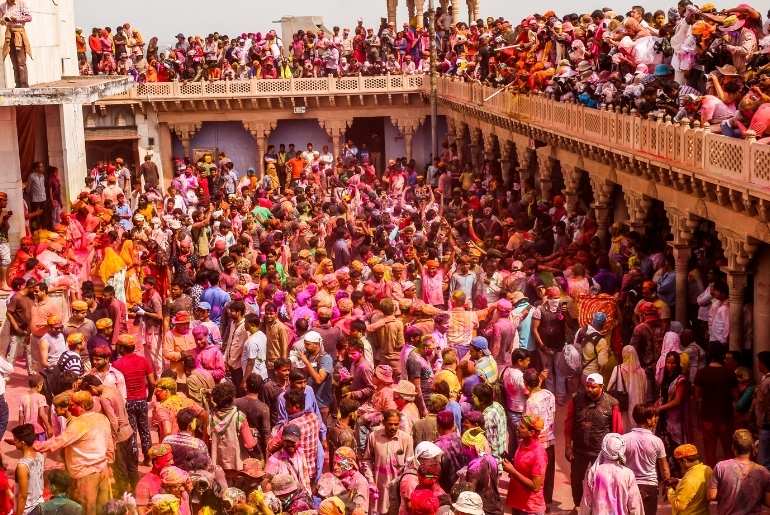
Delhi does not dilute tradition; it layers over it. Residential colonies still light Holika bonfires the night before. But on the main day, farmhouses on the city’s outskirts come alive with ticketed parties, as DJs take over and rain dance setups spray coloured water across packed dance floors.
What’s Special About Holi Here: Delhi demonstrates how festivals evolve in metropolitan ecosystems. Holi here has been repackaged as a music-driven social event without erasing its ritual origins. It is less about mythology and more about scale, sound, and urban identity.
Also Read: India Weather: Mumbai Fog Continues, Delhi AQI Improves To 197, Bengaluru To See Light Rain
6. Rang Panchami: Mumbai, Maharashtra
While Holi itself is widely celebrated in Mumbai, Rang Panchami, observed five days later, carries regional resonance in Maharashtra. Historically linked to the Peshwa era, Rang Panchami marked the public playing of colours after ritual observances concluded. In Mumbai today, housing societies and neighbourhood associations organise structured gatherings. Traditional sweets circulate, and the city’s celebration tends to be contained within community spaces rather than public sprawl.
What’s Special About Holi Here: Rang Panchami connects Maharashtra’s Holi to Maratha court traditions. Legends centre on Radha-Krishna’s playful colour-smearing in Vrindavan, signifying the merging of souls, or the honouring of Shiva reviving Kamadeva. The emphasis on playing with colour after religious rites reflects a layered observance sequence that dates back centuries. Mumbai blends that history with modern community living structures.
7. Royal Holi: Jaipur, Rajasthan
Jaipur’s Holi carries visual drama. Heritage hotels and the City Palace host curated celebrations featuring folk musicians, turban-tying rituals, and controlled colour play within palace courtyards. Though elephant processions were once part of the spectacle, contemporary celebrations focus more on cultural programming, though you may still see them at some of the celebrations. Visitors often encounter Holi framed against sandstone architecture and Rajasthani folk rhythms.
What’s Special About Holi Here: Jaipur reflects Rajput court traditions, where festivals were public yet regal. Holi was historically observed within palace complexes with ceremony and aesthetic flourish. That tone still shapes the city’s presentation of the festival today.
Also Read: Cola King’s Daughter Devyani Jaipuria Shares How She Opened Costa Coffee’s 1st Outlet In India
8. Manjal Kuli: Thrissur, Kerala
In Thrissur, Holi does not resemble North Indian scenes. Instead, Manjal Kuli involves the sprinkling of turmeric-infused water within temple settings and specific communities. Turmeric, valued for its auspicious and medicinal qualities, replaces synthetic colours. The celebration feels localised and ritual-focused rather than expansive.
What’s Special About Holi Here: Manjal Kuli reflects Kerala’s temple culture, where symbolism generates more love than celebration. Turmeric represents purification and prosperity, aligning the festival with regional ritual frameworks rather than pan-Indian colour play trends.
9. Dola Jatra: Puri, Odisha
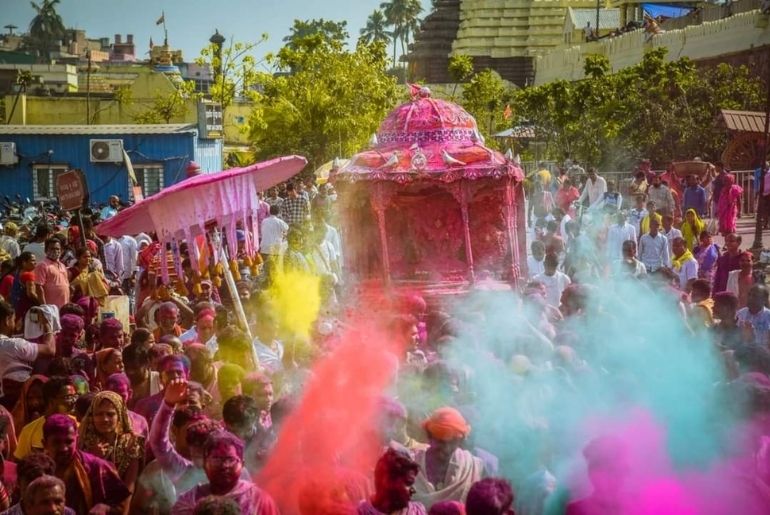
In Puri, Holi overlaps with Dola Jatra, a multi-day Vaishnav festival. Idols of Krishna are placed on decorated swings and taken in procession between temples. Colour application occurs in measured, devotional contexts rather than street-wide celebration. The pace is slower, but the emphasis remains ceremonial.
What’s Special About Holi Here: Dola Jatra integrates Holi into Odisha’s temple traditions, particularly those connected to Krishna worship. It is believed that on the full moon day of Phalguna, Krishna took Radha on a swing (Dola). Instead of focusing on community colour battles, the celebration revolves around deity processions and structured ritual performance.
Also Read: When Will Holi Be Celebrated This Year? Know Muhurat, Rituals & Significance!
10. Phaguwa: Patna, Bihar
In Patna and rural Bihar, Holi, locally called Phaguwa, leans heavily on folk music. Dholaks, harmoniums, and regional dialect songs carry the celebration forward. Groups gather to sing Phagua geet, which often mixes devotion with playful satire. The festival spills into village courtyards and urban neighbourhoods alike, stretching over more than a single day.
What’s Special About Holi Here: Phaguwa ties Holi to Bihar’s agrarian rhythms and oral traditions. Rather than hoopla, the centrepiece is song; it is often improvised and sometimes centuries old. The emphasis on collective singing keeps the celebration rooted in community.
Also Read: Haryanvi Khana, Bihari Swag & A Comic Love Story Ft. Shreya Priyam Roy & Onkar Yadav
Holi refuses to stay singular. In Mathura, it performs mythology, in Punjab, it demonstrates discipline, in Bengal, it sings, and in Bihar, it improvises. Each city reshapes the festival around its own history and temperament.
Cover Image Courtesy: talesofkrishna/X and akashsingh_eth/X
For more such snackable content, interesting discoveries and the latest updates on food, travel and experiences in your city, download the Curly Tales App. Download HERE. First Published: February 27, 2026 5:39 PMFAQs
Where is Lathmar Holi celebrated?
Lathmar Holi is celebrated in Barsana and Mathura, Uttar Pradesh.
What is special about Hola Mohalla in Punjab?
Hola Mohalla in Anandpur Sahib features Sikh martial arts displays and mock battles instead of colour play.
What is Rang Panchami and where is it celebrated?
Rang Panchami is observed five days after Holi and is popular in Maharashtra, including Mumbai.
How is Holi celebrated differently in South India?
In Thrissur, Kerala, Holi is observed as Manjal Kuli, where turmeric water is used instead of coloured powders.