
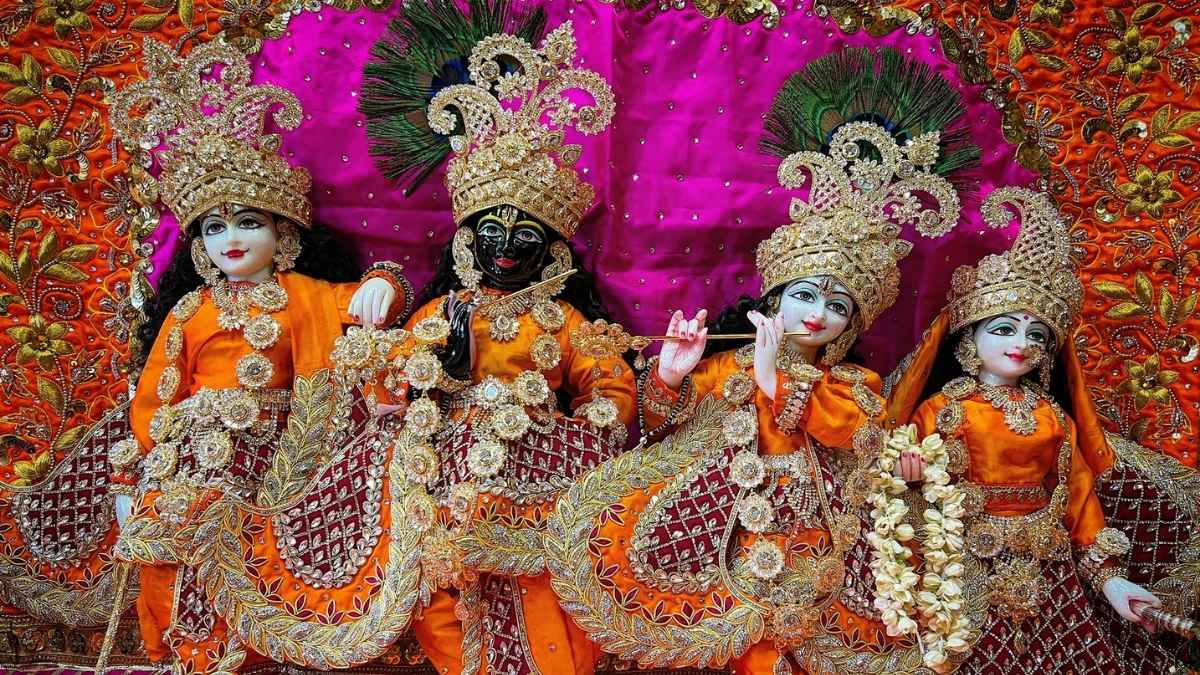

There is a sweet kind of madness and chaos that follows a very important birth. The baby arrives, relatives appear from nowhere, someone starts distributing sweets, the house fills with music and suddenly the entire neighbourhood has an opinion about how adorable the child is. Nandotsav, celebrated after Krishna Janmashtami, is essentially that feeling on a much larger, deeply devotional scale. While Janmashtami marks Krishna’s birth and is associated with the midnight hour, Nandotsav celebrates the jubilation that followed Krishna’s arrival in Gokul. The festival is especially associated with Gokul and Nandgaon in Braj, places deeply connected with Krishna’s childhood. Even today, Gokul draws devotees during both Janmashtami and Nandotsav.
Nandotsav Is Basically The Morning-After Celebration
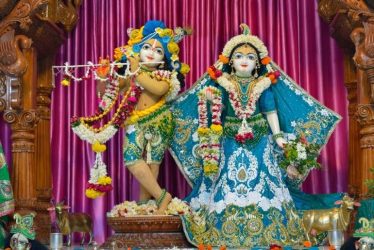
The name comes from Nanda Maharaja, Krishna’s foster father, whose home becomes the centre of the festivities in the traditional story. The Srimad Bhagavatam describes Nanda as overwhelmed with happiness after Krishna appears as his son. He bathes, dresses appropriately, invites learned Brahmins, has auspicious Vedic hymns recited and arranges the child’s birth ceremony. This celebration is traditionally known as Nandotsav.
Also Read: Janmashtami 2026: 8 Trips In India For An Unforgettable Midnight Celebration Of Lord Krishnas Birth
But Krishna Was Actually Born In Mathura
Krishna’s birth takes place in Mathura to Devaki and Vasudeva, who are imprisoned by Kansa. After his birth, Vasudeva carries the infant to Gokul, where Krishna is raised by Nanda Maharaja and Yashoda.
This makes Nandotsav particularly fascinating because the celebration is rooted in Krishna’s life in Gokul, rather than simply the circumstances of his birth in Mathura. Gokul becomes the world of Krishna’s childhood: cows, cowherds, butter, milk, mischievous adventures and the people who know him not merely as a divine figure but as the little boy growing up among them.
Nanda Did Not Exactly Throw A Small Family Party
According to the Bhagavatam, Nanda’s happiness quickly becomes everybody’s business, in the best possible way. The celebration involves Vedic rituals, music and gifts, while people from the wider community arrive dressed in their finest clothes and ornaments.
Nanda gives clothing, ornaments and cows in charity, and people from different professions are also honoured. One passage describes Nanda giving two million decorated cows and seven hills of grain in charity, a detail that gives you a fairly good idea of the scale of the festivities described in the text.
Also Read: From Goa To Bali, Where Are Indians Heading For Rakshabandhan And Janmashtami Long Weekends?
And Then Someone Apparently Decided Milk Was A Party Prop
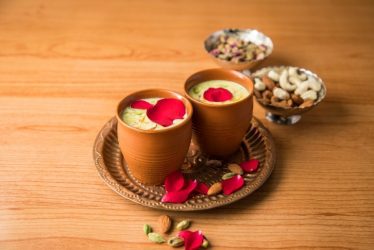
This is possibly the most fun detail about Nandotsav. The Bhagavatam describes the cowherd men celebrating by splashing one another with curd, milk, butter and water. Butter is thrown and smeared. Nobody appears particularly concerned about keeping their clothes clean.
The women also participate in playful celebrations involving mixtures of turmeric, oil, yogurt, milk and water. It sounds like a dairy-themed food fight, except it is rooted in the culture of Vraja and the community’s close relationship with cows and milk products.
Why All The Milk And Butter?
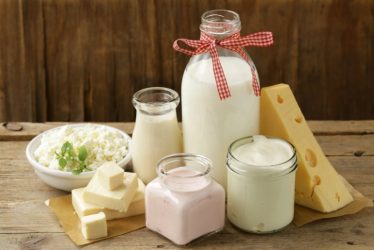
Because dairy was not some random aesthetic choice added to make Krishna celebrations look cute. It belongs to the world of Krishna’s childhood. Gokul is traditionally said to be a pastoral settlement where cattle, milk and milk products were central to everyday life. Krishna’s childhood stories are packed with references to butter, curd and milk, most famously his legendary butter-stealing escapades.
So when these foods become part of Nandotsav, they connect the celebration to the world in which Krishna is believed to have grown up. The butter is not just butter. It is practically part of the supporting cast.
Also Read: Why Do People Fast On Janmashtami? What Actually Goes On The Vrat Thali
What Does Nandotsav Look Like In Braj Today?
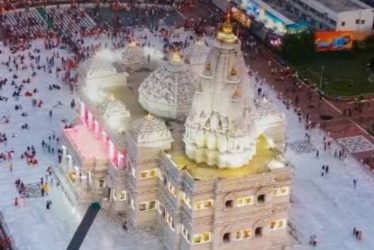
Head to Braj around Krishna’s birth celebrations and the atmosphere is anything but quiet. Mathura, Vrindavan, Gokul, Nandgaon, Barsana and Govardhan become part of the wider Janmashtami festivities, with temples decorated with flowers and lights, devotional singing, performances and elaborate depictions of episodes from Krishna’s life.
Gokul, in particular, is closely associated with Krishna’s childhood and becomes especially crowded during Janmashtami and Nandotsav.
The modern celebrations naturally vary between temples and communities, but the ingredients remain familiar: worship, music, food, crowds and an almost infectious sense that Krishna’s arrival is everyone’s reason to celebrate.
So, Is Nandotsav Just Another Name For Janmashtami?
Not exactly, although the two are so closely connected that the distinction can become blurry in popular usage. Janmashtami focuses on Krishna’s birth and traditionally reaches its peak around midnight, the sacred hour associated with his appearance.
Nandotsav follows the birth celebration and centres on Nanda’s joy and the festivities in Gokul. Some devotional traditions use overlapping terminology, but the distinction is useful for understanding the sequence: first, Krishna is born; then Nanda celebrates.
Perhaps the most charming thing about Nandotsav is that it takes an enormous religious story and gives it an intimate, almost domestic centre. There is Nanda, thrilled about his son. There is Yashoda, surrounded by guests. There are musicians, decorated cows, gifts, food and people turning up to congratulate the family. There is butter flying through the air because apparently that is what happens when everyone in Gokul gets extremely excited.
Also Read: Why Are Cucumbers Cut At Midnight On Janmashtami?
Beyond the rituals, Nandotsav remembers Krishna through the happiness he inspires in the people around him. Janmashtami is the night of his arrival. Nandotsav is the morning when the whole of Gokul wakes up and says, in its own wonderfully chaotic way, the baby is here. Let’s celebrate.
Cover Image Courtesy: anujghai/X
FAQs
What is Nandotsav?
Nandotsav is a festival celebrating the joy and festivities that followed Krishna’s birth, particularly the celebrations associated with Nanda Maharaja and Gokul.
Is Nandotsav the same as Janmashtami?
No. Janmashtami commemorates Krishna’s birth, while Nandotsav traditionally follows it and celebrates the happiness surrounding his arrival in Gokul.
Where is Nandotsav mainly celebrated?
Nandotsav is particularly associated with Gokul and Nandgaon in the Braj region, which are closely connected with Krishna’s childhood.
Why are milk, curd and butter associated with Nandotsav?
Dairy products reflect the pastoral world of Gokul and Krishna’s childhood stories, where cows, milk, curd and butter play an important role.


