

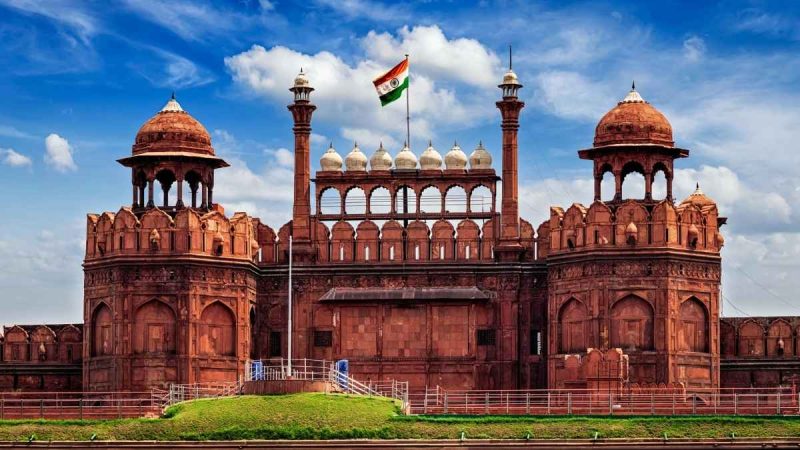
Every year, 26 January arrives with clockwork precision. We wake up to the same visuals of tanks rolling down Kartavya Path, schoolchildren waving flags and anchors reminding us that India is a republic. It’s familiar to the point of predictability. And yet, Republic Day is far more layered than the version we see on television. It wasn’t shaped by grand gestures alone, but by careful choices, pauses, compromises, and moments that history tends to rush past. If you slow down and look closely, the day carries stories that feel almost accidental and deeply enlightening. Here are 10 Republic Day facts that you need to know.
10 Republic Day Facts That Will Make The Celebration More Meaningful
1. Republic Day Was Chosen For Its Ideological Weight
Take the date itself. India could have become a republic on 26 November 1949, when the Constitution was formally adopted. That would have been the neat and legal thing to do. Instead, the leadership waited. They deliberately chose 26 January to echo a far more defiant moment, the 1930 declaration of Purna Swaraj. Long before independence became a reality, Indians had already claimed it in principle. By aligning the republic with that declaration, the Constitution was tied not just to law, but to resistance and memory.
Also Read: Republic Day Gets A Mindful Upgrade With Gracia Cero, A Zero-Alcohol Agave Drink
2. The First Republic Day Parade Was Not At Rajpath
Even the parade, now treated as a sacred ritual, began modestly. The first Republic Day parade in 1950 did not march down Rajpath. It took place at Irwin Stadium, a space far less symbolic than the ceremonial avenue we now associate with national power. Rajpath became the permanent venue only later, once the republic began to understand the value of spectacle as a language of unity.
3. India Still Had A Governor-General On Republic Day
The transition itself was surprisingly gentle. On paper, India became a republic in 1950. In practice, colonial structures didn’t vanish overnight. C. Rajagopalachari continued briefly as Governor-General even after Dr Rajendra Prasad took the oath as President. It’s an awkward overlap, rarely mentioned, but deeply revealing. India didn’t tear down its administrative house and rebuild from scratch. It was renovated carefully, room by room.
4. The Constitution Was Handwritten, Not Printed

Then there is the Constitution, often praised but rarely seen. The original document wasn’t typed, printed, or mass-produced. It was handwritten, patiently, by Prem Behari Narain Raizada. Each page carries decorative elements, borders, and illustrations. It’s not just a governing text; it’s a physical object made with intention and reverence. In a time obsessed with speed, the Constitution was born slowly.
Also Read: Goa & Dubai Lead Republic Day Long Weekend Searches By 115%; Pondicherry, Udaipur In Demand
5. The Original Constitution Is Preserved Using Helium
Preserving it required equal care. The original copies are stored in helium-filled cases inside Parliament. Helium, being inert, prevents oxidation and reduces fire risk. It’s an oddly poetic detail, but the republic’s foundations are floating, quite literally, in a protective bubble. Most people celebrating Republic Day have no idea the document they honour is preserved with such scientific precision.
6. Republic Day Celebrations Were Skipped In 1952
Republic Day itself has not always been uninterrupted. In 1952, formal celebrations were skipped following the death of King George VI. Even as a sovereign republic, India chose diplomatic restraint over festivity. It’s a reminder that independence did not immediately sever emotional or political ties with the Commonwealth. The early republic was cautious, almost understated, in how it positioned itself globally.
Also Read: 8 Beach Trips Under ₹15,000 Perfect For This Republic Day Long Weekend
7. The Parade Has Been Altered Due To Weather
The parade, often assumed to be immovable, has bent to reality, too. In 1971, extreme weather conditions forced a significant scaling down of celebrations. That decision rarely makes it into trivia lists, but it is significant. It shows that the republic, at least once, prioritised safety and practicality over ceremony, a choice that feels refreshingly human.
8. Foreign Chief Guests Were Not Always Invited
Another assumption we carry is that Republic Day has always been outward-facing, marked by foreign dignitaries and diplomatic theatre. In truth, the tradition of inviting a Chief Guest took time to stabilise. In the early years, India often chose not to invite anyone at all. The nation was busy figuring itself out economically, politically and socially. Global symbolism came later.
9. Beating Retreat Has Colonial Roots
Even the Beating Retreat ceremony, now seen as solemn and uniquely Indian, carries colonial fingerprints. Its origins lie in British military tradition, signalling the end of the day’s duties. India retained the format but reshaped its spirit, blending Indian compositions with Western instruments.
10. India Did Not Change Its Flag After Becoming A Republic
Perhaps the most quietly radical choice of all was not changing the flag. Many nations adopt new symbols after major political shifts, but India didn’t. The tricolour that rose in 1947 continued to fly in 1950. The message was subtle but firm: the republic was not a break from the freedom struggle, it was its completion.
Seen this way, Republic Day stops being a fixed spectacle and starts feeling like a conversation across time. A series of decisions that favoured patriotism, symbolism, honesty and patience over urgency. Behind the marching boots and rehearsed salutes lies a republic that grew into itself carefully, sometimes hesitantly, but always deliberately.
Also Read: 500-YO Forts To Royal Palaces, 9 Heritage Properties To Book This Republic Day Long Weekend
Remembering these lesser-known moments doesn’t make Republic Day less grand; it makes it more honest. It reminds us that nations, like people, are shaped as much by what they choose not to do as by what they proudly put on display.
Cover Image Courtesy: dmitryrukhlenko/canvapro
For more such snackable content, interesting discoveries and the latest updates on food, travel and experiences in your city, download the Curly Tales App. Download HERE.