

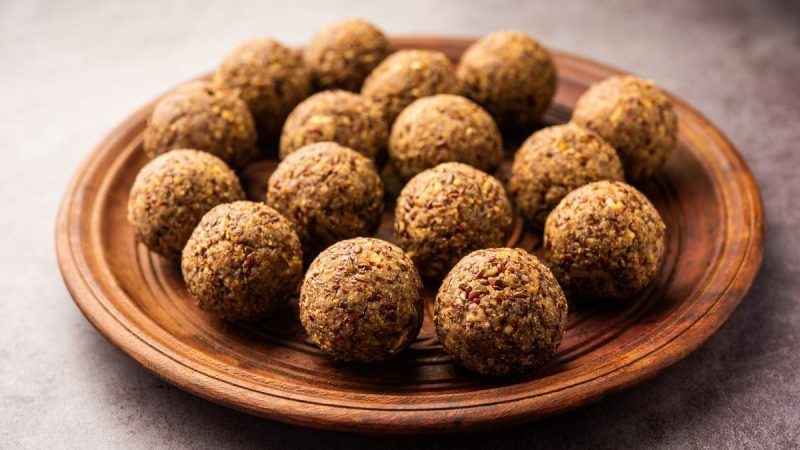
Winter in North India announces itself quietly through foggy mornings, woollen shawls, and the unmistakable smell of ghee slowly warming in home kitchens. Among the many foods that define this season, Pinni holds a deeply emotional place. It is not sophisticated, syrupy, or ornate. Instead, it is sturdy, comforting, and purposeful, exactly the kind of sweet the cold months demand. Learn how to make it as its most authentic and delicious self.
The Soul Of A Punjabi Winter: Pinni Recipe
Pinni is a traditional Punjabi winter sweet made primarily with whole wheat flour, desi ghee, jaggery or sugar, and generous amounts of dry fruits. Dense in texture and earthy in flavour, it is rolled by hand into rough, imperfect rounds. No two pinnis ever look exactly the same, and that is part of their charm. Unlike festive sweets meant for pure hogging, pinni was created with nourishment in mind. One piece is enough to keep you full, warm, and energised.
Its strongest cultural presence is felt around Lohri, the harvest festival celebrated in January. On Lohri, Pinni is prepared at home, offered as prasad, and shared with neighbours, relatives, and guests alongside peanuts, rewri, and popcorn.
The sweet becomes part of a larger ritual of gathering around a bonfire, singing folk songs, and marking the slow retreat of winter. In many Punjabi households, making pinnis is not rushed at all. It is a slow and meaningful process, often spanning an afternoon, with elders guiding the roasting of flour until it reaches just the right colour and aroma.
The logic behind Pinni’s ingredients is rooted in lived experience rather than written recipes. Desi ghee generates internal heat, jaggery provides slow-release energy and iron, and nuts like almonds and walnuts strengthen the body during colder months. Edible gum (gond), often added, was traditionally believed to build stamina and immunity.
This is also why pinnis were commonly prepared for new mothers, reinforcing their role as a functional and restorative food rather than a ceremonial sweet.
Step-By-Step Recipe: How To Make Traditional Pinni
Historically, Pinni belongs to rural Punjab, shaped by agrarian life. Winters were demanding, storage options were limited, and food had to last. Pinni could be made in bulk, stored without refrigeration, and eaten over weeks. Each family developed its own variation, some darker, some richer, some softer, passed down without measurements, and not only memory.
Even today, despite bakeries and boxed mithai, Pinni survives because it answers a seasonal need. It tastes of winter, of patience, and of a time when food was deeply aligned with climate and community.
Ingredients
- Whole wheat flour (atta) – 1 cup
- Desi ghee – ½ cup
- Powdered jaggery or sugar – ¾ cup
- Almonds, chopped – ¼ cup
- Cashews or walnuts, chopped – ¼ cup
- Edible gum (gond), fried and crushed – 2 tbsp (optional)
- Cardamom powder – ½ tsp
Method
- Heat desi ghee on a low flame in a heavy pan.
- Add atta and roast slowly, stirring continuously, until it turns lightly golden.
- Mix in gond and dry fruits and proceed to cook briefly.
- Remove from heat and allow the mixture to cool slightly.
- Add powdered jaggery or sugar and cardamom; combine these well.
- Shape into warm and compact balls.
- Cool completely and store in an airtight container.
Also Read: From Makki Di Roti To Buttermilk: Inside Diljit Dosanjh’s Authentic Punjabi Lunch
Pinni isn’t just eaten, it’s remembered.
Cover Image Courtesy: subodhsathe/CanvaPro
For more such snackable content, interesting discoveries and the latest updates on food, travel and experiences in your city, download the Curly Tales App. Download HERE.