
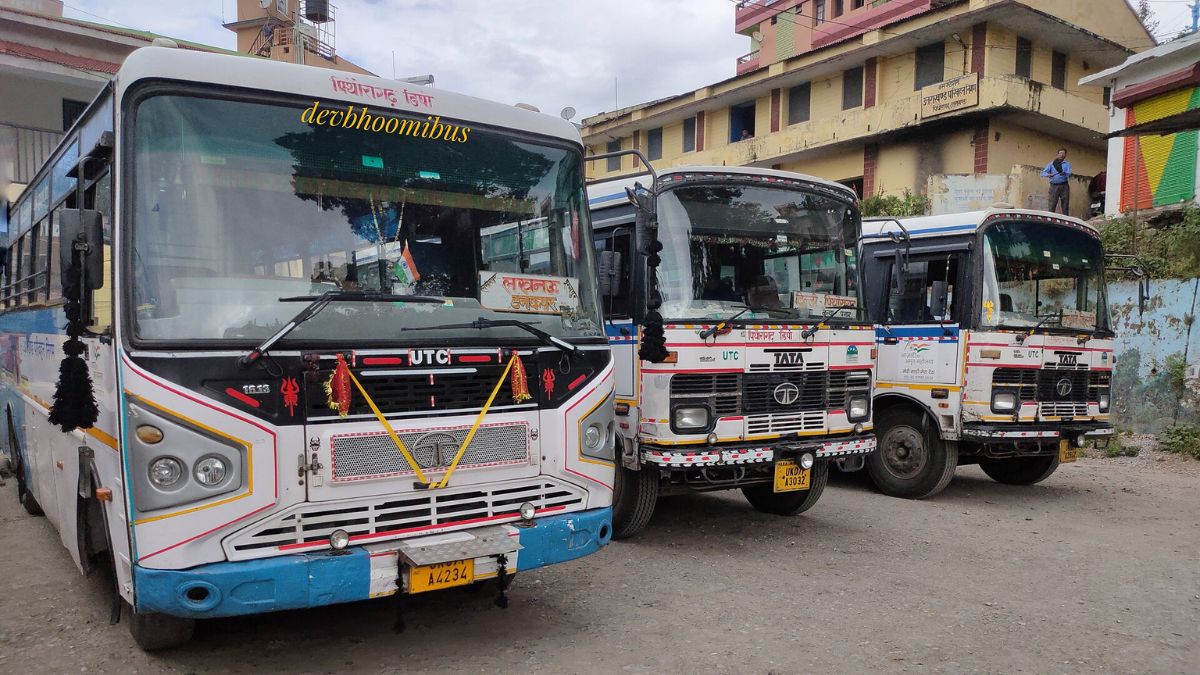
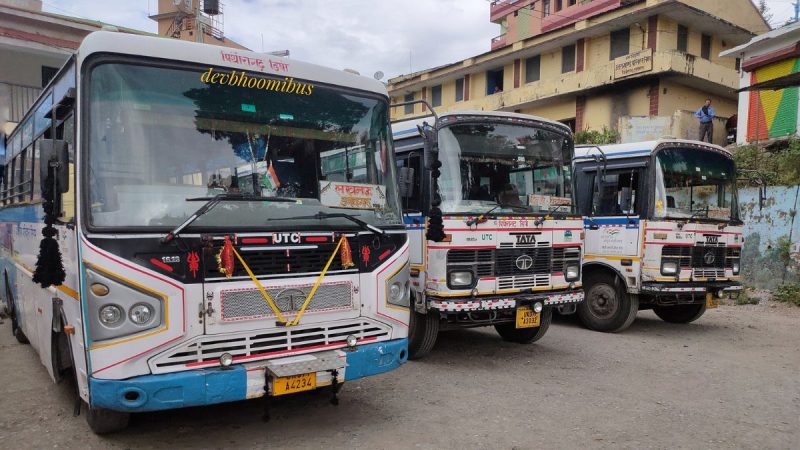
India’s first-ever household travel survey has revealed that only 9% of people primarily use public transport to commute to work, while 43% rely on two-wheelers. Just 3% use cars for their daily work commute. The findings of the National Household Travel Survey (NHTS), conducted between July 2025 and June 2026, also highlight the growing importance of buses for women in urban areas. Want to know more? Read on!
Survey Shows 9% Of People Use Public Transport In India
Around 21.7% of urban women who travel more than 1 km to work primarily use buses, compared with just 6.9% of urban men. The survey, conducted by the Ministry of Statistics and Programme Implementation (MoSPI), covered responses from around 20 lakh people across 14,274 villages and 10,377 urban blocks. The data is aimed at helping governments improve transport planning, identify gaps, optimise routes and improve service frequency.
Commuting to work costs significantly more for people living in cities. Urban residents spend an average of ₹1,044 per month on work-related travel, 71% more than the ₹612 spent by rural residents. The national average stands at ₹785 per month. Among those travelling more than 1 km to work, buses are the primary mode of transport for 6.7% of commuters. Another 2.1% use monorails or trams, while 0.2% travel by rail. When metro rail and local trains are included, rail-based transport accounts for a larger share of urban commutes.
Also Read: 3 Free LPG Cylinders, Free Bus Rides For Women: Tamil Nadu CM Vijay’s Key Announcements Explained
According to MoSPI, monorail, metro, suburban rail and tram services account for 5% of urban worker commutes nationally. Their usage is considerably higher in Maharashtra at 20.7%, followed by West Bengal at 16.5% and Delhi at 14.4%.
Free Bus To Boost Women’s Commute To Work
The data also highlights the role of affordable bus services in helping women commute to work. In states such as Kerala, Tamil Nadu, Karnataka and Telangana, the share of urban women primarily using buses stands at 46.8%, 41.1%, 34.9% and 28.9%, respectively.
An April 2026 IIT Bombay study also linked affordable public transport with women’s workforce participation, suggesting that free bus schemes can encourage more women to travel and access employment opportunities.
Also Read: Tamil Nadu CM Thalapathy Vijay Offers 1.6 Kg Silver Sword At THIS Temple In Karnataka
Several states, including Delhi, Punjab, Karnataka, Telangana, Andhra Pradesh, Jammu and Kashmir, West Bengal and Kerala, offer free bus travel to women. In Tamil Nadu, the state government recently removed the daily trip limit, a move expected to benefit more than 84 lakh women.
How do you travel to work?
Cover Image Courtesy: Wikimedia Commons
FAQs
What is public transport in India?
Public transport in India is a massive, diverse network of shared travel options that moves millions of people every day.
Which state has no metro?
Several major Indian states like Bihar, Goa, Chattisgarh and others currently lack an operational urban rail transit in the Indian network.
What is the biggest problem with public transport?
The biggest problem with public transport is unreliability and poor scheduling, which are usually caused by sharing congested roads with regular cars and chronic underfunding.


