
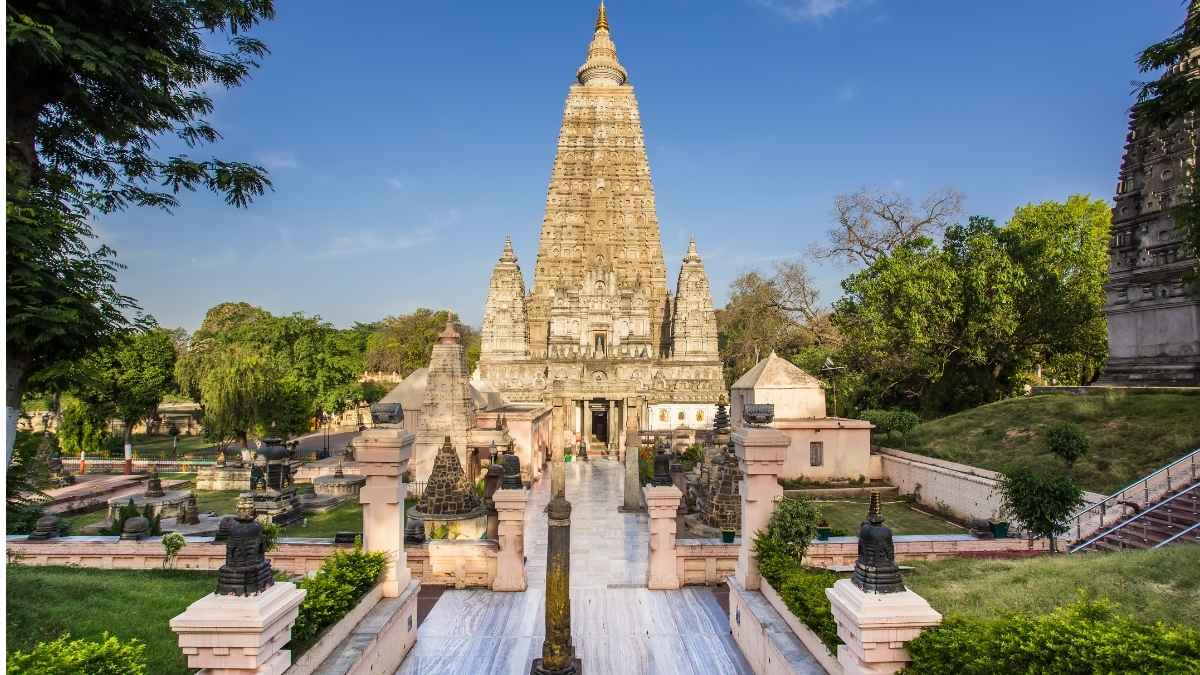


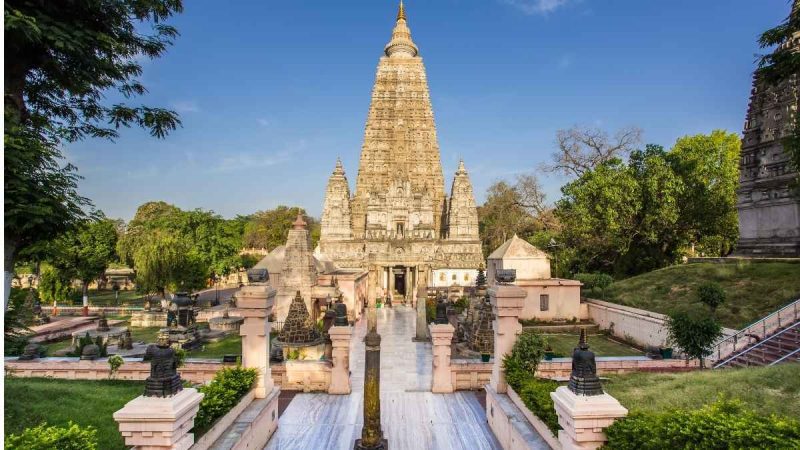
Some places enter your life as a holiday destination. Others arrive much earlier, as a paragraph in a textbook, a picture beneath a history chapter or a story your teacher tells so well that you can almost see it happening. Years later, you might not remember every date you were supposed to memorise. But you remember the places. For Teacher’s Day 2026, we asked Curly Tales’ Editorial team to think about the Indian destinations that first caught their attention in school. The answers were wonderfully personal. For some, it was an ancient Buddhist site. For others, it was the forts of the Marathas or the palaces of Rajasthan. And for me, interestingly, the thing that made me want to travel began somewhere far less realistic. Here are the places and stories that made our school lessons feel a little more real.
5 Indian Destinations That Made School Lessons Feel Real
1. Bodh Gaya, Bihar
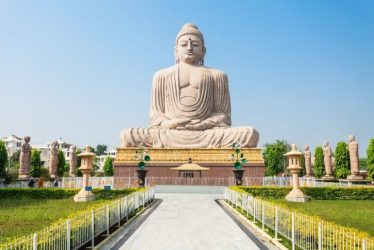
For our Senior Content Writer Anupriya, Bodh Gaya came up during an Ancient History class on the Mauryan Empire. The lesson moved towards Buddhism and Bodh Gaya, and her teacher mentioned that it was absolutely worth visiting. The funny part? Anupriya is from Bihar herself and had already been lucky enough to visit.
What she remembers isn’t just the history attached to the place, but the atmosphere of it. She describes Bodh Gaya as a beautiful village where Siddhartha Gautama attained enlightenment, with the ancient tree and Mahabodhi Temple making the past feel remarkably close. “The beautiful place is absolutely worth checking out,” she says, adding that there is a deep sense of peace there. It is one thing to underline “Bodh Gaya” in an Ancient History notebook. It is another to actually stand there.
Also Read: 16 Indian Sweets Without Which Teachers Day Celebrations Seem Incomplete; Recipes Inside
2. Ajanta Caves, Maharashtra
Ashmeet, our Content Writer, was one of those kids who actually enjoyed history in school, which makes the Ajanta Caves a pretty fitting choice. The rock-cut caves, their Buddhist heritage and the artwork inside have the sort of visual drama that can make even a school chapter stick in your head.
“I used to love history in school, so I was quite fascinated by the Ajanta Caves,” Ashmeet says.
And then there is Jallianwala Bagh in Amritsar, another place she feels deserves a visit. The two destinations are vastly different in what they represent, but both have something that a textbook image simply cannot provide!
3. Jaipur, Udaipur & Bikaner, Rajasthan
Rajasthan has a habit of making school history look slightly understated.
Our Sub-editor, Tashika, grew up learning about its royal past, its culture and its tales of heroism. Later, she got to explore Jaipur, Udaipur and Bikaner herself, and suddenly the forts, palaces and stories had actual streets, courtyards and people attached to them.
But what surprised her was that the things she remembered most weren’t necessarily the grandest ones. “Beyond the museums, magnificent palaces and historic sites, it’s the food and the warmth of the people that really stayed with me,” she says.
That feels very Rajasthan, somehow. You arrive expecting the palaces to steal the show, and leave remembering the meal you had afterwards and the people you met along the way. For Tashika, that is the difference between knowing Rajasthan’s history and experiencing it.
4. Pune, Maharashtra
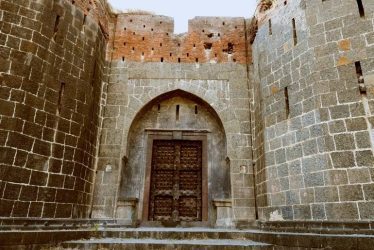
Our Freelance Content Writer, Priyanka Fernandes, has a connection to Pune that is a little more personal.
In Class 4, her history syllabus was centred around the Maratha Empire. She was fascinated by it, but the stories became much more vivid because of her late grandmother, who would explain them to her in extraordinary detail. Her grandmother had been one of the only girls in her family to receive an education and had an impressive memory for dates and historical details.
“She became my teacher in her own way,” Priyanka says.
So when she visited Pune as a child and saw forts and places connected to the Maratha wars, it wasn’t simply a school trip. She was finally looking at the places behind the stories her grandmother had been telling her.
“It was almost like seeing the history she had described come alive in front of me.”
And frankly, that might be the loveliest reason to visit a historical place: because someone you loved once made you curious about it.
Also Read: Did You Know Imtiaz Ali Almost Worked As A Waiter & Teacher Before Becoming A Filmmaker?
5. For Me, It Started With Alice In Wonderland
My relationship with travel didn’t begin with a fort, a palace or an ancient civilisation. It began with Alice in Wonderland!
I remember encountering it in Class 3 or 4 and being completely floored. The story made the unknown feel exciting rather than frightening. I became obsessed with the imagery of Alice, a free woman wandering through gardens, stumbling into strange places and simply following wherever curiosity took her.
I remember thinking I wanted to wear cute, flowy dresses and wander around somewhere I had never been before. Very practical childhood ambitions, obviously. Looking back, that book probably explains why the idea of travel has always appealed to me. Before I knew anything about itineraries or destinations, I liked the idea of getting a little lost. The romance wasn’t really about ticking places off a list. It was about not knowing what I would find.
And maybe that’s what our favourite school lessons had in common. Anupriya’s teacher made Bodh Gaya sound worth seeing. Ashmeet’s love for history led her towards Ajanta. Tashika got to walk through the Rajasthan she had read about. Priyanka saw her grandmother’s stories in the forts of Pune. And I learnt, from a completely fictional girl in a blue dress, that the world outside the page might be even more interesting.
Cover Image Courtesy: tinnaporn/Canva Pro
FAQs
Which Indian Destinations Inspired Travel Through School Lessons?
Bodh Gaya, Ajanta Caves, Jaipur, Udaipur, Bikaner and Pune are among the destinations that first sparked travel curiosity through school lessons and stories.
Why Is Bodh Gaya Important In Indian History?
Bodh Gaya is traditionally associated with Siddharth Gautam attaining enlightenment under the Bodhi tree and is an important Buddhist pilgrimage site.
Why Are The Ajanta Caves Famous?
The Ajanta Caves are renowned for their ancient rock-cut Buddhist architecture, sculptures and paintings.


