

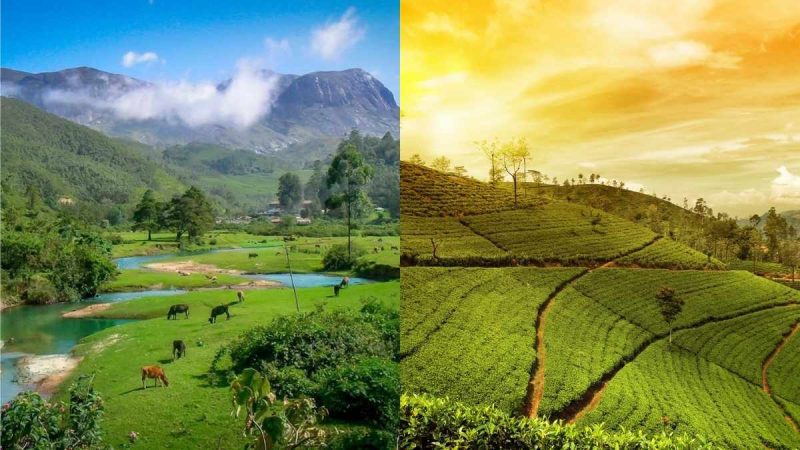
For a generation raised on travel reels, Bali has become more of an aesthetic. The terraces of Ubud, cafés floating above jungles, scooters weaving through narrow village roads, and women carrying baskets through rice fields – the imagery is instantly recognisable now. But did you know India has landscapes capable of creating the exact same feeling, sometimes with far richer histories behind them? Across the Northeast, the Himalayas, and Kerala’s farming belts, there are valleys shaped by ancient cultivation systems, villages suspended in clouds, and layered green landscapes that look almost unreal during the monsoon season. These places are not replicas of Bali in India. In many ways, they feel wilder and more rooted in local life.
8 Destinations In India That Rival Bali’s Beauty
1. Ziro Valley, Arunachal Pradesh

There is something very filmy about Ziro Valley even before you properly enter it. The roads narrow, pine forests begin appearing around the hills, and suddenly the valley opens into enormous stretches of rice fields laid out with geometric precision.
Located in Arunachal Pradesh, Ziro is home to the Apatani tribe, whose agricultural system has existed for centuries. The Apatanis practise a sophisticated form of wet rice cultivation combined with fish farming, all without the use of machines or animals. It is one of the reasons the valley has been considered for UNESCO recognition.
Villages like Hong and Hari here sit between the fields with bamboo homes, wooden fences, and smoke curling out of kitchens in the evening. During the monsoon, the paddies reflect the grey sky like mirrors. The Ziro Music Festival has also transformed the valley into an unlikely cultural hotspot, bringing independent musicians from across the country into this otherwise serene landscape.
Also Read: As PM Modi Urges Indians To Skip Foreign Trips, 8 Indian Destinations To Visit Instead
2. Mawlynnong, Meghalaya
Mawlynnong does not feel real at first. The village is almost unnaturally clean. Located in Meghalaya’s East Khasi Hills, the village became internationally known after being labelled Asia’s cleanest village, but reducing it to cleanliness alone misses the point.
The Khasi community here has built a way of life around preservation. Thick tropical vegetation surrounds the village, and during the monsoon season the clouds move so low that entire sections disappear into mist within minutes.
Travellers spend afternoons climbing bamboo skywalks overlooking the Bangladesh plains, eating local Khasi dishes inside family-run homestays, and walking through rain-soaked forests where waterfalls appear unexpectedly between the trees.
Also Read: Rajkummar Rao Spotted At A Cosy Shillong Cafe & Its Specialty Coffee Is Worth A Trip To Meghalaya
3. Kuttanad, Kerala
Kuttanad does not rise into hills the way Bali’s terraces do, yet it creates the same hypnotic effect through water. Located deep within Kerala’s backwater region, Kuttanad is one of the very few places in the world where farming happens below sea level. For generations, farmers here reclaimed land from the surrounding waters and built an intricate system of bunds, canals, and paddy fields that continues functioning even today.
Seen from above, the region looks like a giant mosaic of green rectangles separated by narrow waterways carrying fishing boats and canoes.
Most travellers experience Kuttanad through houseboats, but the slower routes reveal more. Canoe rides through the interior villages expose a version of Kerala that tourism advertisements rarely show. You pass toddy shops filled with local workers, children cycling along narrow bund roads, women washing utensils beside canals, and farmers standing knee-deep inside flooded fields.
4. Munnar, Kerala
Munnar’s beauty has always carried a slightly old-world mood. Established during British colonial rule as a hill station and tea-growing region, the town still feels moulded by plantation culture. Tea estates spread across the hills in endless curves, trimmed with mathematical precision.
Unlike the dense tropical chaos of Bali, Munnar feels cooler and more restrained. The roads wind through cardamom plantations, eucalyptus forests, and waterfalls hidden behind cliffs. Visitors often tour old tea factories where machinery from the colonial period still exists, though the real experience lies outside the buildings.
Nearby regions like Vattavada add another dimension. Strawberry farms, carrot fields, and fruit orchards replace the tea gardens, while the surrounding mountains remain wrapped in drifting fog for most of the day.
Also Read: 10 Places In India That Look Straight Out Of A K-Drama
5. Pelling, Sikkim
Pelling feels suspended between spirituality and landscape. Located in West Sikkim, the town faces the Kanchenjunga range directly, and on clear mornings the mountain appears so sharp against the sky that it barely looks real.
Historically, Pelling belonged to the old Buddhist kingdom of Sikkim, and traces of that past remain everywhere. Prayer flags flutter across roads and monasteries sit quietly above valleys. Pemayangtse Monastery, one of the oldest in the state, still functions as an important spiritual centre for Tibetan Buddhism.
Travellers often stop at Rabdentse, the ruins of Sikkim’s former capital, where stone pathways cut through dense greenery overlooking enormous valleys below. The recently built glass skywalk nearby offers panoramic views stretching across layered hills and monasteries.
6. Zuluk, Sikkim
Zuluk is the kind of place that still feels slightly undiscovered despite photographs of it circulating constantly online. Perched along the old Silk Route in East Sikkim, the tiny mountain settlement became historically important because traders once crossed these roads while moving between Tibet and India. Today, the village is known almost entirely for one thing, its surreal landscape.
The roads around Zuluk twist across the mountains in impossible loops, particularly near Thambi View Point where dozens of sharp bends can be seen layered across the hills like giant ribbons. During sunrise, the valleys below remain hidden beneath clouds while the upper mountains slowly catch light.
7. Darjeeling, West Bengal
Darjeeling carries a kind of faded elegance that very few hill towns in India still possess. Built during the British colonial era as a retreat from the plains, the town developed around tea plantations that continue defining its identity even today. The terraced tea gardens surrounding Darjeeling are among the most photographed landscapes in India, particularly during the monsoon when the hills turn intensely green.
The Darjeeling Himalayan Railway, the famous toy train, still snakes through the mountains slowly enough for travellers to watch everyday life unfolding beside the tracks.
Much of Darjeeling’s appeal comes from its atmosphere rather than individual attractions. Colonial-era schools, monasteries, cafés, bookshops, and crowded local markets all coexist within narrow mountain roads. Sunrise at Tiger Hill remains one of the region’s defining experiences, especially when Kanchenjunga appears glowing orange against the early morning sky.
Also Read: 10 Best Places To Visit In India In April For Snow, Tea Gardens And Beach Bliss
8. Aizawl, Mizoram
Aizawl rarely enters mainstream travel conversations, which is exactly what makes it memorable and remarkable. Built dramatically across steep mountain ridges in Mizoram, the city appears almost stacked on top of itself..
Mizo culture shapes nearly every aspect of life here. Church choirs echo through neighbourhoods in the evenings, and bamboo handicrafts fill local markets.
During the monsoon, the mountains become saturated shades of green while clouds settle directly between villages.
So, which of these do you plan to visit first?
Cover Image Courtesy: subhsree/X and nevarpp/Canva Pro
For more such snackable content, interesting discoveries and the latest updates on food, travel and experiences in your city, download the Curly Tales App. Download HERE.FAQs
Which places in India feel most like Bali?
Destinations like Ziro Valley, Munnar, Kuttanad, Mawlynnong, and Pelling are often compared to Bali because of their lush greenery, rice fields, misty landscapes, and peaceful atmosphere.
Why is Ziro Valley famous?
Ziro Valley is known for its stunning rice fields, Apatani tribal culture, and unique wet rice cultivation system combined with fish farming.
What makes Mawlynnong special?
Mawlynnong is famous for being one of Asia’s cleanest villages and for its misty forests, bamboo skywalks, and Khasi culture.
Which Kerala destination resembles Bali the most?
Kuttanad and Munnar are often considered Kerala’s most Bali-like destinations because of their lush landscapes, water canals, and layered green hills.