
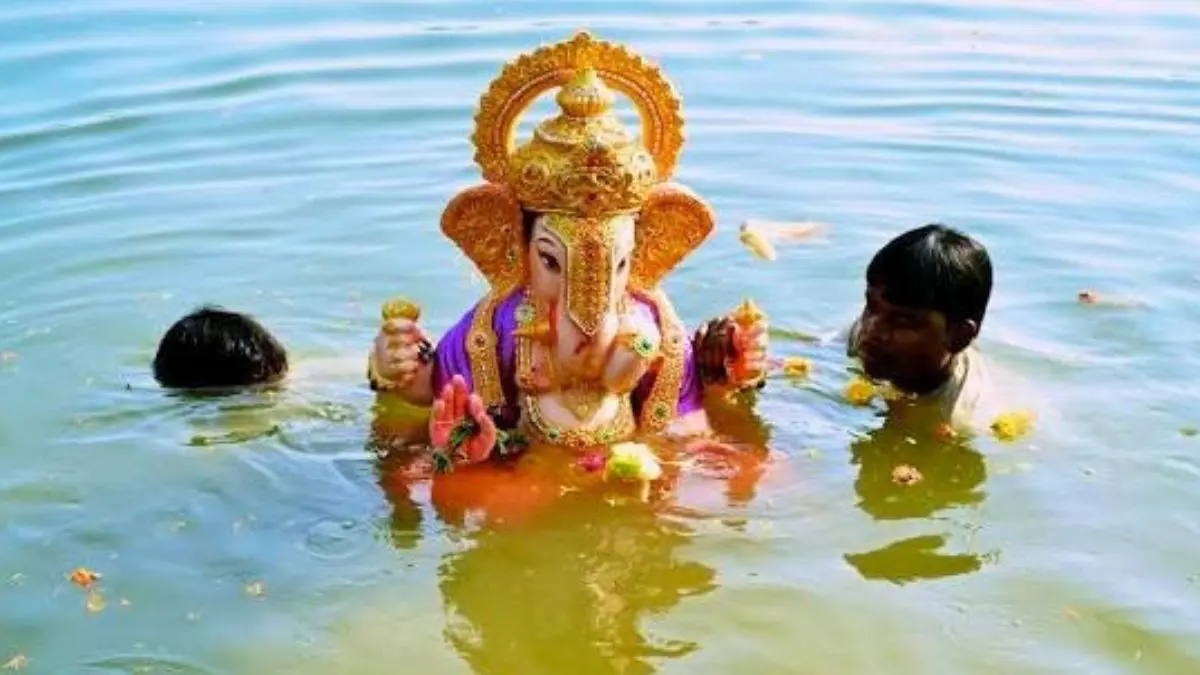

Ganesh Chaturthi celebrations are becoming more mindful of their environmental impact, with Tamil Nadu and Delhi introducing stricter measures around idol immersion. While Tamil Nadu has told the National Green Tribunal (NGT) that it plans to stop Ganesh idol immersion in natural water bodies from 2027, Delhi has already prohibited idol immersion in the Yamuna and other water bodies, except at designated sites.
Tamil Nadu To Stop Idol Immersion In Water Bodies From 2027
According to NDTV, the Tamil Nadu government has assured the NGT that it will aim to stop Ganesh idol immersion in natural water bodies from 2027. The assurance came during a hearing on a petition seeking measures to prevent idol immersion due to its potential impact on water quality and aquatic life.
The government has also said that idol immersion will not be permitted at Chennai’s Foreshore Estate and Neelankarai beaches from next year. The exact scope of the proposed statewide measure will be clarified in an affidavit to be filed before the tribunal.
The move comes amid concerns over materials used to make and decorate idols. Plaster of Paris, paints and chemicals can enter water bodies during immersion, potentially affecting water quality and aquatic life. The petition before the NGT has also suggested temporary artificial immersion ponds as an alternative.
Also Read: Anant Chaturdashi 2026: Check Correct Date, Shubh Muhurat & Ganpati Visarjan Timings
Delhi Bans Idol Immersion In Yamuna, Other Water Bodies
Meanwhile, Delhi has introduced restrictions for this year’s Ganeshotsav and upcoming Durga Puja celebrations. According to Hindustan Times, the Delhi Pollution Control Committee (DPCC) has prohibited idol immersion in the Yamuna and other water bodies, except at designated locations identified by local authorities.
The DPCC has also directed idol makers and sellers to use natural clay, biodegradable materials and natural dyes. Plaster of Paris idols should not be permitted for immersion in water bodies.
According to the DPCC, idol immersion can contribute to silting and deterioration of water quality. Chemical paints and dyes may also contain substances such as mercury, chromium, lead and cadmium, which can pose risks to aquatic life and public health.
To make the process easier for devotees, urban local bodies have been asked to create temporary immersion facilities and artificial ponds near residential areas. The DPCC has also encouraged residents to immerse idols in buckets or temporary artificial ponds at home, in residential premises or parks. The water can later be used for gardening.
Those violating the directions may face environmental compensation of ₹50,000, while violations under the Water Act could also attract further penalties.
Also Read: Video: Air India Crew Member Misses Ganpati Puja At Home, Passenger Brings Bappa On Flight
These measures highlight the growing push towards celebrating festivals while reducing the impact of idol immersion on natural water bodies.
Cover Image Courtesy: Wikimedia Commons (representative image)
FAQs
Can idols be immersed in the Yamuna in Delhi?
No, idol immersion in the Yamuna and other water bodies is prohibited, except at designated immersion sites.
Where can idols be immersed in Delhi?
Devotees can use designated immersion sites set up by local authorities, including temporary artificial ponds.
Why has Delhi banned idol immersion in natural water bodies?
The move aims to reduce water pollution caused by materials such as plaster of Paris, paints and chemical dyes used in idols.
Will Tamil Nadu ban Ganesh idol immersion in water bodies?
Tamil Nadu has told the NGT that it plans to stop Ganesh idol immersion in natural water bodies from 2027.


