
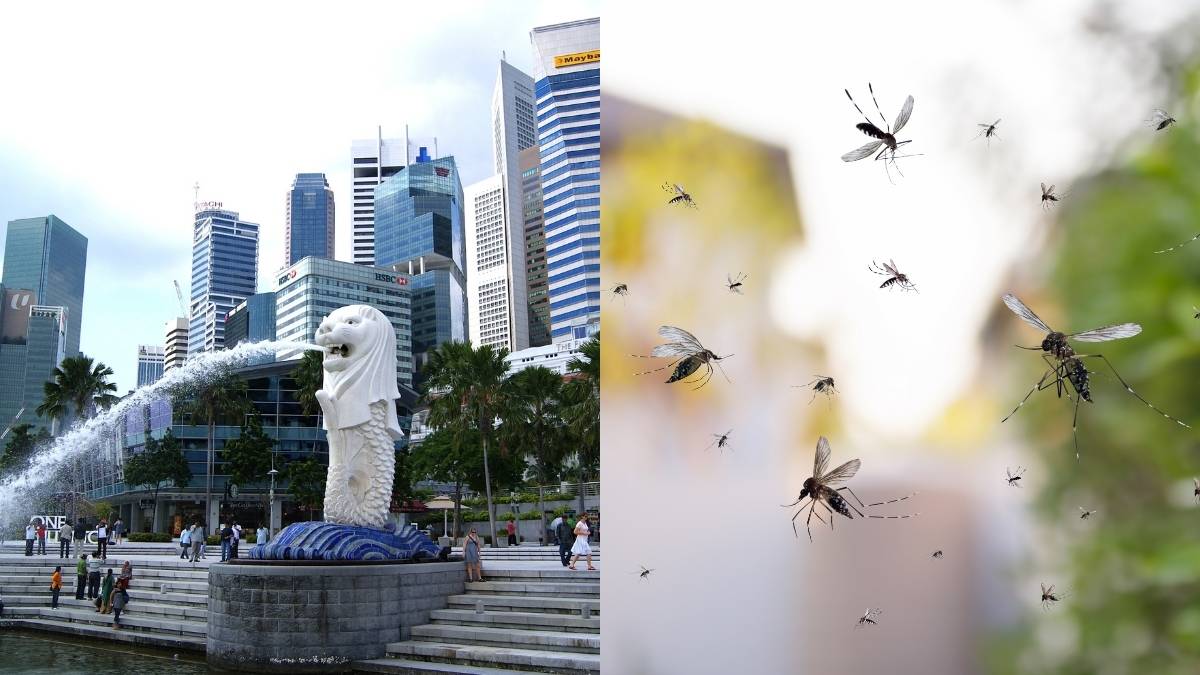



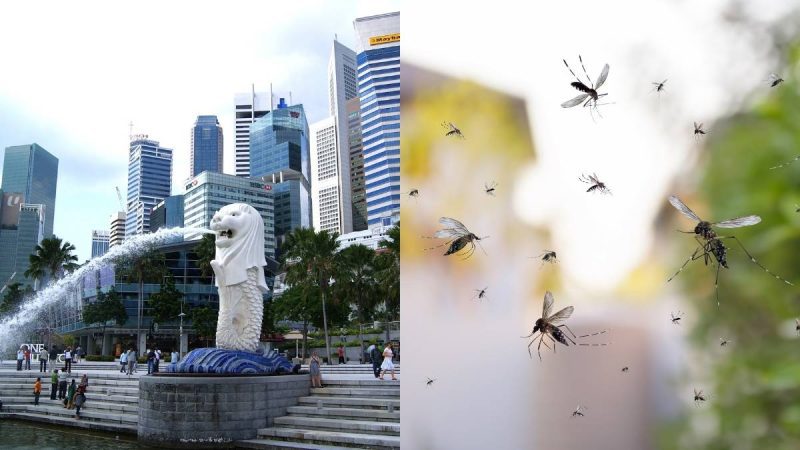
If you live in Singapore or have heard news of people complaining about mosquitoes in the country, then you will find this interesting! Turns out, Singapore is deliberately releasing mosquitoes into the environment, and it’s doing so for a science-backed reason. While it may seem unusual, the initiative is part of Singapore’s broader public health strategy to combat mosquito-borne diseases. Here’s everything you need to know about it.
Singapore Is Releasing Mosquitoes To Fight Mosquitoes!
For a country known for its cleanliness and strict public health measures, an increase in mosquito sightings may come as a surprise to both residents and tourists. However, according to Channel News Asia, Singapore is intentionally releasing millions of mosquitoes every week as part of a long-term strategy to reduce the overall mosquito population across the island nation.
Before you panic, you must know that these mosquitoes don’t bite. The insects being released are male Aedes mosquitoes, and unlike females, they do not feed on blood or bite humans.
The male mosquitoes carry a naturally occurring bacterium called Wolbachia. When they mate with female Aedes mosquitoes in the wild, the eggs produced fail to hatch. Over time, this disrupts the mosquito breeding cycle, leading to a decline in the population and helping reduce the spread of mosquito-borne diseases such as dengue.
Also Read: India Passport Slips 3 Ranks In Henley Index In May; Singapore Retains Top Spot
Here’s All You Need To Know About This
According to Hindustan Times, the initiative is supported by Google, and researchers regard Wolbachia-based mosquito control as one of the most promising methods for tackling mosquito-borne diseases. The naturally occurring bacterium poses no risk to humans or animals, yet it has a significant impact when introduced into mosquito populations.
And the strategy appears to be working. Reports suggest that mosquito populations in some parts of Singapore have declined by more than 90% since the programme was launched. While residents may initially notice an increase in the number of mosquitoes due to the ongoing releases, the objective is to achieve a sustained reduction in the overall mosquito population over the long term.
Also Read: Why Is Singapore Welcoming 30,000 Foreigners Annually As Citizens For The Next 5 Years?
What are your thoughts on this? Let us know in the comments!
Cover Image Courtesy: Canva Pro/Geanina Vlasceanu’s Images & Pixabay
For more such snackable content, interesting discoveries and the latest updates on food, travel and experiences in your city, download the Curly Tales App. Download HERE.FAQs
Why is Singapore releasing millions of mosquitoes?
Singapore is releasing millions of male Aedes mosquitoes as part of a public health strategy to reduce the overall mosquito population and curb the spread of diseases such as dengue.
Are the released mosquitoes dangerous to humans?
No. The mosquitoes being released are male Aedes mosquitoes, which do not bite humans or feed on blood.
Is Singapore the only country using Wolbachia mosquitoes?
No. Several countries have tested or implemented Wolbachia-based mosquito control programmes, but Singapore's initiative is among the most extensive and closely monitored in the world.


