
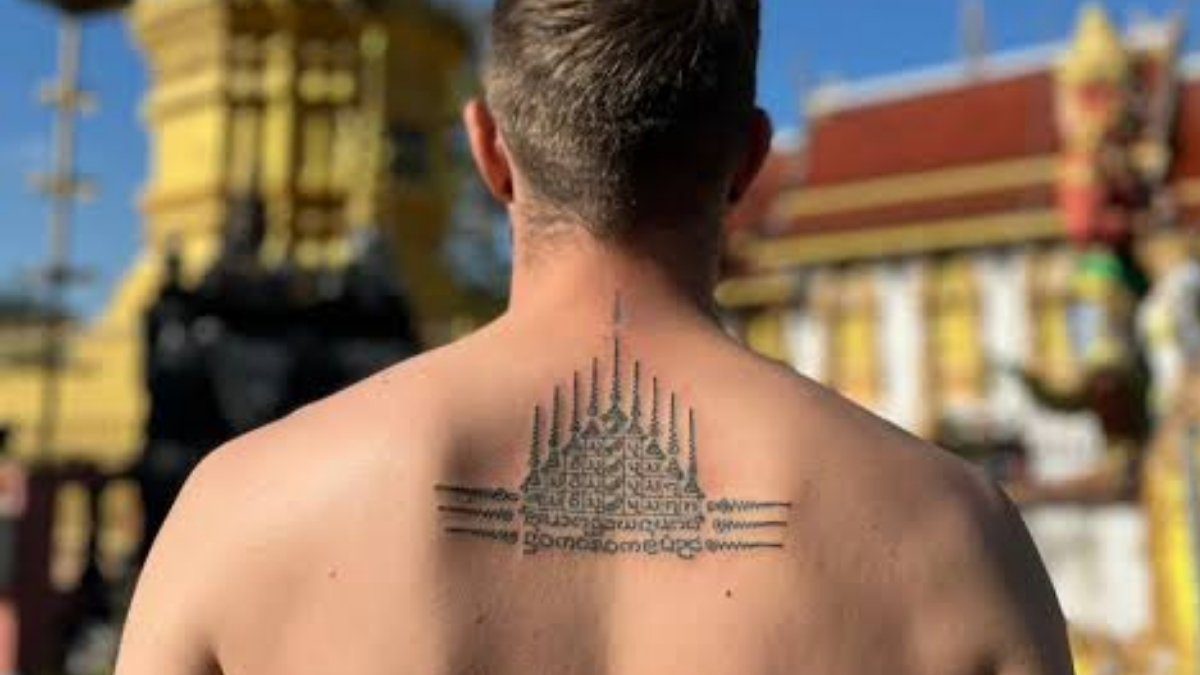



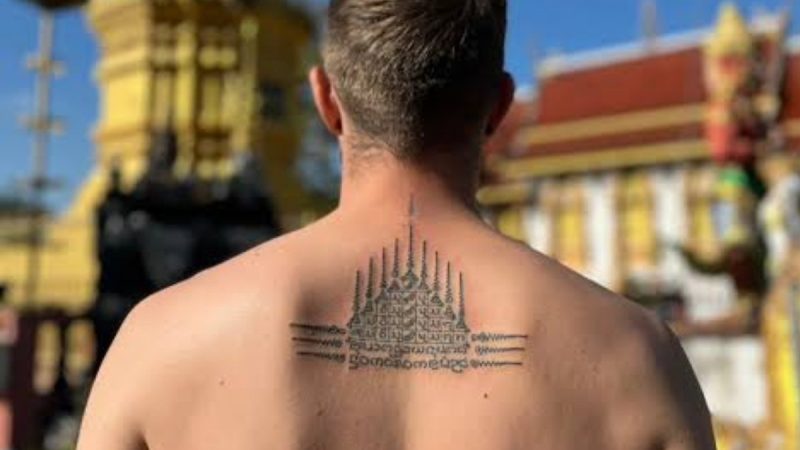
At Wat Bang Phra, a Buddhist temple around an hour outside Bangkok, the atmosphere changes long before the tattooing begins. People arrive carrying trays filled with incense sticks, marigolds, cigarettes, candles and bottled energy drinks as offerings. Then the chanting starts! Temple volunteers rush to calm devotees who appear to enter trance-like states during the annual Wai Khru ceremony, a ritual where followers return to “recharge” the spiritual power of their Sak Yant tattoos. For travellers witnessing a Thailand tattoo for the first time, the scene can feel surreal. For believers, there is nothing theatrical about it.
Sak Yant: The Ancient History Behind Thailand Tattoo
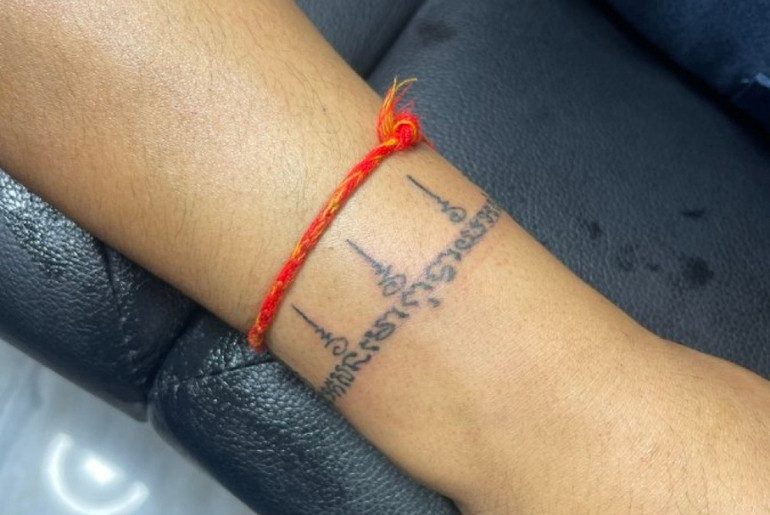
The phrase “Sak Yant” translates roughly to “sacred tattoo.” The word “Yant” comes from “Yantra,” a Sanskrit term referring to mystical geometric diagrams used in Hindu and Buddhist spiritual traditions.
Historians believe Sak Yant evolved through ancient Khmer practices before spreading across Thailand, Cambodia, Laos and Myanmar. Over centuries, these traditions merged with Theravada Buddhism, local animist beliefs and protective warrior rituals.
Long before celebrities and influencers made the tattoos globally recognisable, Sak Yants were associated with soldiers heading into battle. Warriors believed sacred inscriptions tattooed onto their bodies could protect them from weapons, danger and evil forces. Some tattoos promised courage. Others symbolised authority, intimidation or luck.
Even today, Sak Yants remain common among Muay Thai fighters, military personnel, monks, businessmen and devotees who believe the tattoos carry spiritual protection.
That belief is central to understanding why Sak Yant is treated differently from ordinary tattoo culture in Thailand.
Also Read: What Are Vegan Tattoos? Are They Safe & What You Need To Know Before Getting Inked
Why Sak Yant Is Considered Sacred
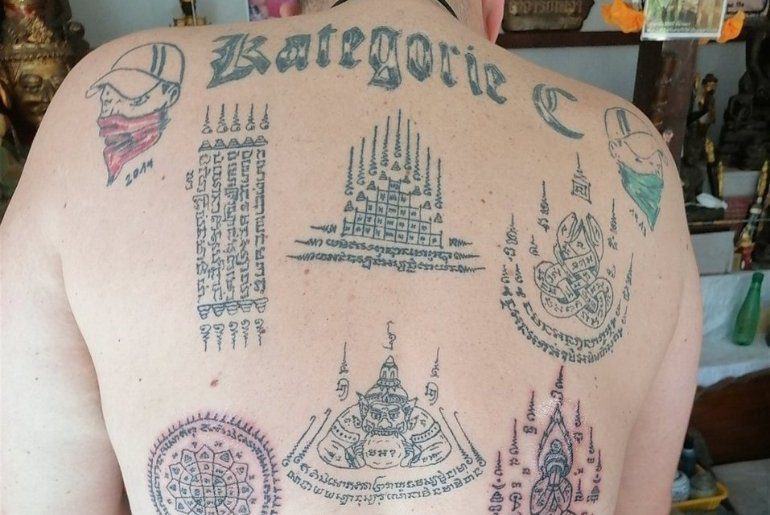
A Sak Yant is traditionally viewed as more than ink on skin. Many followers believe the tattoo contains spiritual energy activated through ritual, blessings and moral discipline.
Different designs are associated with different forms of protection or power.
Hah Taew, the famous Five Lines tattoo popularised internationally by Angelina Jolie, is believed to offer blessings and good fortune. Gao Yord, meaning Nine Spires, symbolises spiritual guidance and protection. Twin tiger tattoos are connected to strength, leadership and authority. Hanuman designs inspired by the Ramayana are associated with bravery, loyalty and resilience.
Most designs also feature ancient Khom or Pali scripts treated as sacred inscriptions rather than decorative text.
Contrary to what social media often suggests, Ajarns don’t always “mystically read auras” before deciding which Sak Yant tattoo to give someone.
Many begin with direct conversations. They ask about career struggles, anxiety, heartbreak, fears, family tension or what kind of protection a person is seeking. The tattoo recommendation often comes through discussion. Still, spirituality remains deeply embedded within the tradition.
Also Read: What Is Thailand Tattoo, And Why You Should Avoid Getting It?
Rituals And Rules Associated With Sak Yant
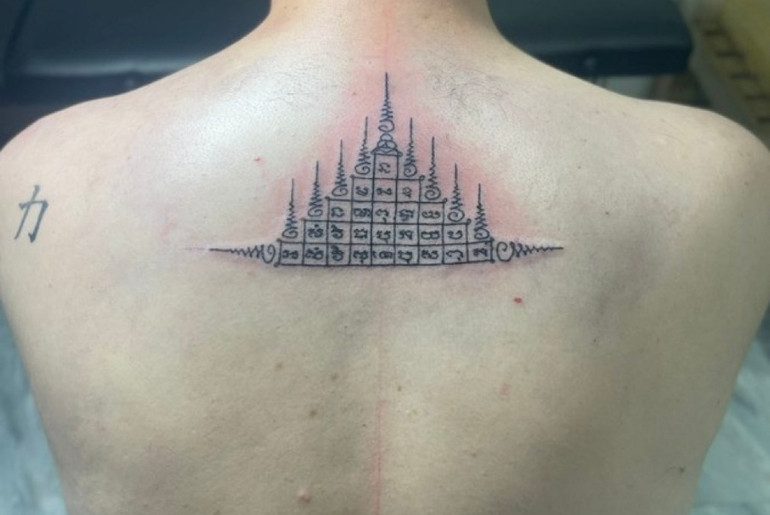
Traditional Sak Yant tattooing rarely feels clinical or commercial.
The process usually begins with offerings presented to monks or Ajarns, i.e. spiritual tattoo masters trained through specific lineages. Incense, flowers, cigarettes and candles are common. Some devotees also bring symbolic offerings requested by the Ajarn.
Unlike modern tattoo machines, Sak Yants are traditionally hand-poked using a long steel rod called a khem sak. The method is faster, sharper and often more painful than visitors expect.
During the tattooing process, prayers and chants are recited continuously. Some Ajarns whisper blessings while working. Others blow onto the finished tattoo to symbolically awaken its power.
For many believers, the tattoo’s effectiveness depends not just on the ritual but also on the behaviour of the wearer afterwards.
Certain Sak Yant traditions require followers to obey moral codes believed to preserve spiritual protection. Depending on the lineage, this can include avoiding lies, theft, violence, excessive drinking or disrespect toward parents and teachers. Some traditions even include dietary or behavioural restrictions.
How Tourism Changed Sak Yant Forever
The global fascination with Sak Yant exploded after Angelina Jolie publicly revealed her sacred Thai tattoos in the early 2000s. Since then, the tradition has transformed into a major tourism industry.
Today, travellers can book Sak Yant experiences online before even arriving in Thailand. Luxury tours offer private temple visits, translators, curated rituals and professionally documented tattoo sessions.
That visibility helped preserve international interest in the tradition. But it also changed the way Sak Yant is consumed.
Many Thai practitioners feel sacred tattoos are increasingly being treated like aesthetic souvenirs for travellers searching for an “authentic spiritual experience.” Online travel forums are filled with debates around whether foreigners receiving sacred Buddhist tattoos without understanding the meaning crosses into cultural commodification.
The tension becomes even sharper because many tourists permanently ink symbols onto their bodies that they cannot actually read.
Hygiene Concerns Around Sak Yant
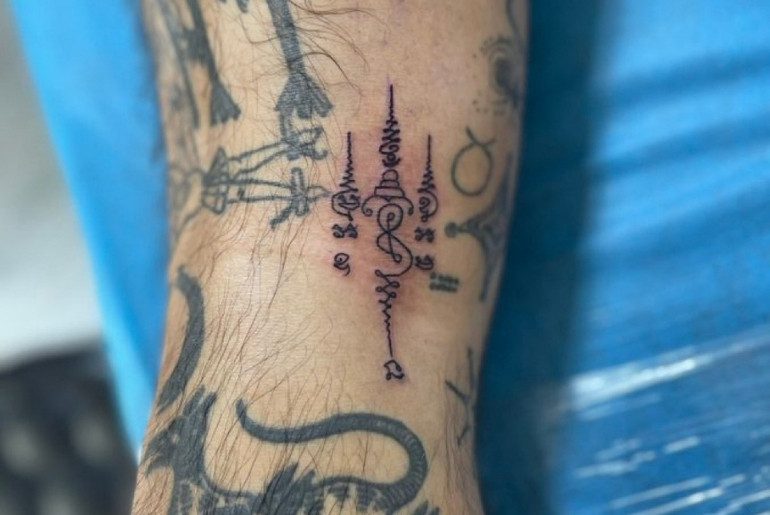
Behind the romanticised travel content lies a very real issue: hygiene.
Traditional Sak Yant methods historically involved shared rods and communal ink pots. Modern health experts have repeatedly warned about infection risks associated with unsafe tattoo practices, including bacterial infections and bloodborne diseases like hepatitis.
Some modern Ajarn studios now use disposable needles, gloves and proper sterilisation procedures. Others continue working traditionally.
And ironically, some of the places marketed as “most authentic” are the ones travellers should research most carefully from a medical perspective.
Anyone considering a Sak Yant should confirm:
- Fresh needles are being used
- Equipment is sterilised properly
- The studio or temple follows safe hygiene practices
- Proper aftercare instructions are provided
Blindly trusting a place simply because it appears spiritual can be risky.
Also Read: World Earth Day 2026: 10 Simple Food & Conscious Travel Habits You Should Adopt To Protect Nature
Important Cultural Etiquette Visitors Often Miss
There are cultural rules surrounding Sak Yant that many travellers only learn after arriving.
In Thai belief systems, the head is considered spiritually highest while the feet are viewed as lowest and impure. Because of this, sacred tattoos are generally not placed below the waist. Some Ajarns refuse outright to place certain designs on lower parts of the body.
Women may also encounter restrictions in certain temples because Buddhist monastic rules prohibit physical contact between monks and women. This is one reason many female travellers choose private Ajarn studios instead of temple settings.
Visitors are also expected to dress modestly, behave respectfully and avoid treating ceremonies like entertainment content for social media.
So, Should You Get A Sak Yant Tattoo?
That question depends less on belief and more on intention.
Not everyone who receives a Sak Yant believes in mystical protection. Some are drawn to the artistry, others to the ritual or cultural significance. But Sak Yant carries spiritual meaning for many Thai practitioners, which makes approaching it casually feel uncomfortable to some communities.
Also Read: Gen Z Picks Experiences This Summer; Tokyo Searches Surge 90%, Bangkok Remains A Favourite
At its core, Sak Yant was never originally created to be decorative alone. This Thai tattoo was designed to protect, guide, intimidate, bless and spiritually anchor the people wearing it.
Cover Image Courtesy: thaiverse/X
FAQs
What is a Sak Yant tattoo?
A Sak Yant tattoo is a sacred Thai tattoo traditionally created through Buddhist rituals, chants, blessings, and hand-poked tattooing methods believed to offer spiritual protection or guidance.
What does Sak Yant mean?
The phrase “Sak Yant” roughly translates to “sacred tattoo.” The word “Yant” comes from the Sanskrit word “Yantra,” referring to mystical geometric symbols used in spiritual traditions.
Why are Sak Yant tattoos considered sacred?
Many Thai practitioners believe Sak Yant tattoos contain spiritual energy activated through blessings, chanting, rituals, and the moral behaviour of the wearer.
What is the Wai Khru ceremony at Wat Bang Phra?
The Wai Khru ceremony is an annual ritual where Sak Yant followers return to recharge the spiritual power of their tattoos through chanting, offerings, blessings, and devotion.
Are Sak Yant tattoos safe?
Sak Yant tattoos can carry infection risks if proper hygiene practices are not followed. Travellers should confirm that disposable needles, sterilised equipment, and safe aftercare procedures are being used.


