
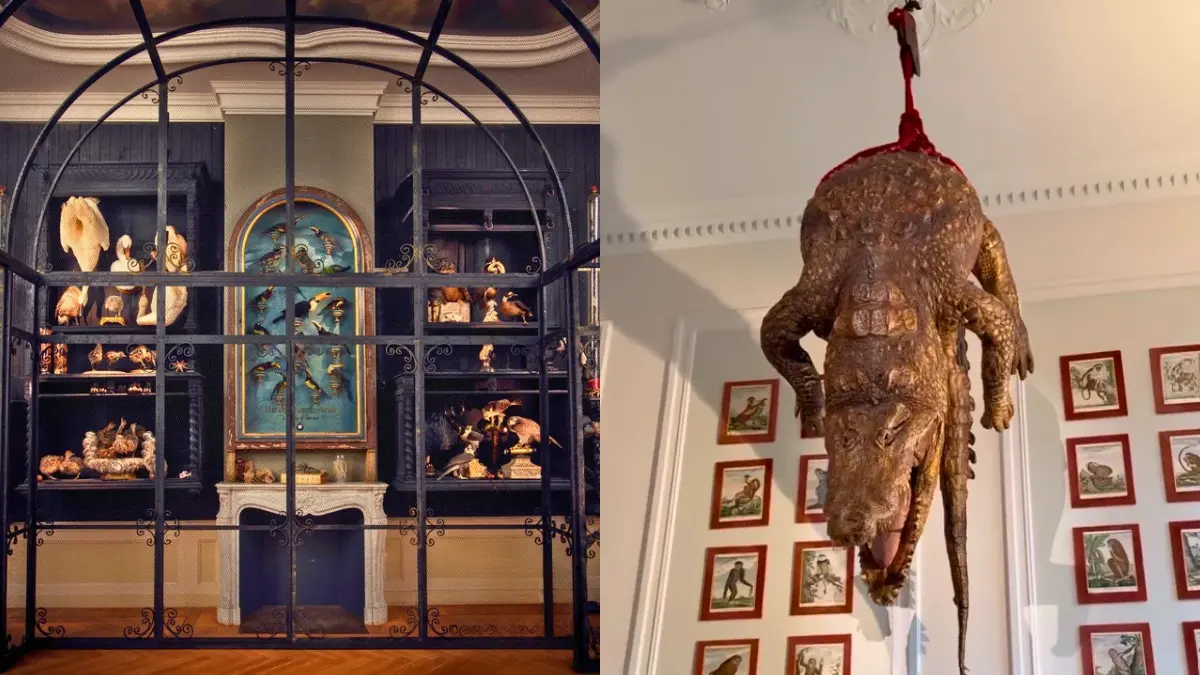



Imagine walking into a museum only to find yourself behind bars while animals appear to roam freely around you. Sounds unusual? Well, that is exactly what visitors experience at Amsterdam’s Art Zoo museum, which is giving the traditional museum experience a rather interesting twist.
Inside Amsterdam’s Interesting Art Zoo
According to an Associated Press report, housed inside a 17th-century canal-side building, Art Zoo features hundreds of preserved animals, dramatic displays of animal bones and other curious objects. However, what makes it stand out is its unusual concept: instead of keeping animals behind cages, the museum puts human visitors inside them!
View this post on Instagram
Unlike a traditional zoo or natural history museum, where animals are usually displayed inside enclosures, Art Zoo has its exhibition rooms surrounded by dark, black metal cages. Visitors walk through these enclosed spaces as the preserved animals are displayed in dramatic poses, creating the illusion that they are free to move around the building.
Also Read: Amsterdam’s 60-Year-Old Floating Cat Shelter Lets You Meet Adorable Rescue Cats For Free
A 12-Foot Crocodile, A Giant Spider Crab And More
The museum is home to some rather striking displays. As visitors enter, they are greeted by a massive 12-foot-long preserved crocodile hanging overhead, with its mouth wide open. Elsewhere, a cheetah appears to be resting in an alcove, while a cassowary stands nearby.
One of the other unusual exhibits is a Japanese giant spider crab with legs stretching around six feet across a doorway. Visitors can also spot large collections of animal bones, including the remains of a mastodon, alongside unusual fish specimens and illuminated tulips displayed in glass jars.
While the displays may seem a little eerie, the idea is to make visitors look at animals and the natural world differently.
What Is The Idea Behind Art Zoo?
Created by Dutch artists Jaap Sinke and Ferry van Tongeren, Art Zoo draws inspiration from Wunderkammer, also known as curiosity cabinets. These collections were popular among wealthy Europeans during the 16th and 17th centuries, who displayed unusual objects and specimens from the natural world.
The artists wanted to bring back that sense of curiosity but with an artistic twist. Instead of simply recreating how animals look in the wild, they use dramatic poses and arrangements to tell stories through their displays.
Interestingly, the artists have also clarified that none of the animals were taken from the wild. According to Sinke, the preserved specimens come from zoos where the animals died of natural causes.
Also Read: Love Treasure Hunt? This Viral Amsterdam Mystery Box Market Lets You Buy Lost & Unopened Parcels
If you are planning a trip to Amsterdam and enjoy unusual museums, Art Zoo might just be an interesting addition to your itinerary. Just be prepared to find yourself behind bars this time!
Cover Image Courtesy: Instagram/artzoomuseum
FAQs
Why are humans put behind bars at Amsterdam's Art Zoo Museum?
Unlike traditional zoos, where animals are kept inside enclosures, Art Zoo places visitors inside rooms surrounded by black metal cages while the preserved animals appear to roam freely. The concept is intended to make the entire building one work of art.
Who founded Art Zoo Museum in Amsterdam?
The museum was created by Dutch artists Jaap Sinke and Ferry van Tongeren, who draw inspiration from historic curiosity collections known as Wunderkammer.
Are the animals at Amsterdam's Art Zoo Museum real?
Yes, the museum displays preserved animal specimens through taxidermy. According to its creators, none of the animals were taken from the wild or specifically bred for the museum. They died of natural causes at zoos or breeders.


