
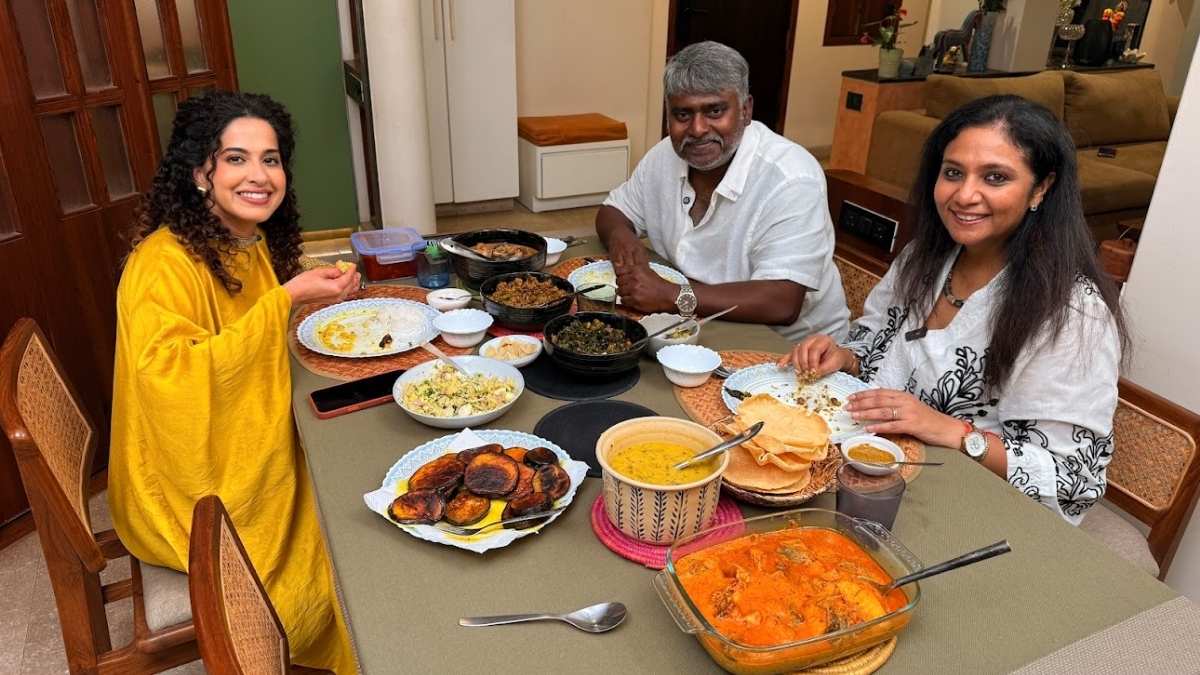

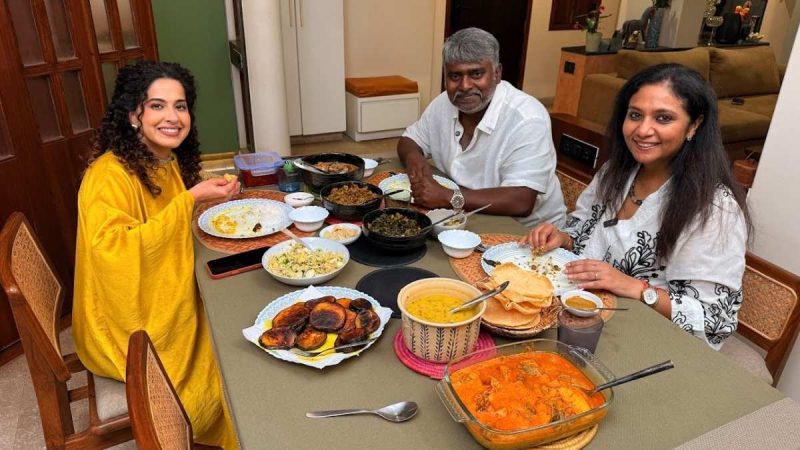
This Sunday Brunch episode on Curly Tales features Dibyendu Bhattacharya, an actor widely respected for his work in theatre and for the intensity he brings to film and series roles. He welcomes Kamiya Jani, our editor-in-chief, into his Kolkata-style Bengali home in the middle of Mumbai, and the first thing to anchor the visit is food. The table carries a full Bengali spread: Mutton Rizala, Aloo Uche Bhate, Dim Aloo Bhate, Begun Bhaja, Mocha, several macher preparations, mango dal, and tomato chutney served with papad, followed by rasgulla and mishti doi. There is no attempt to tone it down. This is how a Bengali meal arrives.
Inside Dibyendu Bhattacharya’s Lived-In Mumbai Home
You notice the gate before you notice anything else. It doesn’t carry a nameplate in the usual sense. Instead, a sequence of dots and dashes runs across it. Dibyendu Bhattacharya explains that it is Morse code and that it spells his surname. It feels like a quiet declaration, which is private, precise, and slightly playful. It also turns out to be an accurate introduction to the home beyond it.
Inside, the house feels lived-in rather than styled. Kamiya Jani remarks on how much character it has, and Dibyendu explains why. He has a long-standing habit of collecting souvenirs from every set he works on. They sit around the house as markers of time, roles, and places he has passed through, each one holding its own memory.
The balcony shifts the atmosphere again. Dense plants crowd the space, layered and leafy, carefully manicured yet intentionally wild. Dibyendu calls it his version of the Sundarbans. He speaks about his love for jungles without embellishment, simply as something that brings him peace. The garden, he adds, was recently trimmed and tended to as a quiet labour of care.
When his wife joins the conversation, Dibyendu shares how they first met in a mess during their younger days. The story is unpretentious and gentle, and it underlines something that keeps resurfacing through the episode: food has always been central to their relationship, as a routine and a connection.
Also Read: Dibyendu Bhattacharya Got His First Paycheck From NSD; Shared All About His Acting Journey
Beyond The Screen: Dibyendu Bhattacharya On Tackling Racism & Bengali Recipes
The kitchen becomes the next stop. Dibyendu begins talking through Bengali culinary bases, explaining how mustard, coconut, and khus khus shape different flavours and textures. Kamiya Jani later spends time chatting with Debu Sir’s kids, the conversation light and humble, before everyone finally gathers at the table.
As the meal begins, Dibyendu explains a special aloo preparation and a distinct saag variant, taking visible pride in both. Each dish carries context and not just ingredients! A round of ‘This or That’ follows, with Kamiya Jani throwing out choices like Chingri Malai Curry versus Ilish Maach and Mishti Doi versus Rosogolla, prompting quick decisions and small smiles.
The conversation then shifts. Dibyendu speaks about racism and stereotyping within the film industry, acknowledging how persistent it has been while also recognising that things are, slowly, beginning to change. The shift is cautious and not celebratory yet.
Also Read: 12 Traditional Bengali Recipes To Make Durga Puja Extra Special At Home This Year
Before the episode closes, he shares his secret Sosher Macchar Jhaal recipe and talks about a lesser-known Bengali staple, papad chutney. It feels like a fitting end and another honest detail offered at the table, alongside everything else.
Cover Image Courtesy: Internal
For more such snackable content, interesting discoveries and the latest updates on food, travel and experiences in your city, download the Curly Tales App. Download HERE. First Published: December 19, 2025 11:11 AM