
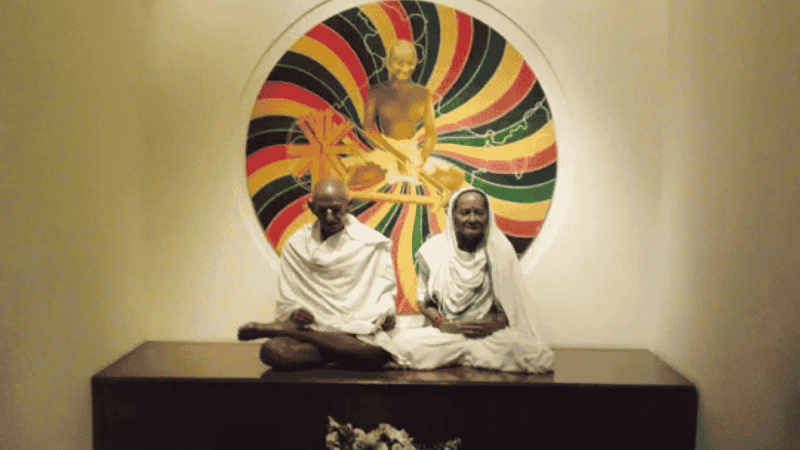
Gandhi’s most famous possessions are almost comically ordinary. A pair of round spectacles, a wooden walking stick and a wheel. Across museums, ashrams and memorials in India, these objects have survived as unusually intimate pieces of the freedom movement. They were handled, worn, written with and carried by Gandhi himself. Some are connected to landmark political events; others belonged to the quieter, intensely disciplined routine behind the public figure. This Gandhi Jayanti, here are 10 such relics and documents worth knowing about.
Gandhi Jayanti: 10 Relics Of Mahatma Gandhi In India
1. Gandhi’s Spectacles | Gandhi Smriti, Delhi
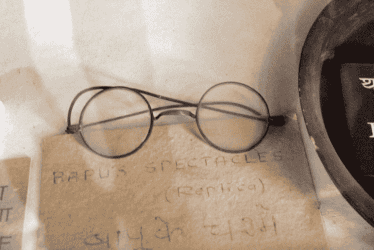
At Gandhi Smriti in New Delhi, history is preserved in almost unnervingly ordinary details worthy of admiration on Gandhi Jayanti. The room where Gandhi spent the last 144 days of his life has been maintained as it was around the time of his assassination on January 30, 1948. Among the possessions displayed are his spectacles, walking stick, knife, fork and spoon, along with the rough stone he used in place of soap. His bed was simply a mattress on the floor, accompanied by a low wooden desk. There is also an old, well-used copy of the Bhagavad Gita.
2. The Walking Stick Of The Salt March | National Gandhi Museum, Delhi
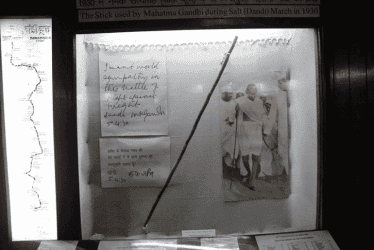
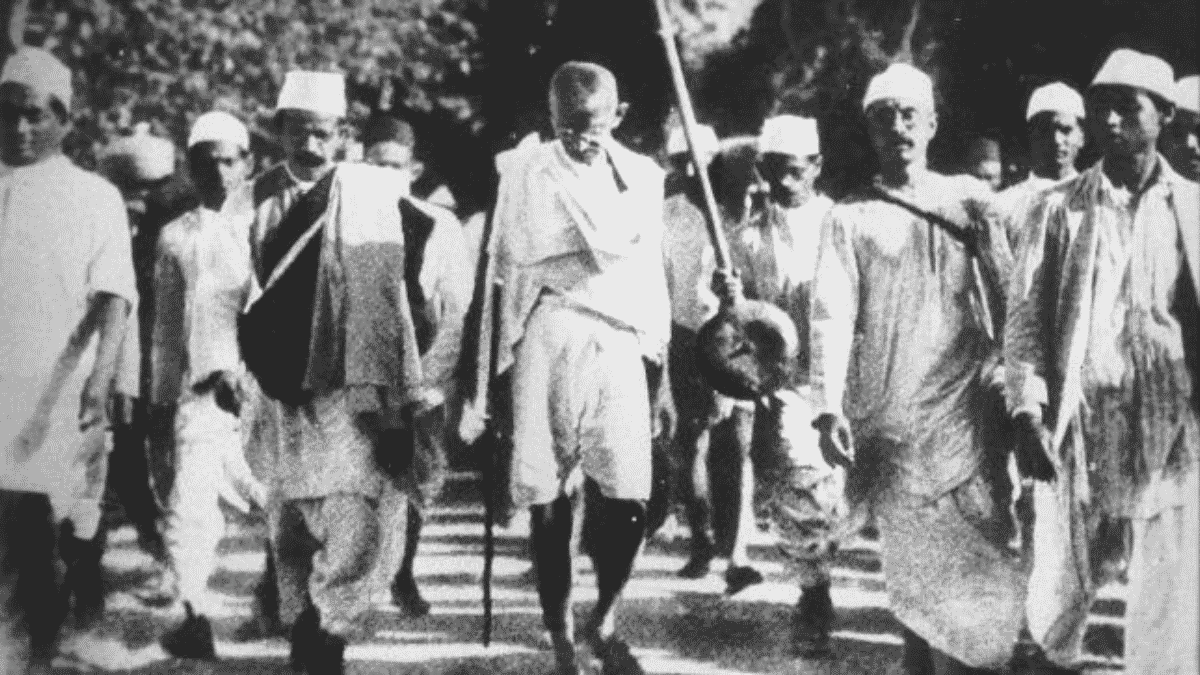
One walking stick in the National Gandhi Museum carries an association far larger than its physical size. It is identified by the museum as the stick used by Gandhi during the historic Salt March of 1930, when he walked from Sabarmati Ashram to Dandi between March 12 and April 5. The march transformed salt, something sitting in practically every Indian kitchen, into a symbol of colonial resistance. Gandhi walked roughly 390 kilometres with fellow marchers before reaching the coast and making salt in defiance of British law.
3. Gandhi’s Letters: More Than 34,000 Pieces Of Correspondence | Sabarmati Ashram, Ahmedabad
If Gandhi’s political life had a soundtrack, it might be the scratch of a pen. The archives at Sabarmati Ashram preserve an extraordinary collection of correspondence: 34,111 letters, either written to Gandhi or sent by him, including originals and photostat copies. The archive also contains 1,371 manuscripts of his articles published in Navajivan, Young India and Harijan.
4. Gandhi’s Passport From 1931 | Mani Bhavan, Mumbai
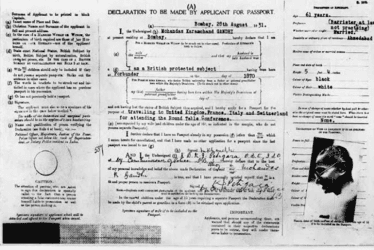
A passport sounds like possibly the least dramatic Gandhi artefact imaginable on Gandhi Jayanti. Yet Mani Bhavan preserves Gandhi’s passport issued on August 28, 1931, for his journey to attend the Round Table Conference in London. The collection also includes his passport application form. This was the journey during which Gandhi travelled to Britain as a representative of the Indian National Congress for the Second Round Table Conference.
Also Read: 8 Freedom Fighter Homes Across India That Are Now Museums Honouring India’s Bravehearts
5. Gandhi’s Charkha | Aga Khan Palace, Pune
At Pune’s Aga Khan Palace, the charkha becomes particularly poignant because of the circumstances in which Gandhi lived there. After the Quit India Movement began in 1942, Gandhi, Kasturba Gandhi and several associates were detained inside the palace. The building now preserves Gandhi’s room along with his charkha, sandals and other personal belongings. The spinning wheel was central to Gandhi’s idea of Swadeshi and his advocacy of hand-spun khadi, but inside the palace it also becomes an object connected to his years of confinement.
6. Gandhi’s Sandals | Aga Khan Palace, Pune
The sandals preserved at Aga Khan Palace may be among the most quietly revealing Gandhi relics on Gandhi Jayanti. Photographs of Gandhi walking with his famously simple footwear are instantly recognisable, but seeing an actual pair makes the austerity less abstract. The palace, where Gandhi and Kasturba were imprisoned during the Quit India period, displays his sandals alongside his charkha and other belongings.
7. Gandhi’s Passport, Identification Chart & Eye Report | Mani Bhavan, Mumbai
Mani Bhavan has another wonderfully unglamorous category of Gandhi memorabilia: paperwork. Its personal-document collection includes Gandhi’s identification chart, an ophthalmic report recording details of his eyesight, and his passport. These documents are fascinating precisely because they are not iconic political props. They record the physical and bureaucratic details of an individual who is usually remembered through speeches, marches, and photographs.
Also Read: Varanasi Has A Temple With No Idol But Map Of Pre-Partition India & Mahatma Gandhi Inaugurated It
8. The Microscope Gandhi Used To Study Leprosy | National Gandhi Museum, Delhi
The National Gandhi Museum houses an object that sounds almost unexpected in a collection dominated by political history: a microscope Gandhi used while studying leprosy germs. The museum lists it among its relics alongside his pens, rosary, sandals, watches, and other personal-use objects. Gandhi had a sustained interest in leprosy and in the treatment and social exclusion of people living with the disease.
9. Gandhi’s Pens, Rosary, Watches & Other Everyday Relics | National Gandhi Museum, Delhi
The National Gandhi Museum’s collection becomes especially interesting when you stop looking for one grand object and start looking at the small stuff. Its listed Gandhi relics include pens, a rosary, watches, sandals and other items of personal use. There are also the famous Three Wise Monkeys associated with the Gandhi collection.
10. Gandhi’s Handwritten Manuscripts & Papers | Sabarmati Ashram, Ahmedabad
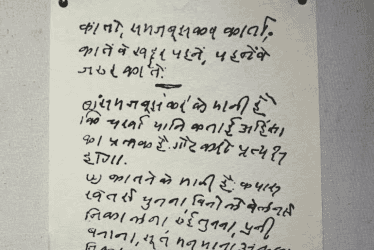
For anyone fascinated by handwriting, Sabarmati Ashram is where Gandhi’s voice becomes almost physical. Its archives preserve thousands of documents connected with his writings and correspondence. The Ashram describes its holdings as including original manuscripts and papers relating to Gandhi, his principal associates, official correspondence and personal artefacts. The collection contains 1,371 manuscripts of articles published in Navajivan, Young India and Harijan, in English, Gujarati and Hindi.
On Gandhi Jayanti, these objects offer a chance to look past the icon and into the life that created him.
Cover Image Courtesy: sabarmatiashram/Website
FAQs
What are some famous relics of Mahatma Gandhi?
Some well-known Gandhi relics include his spectacles, walking stick, charkha, sandals, pens, watches, passport, letters and handwritten manuscripts.
Where can I see Gandhi’s spectacles?
Gandhi’s spectacles are among the personal belongings preserved at Gandhi Smriti in New Delhi.
Where is Gandhi’s Salt March walking stick preserved?
A walking stick identified with Gandhi’s Salt March is preserved at the National Gandhi Museum in Delhi.


