
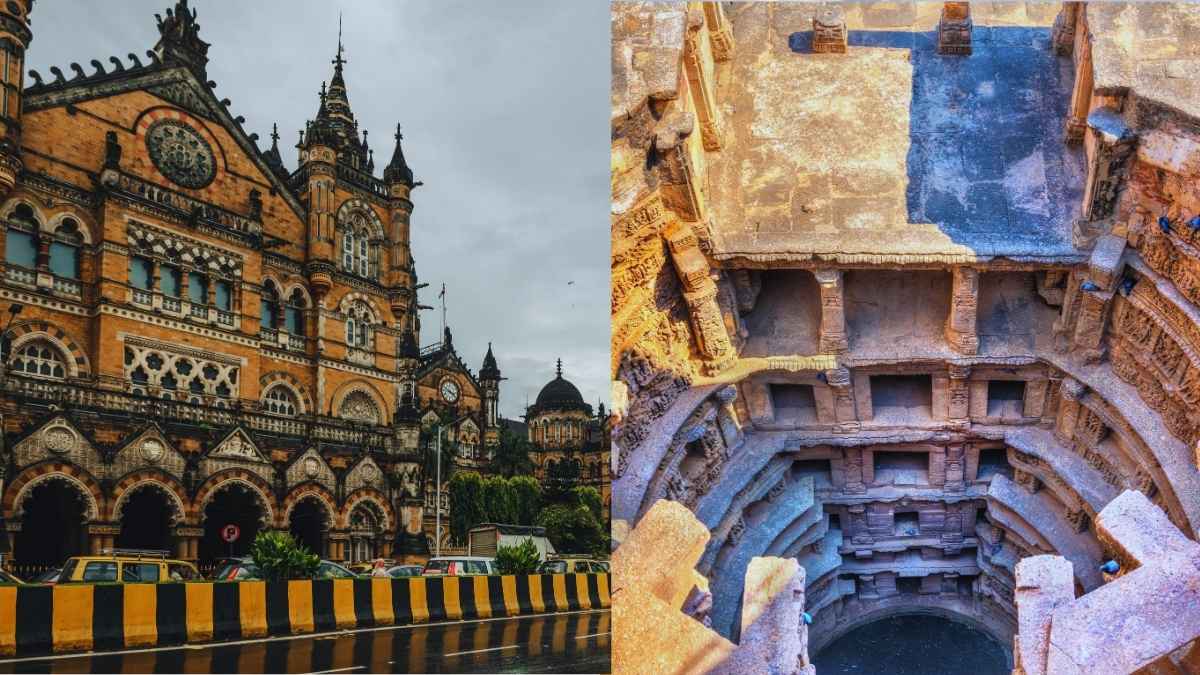



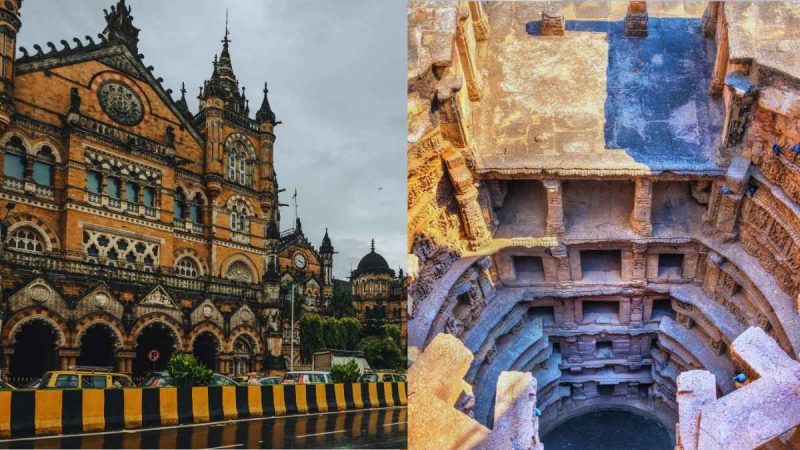
Everyone knows the usual suspects. The Taj Mahal is full before sunrise, and Hampi has become an Instagram staple. But India’s UNESCO story stretches far beyond the places that dominate postcards and travel reels. If your idea of travel involves discovering places before everyone else catches on, start here, with these iconic UNESCO sites in India.
Beyond The Taj Mahal: 7 Lesser-Known UNESCO Sites In India
1. Rock Shelters of Bhimbetka, Madhya Pradesh
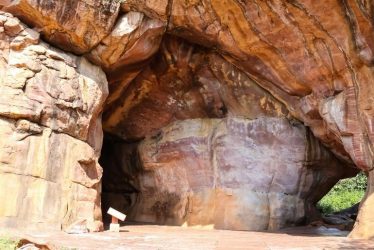
Imagine standing inside a cave where someone painted a hunting scene nearly 30,000 years ago, and the artwork is still visible. That’s what happens at the Rock Shelters of Bhimbetka, one of the oldest surviving records of human life in South Asia.
More than 700 natural rock shelters are spread across the landscape, with over 400 featuring prehistoric paintings. These aren’t random markings. You’ll spot groups of hunters chasing deer, families dancing together, elephants, bison, horses and even scenes that suggest rituals and celebrations.
Also Read: 10 Transformative Travel Experiences Every Woman Deserves Before 30
2. Champaner-Pavagadh Archaeological Park, Gujarat
Most mediaeval cities in India live as fragments. A ruined fort here and an old mosque there. Champaner-Pavagadh is different, as it preserves an entire historical landscape.
Hidden at the foot of Pavagadh Hill, this UNESCO site was once the capital of Sultan Mahmud Begada in the late 15th century. For a brief but prosperous period, Champaner flourished as one of western India’s most ambitious cities before being abandoned and gradually reclaimed by nature.
Today, travellers can wander through kilometres of stunningly preserved monuments. There are elegant mosques with finely carved pillars, palaces, residential quarters, stepwells, fortifications, granaries, water reservoirs and temples dating back several centuries. The Jama Masjid alone is worth the journey.
Also Read: 10 Breathtaking Monsoon Road Trips In India Ranked From Easy Routes To Epic Adventures
3. Great Himalayan National Park, Himachal Pradesh
UNESCO recognition isn’t reserved for monuments; sometimes, nature tells the greatest story. The Great Himalayan National Park, sitting deep inside Himachal Pradesh’s Kullu district, protects nearly 1,200 square kilometres of Himalayan wilderness that remains astonishingly untouched. Instead of souvenir shops and crowded viewpoints, you’ll find alpine meadows bursting with wildflowers, dense deodar forests, glacial rivers and mountain peaks that seem to stretch forever.
The park shelters more than 375 species of fauna and over 800 varieties of plants. It is one of India’s last strongholds for elusive wildlife like the snow leopard, Himalayan musk deer, blue sheep, Himalayan brown bear and the endangered western tragopan, often called one of the world’s rarest pheasants.
Also Read: Beyond Manali: 8 Underrated Himachali Escapes That Still Feel Raw And Untouched
4. Rani Ki Vav, Gujarat
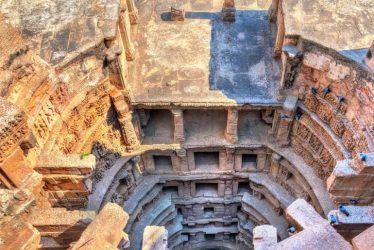
At first glance, it looks like a beautifully decorated staircase disappearing into the earth. Then you keep walking. And walking. Rani Ki Vav shows itself level by level until it becomes clear that this isn’t simply a stepwell. It’s an underground palace carved entirely from stone! Yes.
Built during the 11th century by Queen Udayamati in memory of King Bhima I of the Solanki dynasty, the monument originally served as both a water reservoir and a sacred gathering place. Over time, floods from the Saraswati River buried much of the structure beneath layers of silt, unintentionally preserving its carvings for centuries until archaeologists excavated it.
5. Keoladeo National Park, Rajasthan
People visit Rajasthan expecting forts, palaces and deserts. Very few expect one of the finest bird sanctuaries on Earth!
Padhaaro maare desh. Keoladeo National Park in Bharatpur began as a royal hunting reserve for the Maharajas, who engineered an intricate wetland system to attract waterfowl. Today, the same wetlands support one of Asia’s richest bird habitats and have earned UNESCO recognition for their global ecological importance.
More than 370 bird species have been recorded here. During winter, migratory birds arrive from Siberia, Central Asia, Europe and China, transforming the park into a living atlas of global birdlife.
Also Read: Did You Know A Rajasthan Temple Is Built With 40,000 Kg Of Ghee, And It Sweats Butter?
6. Chhatrapati Shivaji Maharaj Terminus, Mumbai
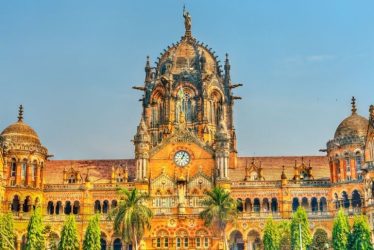
Millions of people hurry through this station every day without looking up. That’s understandable. Most are trying to catch a local train. But if they paused for even two minutes, they’d realise they’re standing inside one of the world’s greatest railway buildings.
Completed in 1887 to commemorate Queen Victoria’s Golden Jubilee, Chhatrapati Shivaji Maharaj Terminus represents Victorian Gothic Revival architecture infused with Indian craftsmanship. British architect Frederick William Stevens borrowed inspiration from medieval European cathedrals, while Indian artisans filled the structure with carved peacocks, lions, monkeys, floral motifs and traditional decorative elements.
7. Jantar Mantar, Jaipur
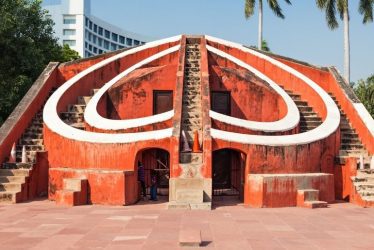
Most people see giant stone structures, but astronomers see precision instruments.
Built between 1728 and 1734 by Maharaja Sawai Jai Singh II, Jaipur’s Jantar Mantar was designed to solve astronomical questions that fascinated scholars centuries before computers existed. Its most famous structure, the Samrat Yantra, is the world’s largest stone sundial, standing nearly 27 metres high. Under ideal conditions, it can measure time with an accuracy of about two seconds.
So, which of these underrated UNESCO sites fascinated you the most?
Cover Image Courtesy: leonidandronov/Canva Pro and romansaienko/Canva Pro
FAQs
Which are the most underrated UNESCO World Heritage Sites in India?
Some of the most underrated UNESCO sites include the Rock Shelters of Bhimbetka, Champaner-Pavagadh Archaeological Park, Great Himalayan National Park, Rani Ki Vav, Keoladeo National Park, Chhatrapati Shivaji Maharaj Terminus and Jantar Mantar in Jaipur.
Why are the Rock Shelters of Bhimbetka famous?
Bhimbetka is renowned for its prehistoric cave paintings, some believed to be over 30,000 years old, offering one of the earliest visual records of human life in South Asia.
What makes Rani Ki Vav a UNESCO World Heritage Site?
Built in the 11th century by Queen Udayamati, Rani Ki Vav is celebrated for its remarkable stepwell architecture and more than 500 intricately carved sculptures depicting Hindu deities and mythological themes.


