

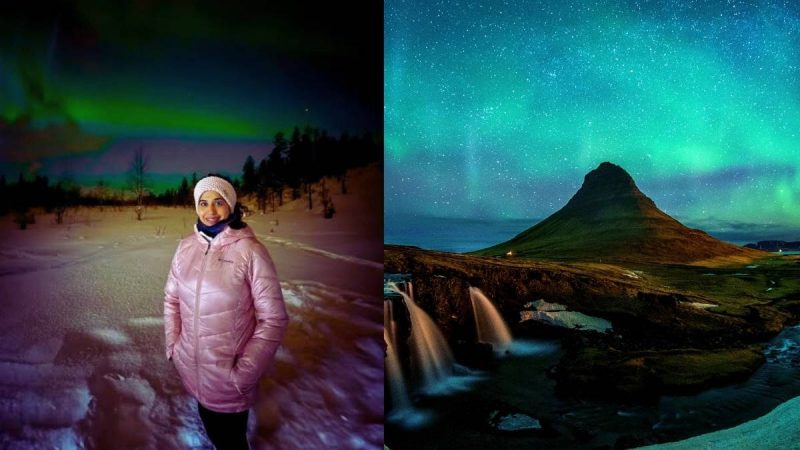
Some experiences feel exaggerated in photographs; the Northern Lights are not one of them. When the sky begins to ripple in sheets of green and violet light, it does not look staged or cinematic; it feels elemental. Ancient observers saw omens, and modern scientists see charged particles and geomagnetic fields in them. But travellers see a once-in-a-lifetime moment worth crossing continents for. Here is everything you need to know, not just the science, but the logistics too, including when to go, where to stay and what it costs.
What Are The Northern Lights?

The Northern Lights, or aurora borealis, are the visible result of solar activity interacting with Earth’s atmosphere. The Sun constantly releases charged particles. When bursts of solar wind reach Earth, our planet’s magnetic field channels those particles toward the polar regions. As they collide with oxygen and nitrogen atoms high above the surface, energy is released in the form of light.
The colours depend on altitude and gas composition:
- Green: oxygen at lower altitudes (most common)
- Red: oxygen at higher altitudes
- Blue and purple: nitrogen
The aurora is not a rare event in itself; it happens continuously. Visibility is what changes, and that depends on darkness, weather, and solar intensity.
Also Read: You Can Now Get Permanent Residency In The Land Of The Northern Lights— But There’s One Catch!
Best Time To See The Northern Lights
The Geophysical Institute at the University of Alaska Fairbanks notes that auroral activity is typically strongest between 9 PM and 3 AM. Those hours are significant because geomagnetic disturbances tend to peak around midnight local time. Still, there is no exact schedule. Some nights produce faint glows; others erupt in moving arcs that stretch from horizon to horizon.
Best Season
The viewing window runs from late September through early April. This is not arbitrary; Arctic regions need prolonged darkness. In peak summer, parts of Norway, Sweden, and Alaska experience the midnight sun, meaning there is simply no darkness in which to see the lights, even though solar particles continue arriving.
Equinox periods (September and March) often show stronger geomagnetic activity due to the alignment of Earth’s magnetic field with solar wind patterns.
Also Read: In Pics: From Florida To Washington, Americans Capture The Northern Lights In All Their Glory
Where To See The Northern Lights
The most reliable sightings occur within the “auroral zone,” a band roughly 2,500 kilometres from the North Pole. According to the Tromsø Geophysical Observatory, this is where the auroral oval sits most frequently.
Top Destinations
Each offers slightly different advantages. Tromsø combines accessibility with dramatic fjord backdrops, Fairbanks is known for consistently clear winter skies, Abisko benefits from a microclimate that reduces cloud cover, and Iceland offers volcanic landscapes under auroral arcs.
Under strong geomagnetic storms, auroras occasionally lean southward. In rare cases, they have been visible in the northern United States, the United Kingdom, and parts of central Europe. These events depend entirely on solar intensity and cannot be planned around.
Southern Hemisphere
The phenomenon has a southern counterpart, which is called aurora australis.
It can be observed from:
- Southern New Zealand
- Tasmania
- Antarctica
The physics is identical, but yeah, the geography is reversed.
History Of The Northern Lights
The term aurora borealis was introduced in 1619 by Galileo Galilei, referencing Aurora, the Roman goddess of dawn, and Boreas, the Greek god of the north wind. But documented sightings predate Galileo by millennia.
A Babylonian clay tablet from 567 B.C. describes unusual red glows in the sky. Chinese records from 193 B.C. note similar phenomena, and NASA also references a possible 30,000-year-old cave depiction in France that may represent auroral light.
Interpretations varied widely, though. Some Inuit traditions described spirits at play in the sky, while Norse mythology imagined reflections from Valkyrie armour guiding fallen warriors.
Scientific clarity comes much later. In the early 20th century, Norwegian physicist Kristian Birkeland proposed that solar electrons, directed by Earth’s magnetic field, produced atmospheric light near the poles. His theory was initially speculative, but satellite data decades later confirmed it.
Also Read: In Pics: Northern Lights Dazzle Up Skies In UK, Germany & France; Australia Sees Rare Sight
Where To Stay To See Northern Lights
Accommodation choice significantly affects your viewing experience, so plan for comfort wisely!
Norway (Tromsø Region)
City hotels offer convenience and tour pickups. For darker skies, travellers often stay in fjordside cabins or remote Arctic lodges outside urban light pollution.
Iceland
Reykjavík provides accessibility and organised night tours. Countryside guesthouses, particularly along the South Coast, offer clearer horizons and reduced artificial lighting.
Finland (Lapland)
Glass igloos and heated aurora domes allow viewing directly from bed. Wilderness resorts in Saariselkä and Rovaniemi combine accommodation with snow activities.
Alaska and Northern Canada
Aurora lodges near Fairbanks or Yellowknife often include wake-up alerts, ensuring you do not miss peak displays. Plan for at least three to four nights in one location. A single evening rarely guarantees a strong show.
Also Read: What Strangers See vs What Shefali Shah Really Felt On Her Once-In-A-Lifetime Norway Trip
How To Reach
From India, reaching the auroral zone typically involves one major European or North American connection. Common routes include:
- Delhi → Oslo → Tromsø
- Delhi → Helsinki → Rovaniemi
- Delhi → London → Reykjavík
- Delhi → Seattle → Fairbanks
Total travel time ranges between 14 and 20 hours, depending on layovers.
Domestic connections are straightforward:
- Oslo to Tromsø (Norway)
- Helsinki to Ivalo or Rovaniemi (Finland)
- Seattle to Fairbanks (Alaska)
Winter weather can delay regional flights, so make sure you add buffer time into your itinerary.
Also Read: 10 Transformative Travel Experiences Every Woman Deserves Before 30
Cost Breakdown: The Northern Lights Experience
Costs vary by season and accommodation style.
Budget (7-day trip from India)
These may go upto ₹95,000 to ₹1.4 lakh per person. It includes economy flights, standard hotels, and one or two aurora tours.
Mid-Range
These will cost between ₹1.5 lakh and ₹2.5 lakh. It includes better accommodation and multiple excursions, such as snowmobiling or dog sledging.
Luxury
Glass igloos and high-end Arctic lodges range from €300 to €2,000 (₹31,853-₹2,12,358) per night. Aurora tours alone typically cost ₹8,000 to ₹15,000 per night for group experiences. Flights account for the largest portion of total expense.
Photography Tips
Capturing the aurora requires preparation. Use a tripod and set the manual exposure. Keep shutter speeds between 5 and 25 seconds, depending on intensity. A remote trigger prevents vibration. Also, make sure to dress for sub-zero conditions; temperatures can drop below -20°C in interior Alaska or northern Scandinavia. Patience is more crucial than any equipment here; wait for your moment.
Also Read: Love Lights Up Norway’s Sky As Northern Lights Create A Perfect Heart Before Valentine’s
The Northern Lights are not some staged performances; they are the visible trace of solar energy meeting Earth’s magnetic defence system. From Babylonian astronomers to modern satellites, humanity has watched this interaction unfold overhead.
When the sky shifts and the first arc of green light appears, magic happens up close and personal.
Cover Image Courtesy: tawatchaiprakobit/Canva Pro and kamiya_jani/Instagram
For more such snackable content, interesting discoveries and the latest updates on food, travel and experiences in your city, download the Curly Tales App. Download HERE.FAQs
What causes the Northern Lights?
Charged particles from the Sun collide with oxygen and nitrogen in Earth’s atmosphere, producing visible light in polar regions.
What is the best month to see the Northern Lights?
Late September to early April offers the best visibility due to longer hours of darkness, with equinox months often showing stronger geomagnetic activity.