
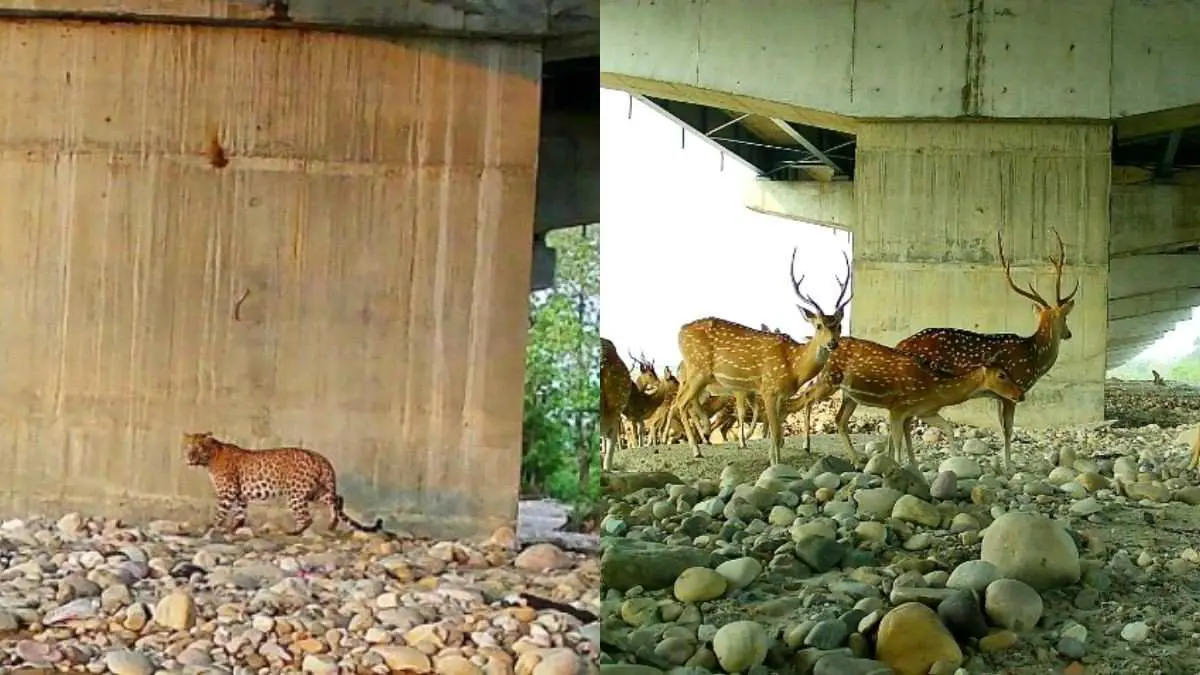



The much-awaited Delhi-Dehradun Expressway is all set to be inaugurated by PM Narendra Modi. The expressway is all set to make travel between Delhi and Dehradun a lot easier by reducing travel time from 6.5 hours to approximately 2.5 hours. But that’s not the only good thing. The expressway also boasts an amazing wildlife corridor that allows wild animals to cross the forest beneath the elevated structure with ease. Keep reading to know how it helps wildlife.
Delhi-Dehradun Expressway Has A Wildlife Corridor
NHAI and @wii_india Study Highlights Effectiveness of Wildlife Mitigation Measures on Delhi–Dehradun Economic Corridor!
The extensive WII report documents the first evidence of wildlife using animal underpasses on the Delhi – Dehradun Economic Corridor. Conducted along the… pic.twitter.com/mZLHaXCHo4
— NHAI (@NHAI_Official) April 10, 2026
The Delhi-Dehradun Expressway is all set to make it easier to travel between these two destinations. Its opening not just shows rapid development but is also set to boost tourism. People from across India will now be able to visit Uttarakhand more easily. But according to NDTV, the project is being considered more significant because of its wildlife corridor that passes through the heart of the Rajaji Tiger Reserve. The reserve is home to many wildlife species like elephants, Bengal tigers, leopards, chital, sambar deer, king cobras, nilgai and more.
The corridor was designed specially to allow animals to move easily beneath the elevated expressway. This means authorities have designed the highway in such a way that commuters can benefit from it without causing problems to the wildlife nearby, even though the expressway’s alignment passes through the forest’s sensitive region. Reportedly, the wildlife corridor stretches 12 km and is one of the longest such corridors in Asia.
Even before the inauguration, images of 18 wild species were captured showing them using this underpass. This included deer, elephants and even leopards. The photos were posted by NHAI on their official X account.
Also Read: What New Rules Have Been Introduced At Jawai Leopard Reserve To Protect Wildlife?
A Great Example Of Coexistence
According to News18, the elevated section resembles a bridge cutting through dense forest terrain, which ensures the coexistence of traffic and wildlife. The corridor plays a very important role in linking the Rajaji Tiger Reserve with the Shivalik forest ranges. Previously, highways and river barriers had fragmented these two habitats, which made it difficult for animals to migrate between them.
But now, with the wildlife corridor beneath the Delhi-Dehradun Expressway in place, the two forest zones are reconnected, making way for wildlife movement. People travelling on this expressway will pass through scenic landscapes of hills and forests. This will make the whole travel experience a lot more amazing. According to us, this corridor is a great example of coexistence.
Also Read: 8 Short Trips From Delhi Within 300 Km Covering Hills, Wildlife And Heritage Spots
What do you think of the Delhi-Dehradun Expressway wildlife corridor? Do share your thoughts with us in the comment section below.
Cover Image Courtesy: @NHAI_Official/X
For more such snackable content, interesting discoveries and the latest updates on food, travel and experiences in your city, download the Curly Tales App. Download HERE.FAQs
What is a wildlife corridor?
A wildlife corridor is a safe passage that allows animals to move between two habitats safely.
What animals are found in Rajaji National Park?
Rajaji National Park is home to species like Asian elephants, leopards, Bengal tigers, king cobras, nilgai, sambar deer, and more.
What is the Delhi-Dehradun Expressway?
Delhi-Dehradun Expressway is a new elevated highway that connects Delhi and Dehradun, and cuts travel time from 6.5 hours to just 2.5 hours.


