
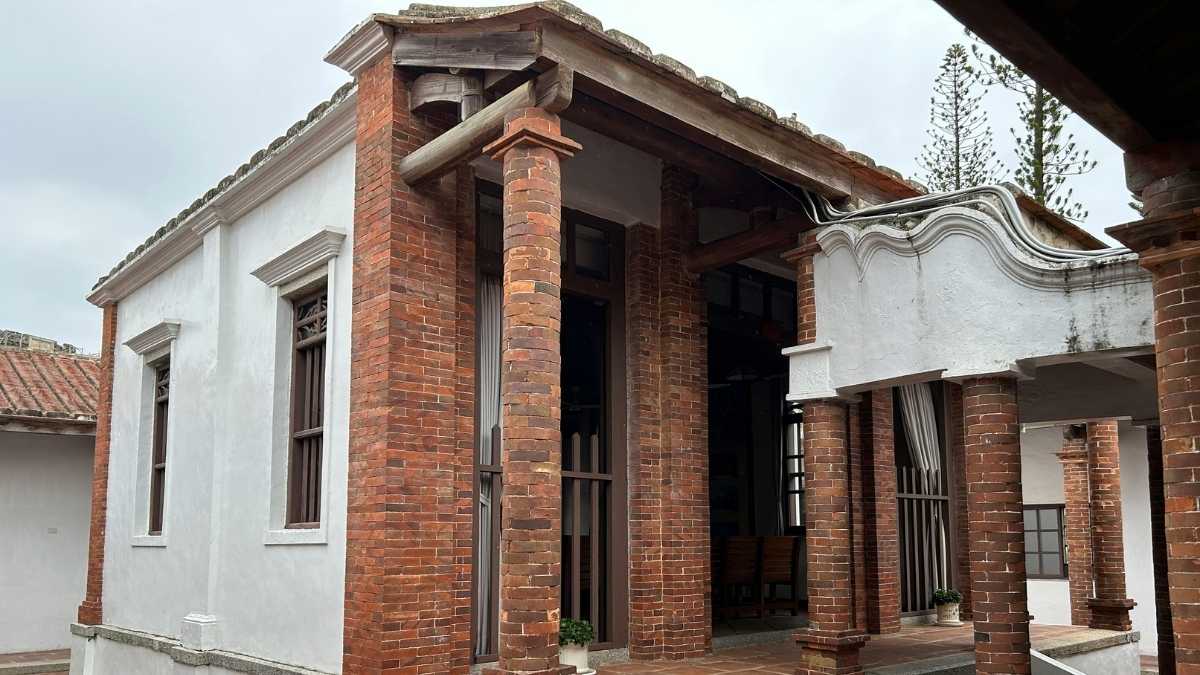


There is a house, which silently rebels against time, located in the village of Naugaon, Chhatarpur district, Madhya Pradesh. It initially looks like a normal ancestral house with arched windows and moulded details, but it is reverently talked about by locals. Its unusual robustness has given the structure a reputation in the area, with many in the area calling the structure a bunker-like house instead of a mere house that was built about 200 years ago.
A Remarkably Strong Home Built Without Cement
According to India.com, the history behind the building starts with one of the representatives of a large landlord family in the region, Jagannath Prasad Tiwari. The current resident in Singhpur, Shravan Tiwari, says that the family has a long history in the town dating back a number of generations. The Tiwaris were powerful landlords during British rule who had dominance in the area of about five villages.
The interesting thing about the house is the manner in which it was constructed. The building dates back to a time when cement and reinforced steel were not involved in daily construction in rural areas. Instead, constructors used lime mortar (chuna), bricks and wood. When lime mortar is prepared and well cured, it creates a strong bond that does not make the walls crack easily in seasonal changes. The house was initially a three-storey house, which was an architectural declaration in a rural setting, almost 200 years ago.
The outside is indicative of the artistic sensibility of the time. Outside the house parts are decorated with carved statues of the Hindu gods and goddesses. The great wooden threshold door still defends the front of the house.
Also Read: World’s Iconic Underground House & Techno Brand, Circoloco, Is Coming To Mumbai In April
A Colonial-Era Incident That Tested The Strength Of The House
Another dramatic episode connected to the house is the one during the colonial time. Family narratives remember an incident that occurred on January 14, 1931, in the village of Singhpur, where tensions were reported to have gotten out of control among the people. As Shravan Tiwari narrates, the case was similar to the Jallianwala Bagh massacre, where British officials opened fire on villagers.
Lord Fisher, a British political agent who is stationed at Naugaon, is reported to have shot bullets at this place. But it was not the gunfire that caused the thick lime-and-brick walls to crumble or crack. The structure still stood, and this eventually made it reputable as being extremely strong.
It is also remarkable that the house has continued as a family home. The Tiwari family are the eighth generation living in this place; this is quite unusual as ancestral houses are either neglected or reconstructed nowadays. The family has claimed that the structure has not had any substantial renovations since the time it was built, a factor that has been attributed to the fact that the original design of the structure remains solid.
The lime-and-wood structure has the advantage of naturally cooling the inside down in the hot summer of Madhya Pradesh and this eliminates the necessity of installing electric cooling systems. The walls are not permeable to moisture and hence the seeping of water inside the walls does not take place during the monsoon season, according to India.com.
Also Read: Michelin-Starred Chef Garima Arora Curates Royal Dinner For Thailand’s Princess Sirivannavari
The Singhpur house is not only an old building but an embodiment of regional history, a reminder of traditional building skills, the memoirs of the colonial era, and the continuity of the lineage of one family.
Cover Image Courtesy: pexels/Canva Pro (representative image)
FAQs
Where is the 200-year-old house located in Madhya Pradesh?
The historic house is located in Singhpur village near Naugaon in the Chhatarpur district of Madhya Pradesh.
Who built the historic house in Madhya Pradesh?
The house is believed to have been built by landlord Jagannath Prasad Tiwari, whose family held influence across several villages during the British era.
Why is the house called bunker-like by locals?
Locals describe the structure as bunker-like because its thick lime-and-brick walls have remained intact for nearly 200 years despite weather changes and historical incidents.