
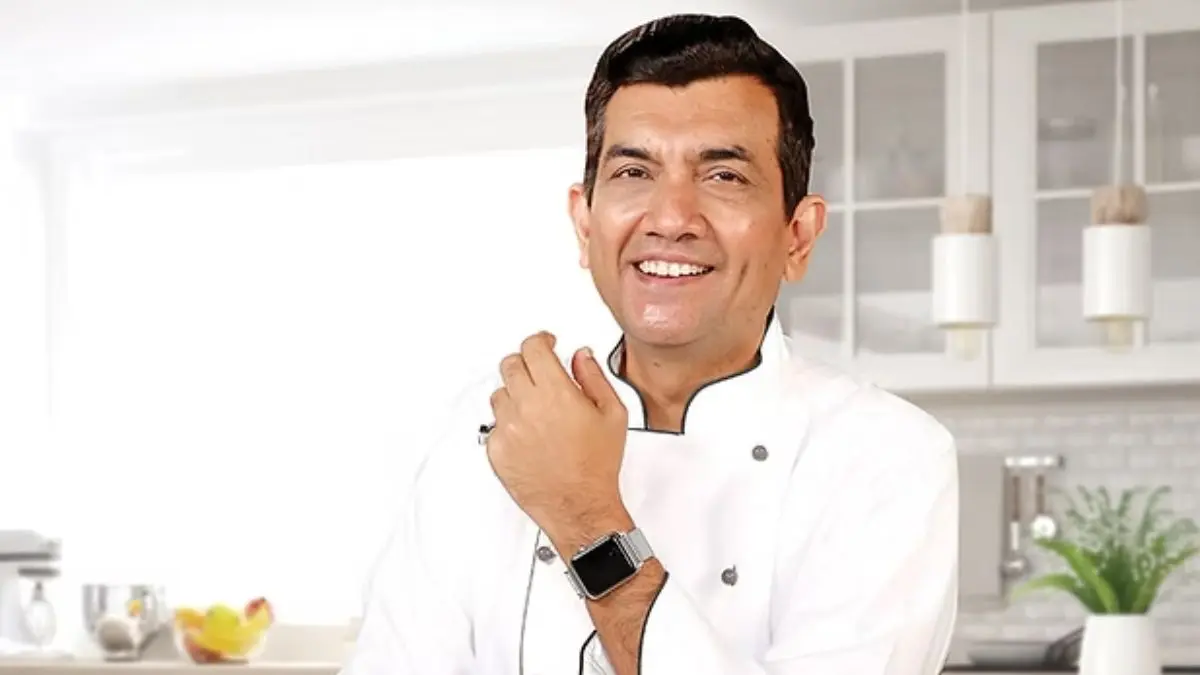

Food has come a long way from family recipes and television cooking shows to Instagram reels, YouTube tutorials and picture-perfect plates. But has social media actually made us better home cooks, or are we paying more attention to how food looks than how it tastes? Curly Tales sat down with Chef Sanjeev Kapoor for a conversation about changing food habits, the science behind everyday cooking, festive traditions and what makes a meal truly memorable.
From Food Trends To Festive Hosting, In A Tête-à-Tête With Chef Sanjeev Kapoor
From why younger generations are more conscious about food to why families need to share the load during festivals, the chef shares some interesting perspectives on food, cooking and togetherness.
Social Media Has Changed The Way We Look At Food
Q. We grew up watching you on Khana Khazana, and today we find ourselves picking up recipes from Instagram and YouTube. How do you think social media has made us better home cooks? Are we paying more attention to aesthetics or what food actually tastes like?
Whenever there is progress, certain things become better, but there are also some trade-offs. Both can coexist. My view is that, over time, things largely improve. Sometimes, we get stuck in nostalgia and believe that the songs from the past were always better. But that isn’t necessarily true.
The way we consume and look at food has changed. There are more conversations around it, and these conversations are happening on different levels. Food is a sensory experience involving all five senses. Earlier, we probably spoke mostly about taste. Today, we discuss its visual appeal, texture, storytelling and provenance.
That tells me food has evolved, and our relationship with it is evolving too. Of course, some things may get diluted along the way, but that’s part of progress. We cannot expect to live in a perfect world.
Younger Generations Are More Responsible About Food
Q. Every generation has its own food habits and preferences. What is the most surprising change you’ve noticed over the years?
I think most people assume that the younger generation is doing everything wrong, but I believe they are much better in many ways. They are more aware, responsible, authentic and real. There is a lot we can learn from them.
I have two daughters, and I know they understand so much more than we did at their age. And it’s not just my daughters. If you look at what is happening around us, younger people are generally more responsible towards food.
They understand food wastage better, they are more conscious about health, and they are more aware of what they consume. You cannot fool them easily, which is a good thing. Their relationship with food is quite mature, even at a young age. I may not have expected this level of awareness and maturity, but it is encouraging to see.
Why The Same Recipe Can Taste Different In Two Kitchens
Q. A recipe can have the exact same ingredients and instructions but still taste different in two kitchens. Apart from the ingredients and the method, what are we missing when we try to recreate a dish?
There are multiple factors. Ingredients are only one part of the process. The method of preparation is equally important. Even the quality of ingredients, the way you cut them and the environment in which you cook can make a difference.
Take sourdough, for instance. Making it in Delhi and making it in Mumbai can give you very different results because the moisture in the air is different. The application of heat can also vary from one burner to another. Even the minerals in the water may be different.
Cooking is a very evolved science. We may assume that two processes are exactly the same, but they aren’t. It’s like thumb impressions. Two may look similar, but their intricacies are never identical.
Q. That’s interesting. I recently learnt that chopping garlic into cubes or slicing it can change its pungency and flavour. Is there a science behind that too?
Absolutely. When you cut garlic, the surface area exposed changes, which affects the release of volatile sulphur compounds. These compounds play an important role in its pungency and flavour.
When you cook garlic, these compounds change further, and the flavour becomes sweeter and less pungent. So, the more you cook it, the less sharp its flavour becomes.
There is a science behind these little things. Once you understand it, you can use that knowledge to cook accordingly.
Festivals Are About More Than Just Food
View this post on Instagram
Q. Is there a particular festive dish or food ritual from your childhood that has stayed with you and continues to shape the way you cook today?
I think festive memories are about much more than just food. When I was a child, I didn’t know I would eventually become a chef. So, for me, it was never just about the food.
What stayed with me was the relationship with family, celebrating togetherness and spending time with one another. Festivals mean uninterrupted family time to me. There is also so much positivity associated with celebrations.
Festivity is about abundance, joy, togetherness and the memories you create. It’s not just about what is on the table. It is about the million memories you make while celebrating with the people you love.
The Secret To Hosting A Memorable Festive Meal
Q. Hosting at home often means spending hours in the kitchen, leaving very little time to enjoy the company of your guests. How can people put together a memorable spread without being stuck cooking throughout the celebration?
That’s where a concept we use professionally comes in. It’s a French term called mise en place. It essentially means preparing and organising everything in advance.
Start by writing down what you want to do. Then plan your shopping, followed by the preparation. You need to get things done ahead of time rather than wait until the last minute.
I often tell people that festivals and important occasions don’t suddenly appear on the calendar. You know when Diwali is coming. You know when New Year’s Eve is coming. So why wait until the last minute to start planning?
A little preparation can make a huge difference to how comfortably you host people.
Q. Meal preparation has also become a popular conversation. What are your thoughts on meal prep?
It’s a reality. You have to do it. Today, there are so many conveniences, products and tools available that make planning and preparation much easier.
If you don’t want last-minute hassles, you have to plan. You should have the confidence that you can manage several things at once when you prepare properly. That’s what makes you a super person, or a superwoman!
Q. In many Indian households, people are used to having freshly prepared food, especially a hot phulka straight off the tawa. Doesn’t that make meal prep a little challenging?
I don’t think it has to be. If there is one particular item that someone insists on having fresh, you can always work around that. But the people who are comfortable preparing things themselves can do so.
I think we sometimes need to address how inconsiderate certain expectations can be, especially in Indian families. Festivals are for everyone, right? We need to be fair to one another.
Togetherness doesn’t mean just standing together during the puja. It should extend to everything else too. Everyone should share the responsibility and the workload.
Also Read: Exclusive: Sonakshi Sinha’s 1 PM & 8 PM Diet Rule Reveals How She Balances Food & Fitness
Q. Why Should Lemons Be Doing The Laundry?
Ariel’s #FreeTheLemon campaign is built around a simple question: Why should the lemon be doing the laundry? What makes this idea stand out to you?
We have so many associations with different things, but everything has a primary role. The primary role of a lemon should be in food. That is where it belongs.
Other uses can be secondary or tertiary. So, let’s focus on its primary role and relieve the lemon of its secondary and tertiary responsibilities, such as removing stains or being used in laundry.
Q. The Most Important Ingredient In A Memorable Meal
Our grandparents often say that a memorable meal doesn’t need an elaborate recipe or expensive ingredients. What do you think is the most important ingredient that makes a dish truly special?
I think, most of the time, it comes down to how the food is made and the intention behind it. As people say, food should be made with love. The bhaav (feeling) with which you cook is very important.
I often feel that energy flows through everything we do. Sometimes, someone walks into a room and you don’t even feel like talking to them, even if you don’t know that person. The same applies to the energy we bring into cooking.
Imagine there are four or five people at home and someone has a headache. Ask each person to place a hand on their forehead, one after another, with their eyes closed. Not every touch will feel equally relaxing, even if it comes from a family member. That’s because the energy and intention behind it can be different.
Food works in a similar way. When you turn ingredients into a dish, the intention matters. If you cook with love and positivity, the meal becomes memorable on its own.
Also Read: Exclusive: We Unpacked IKEA India’s Food Playbook & Found The Secret Behind Its Swedish-Indian Menu
It doesn’t have to be elaborate. It can be something very simple, but it should be prepared with the right intention, positivity and love. And when you serve it, do so with the same affection and a smile. Share the meal together, and never forget the importance of that experience.
For Chef Sanjeev Kapoor, a memorable meal is about much more than recipes or presentation. It is the warmth, thought and love that go into cooking and the joy of bringing people together around the table and we strongly agree with it, don’t you?
Cover Image Courtesy: Chef Sanjeev Kapoor/Website
FAQs
What is Chef Sanjeev Kapoor's advice for hosting a festive meal at home?
Planning ahead is key to hosting without feeling overwhelmed. Preparing ingredients in advance, organising the cooking process and sharing responsibilities with family members can make festive hosting more enjoyable.
How are younger generations changing food habits?
Younger generations are becoming more aware of what they eat and are asking more questions about ingredients, preparation and food choices. They are also more informed, which means cooks and food brands need to pay attention to quality and transparency.


