
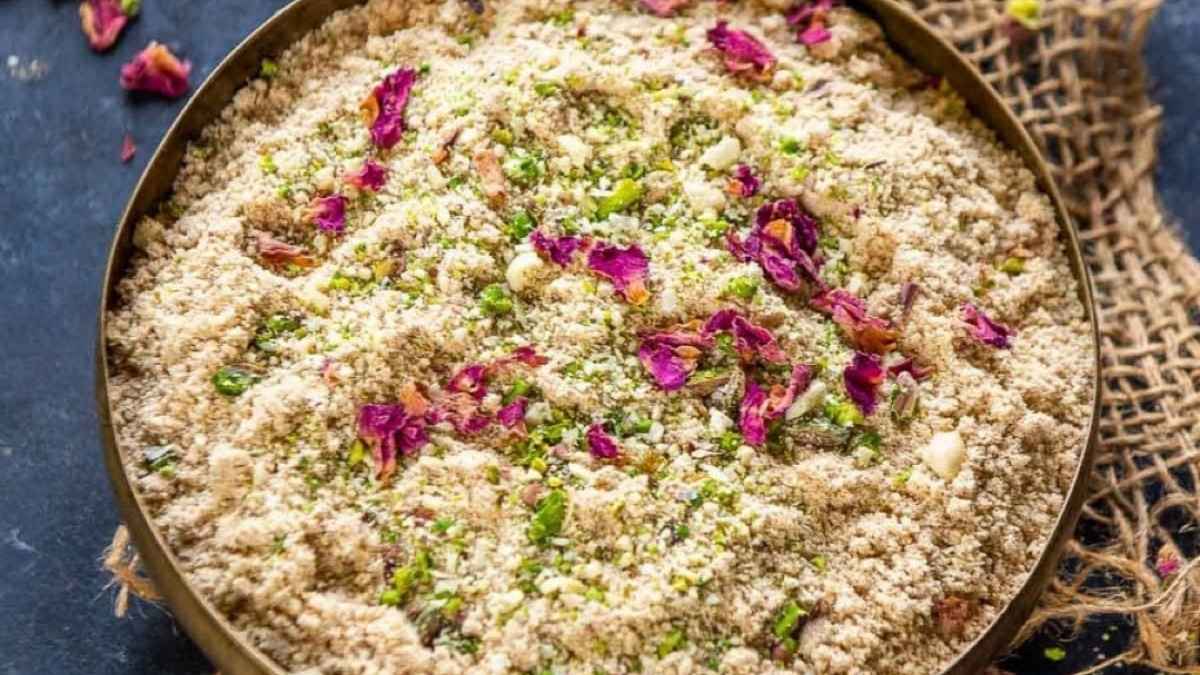



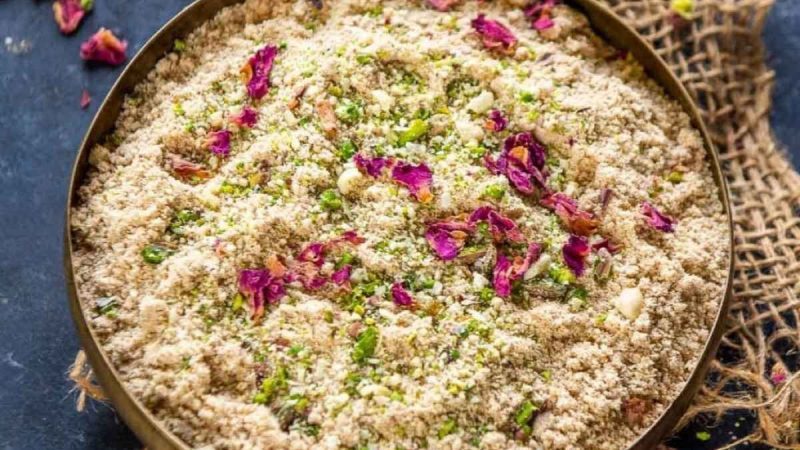
Winter food in India has a memory of its own. It exists because someone, somewhere, once figured out exactly what the body needs when the air turns sharp and mornings feel heavier than usual. Panjiri is one of those foods. You encounter this one at home, usually announced by the unmistakable smell of wheat flour browning slowly in ghee. Learn how to make it using this easy and soulful Panjiri recipe.
A Winter Staple: The Soulful Panjiri
Panjiri is not a dessert in the conventional sense. It’s a deliberately dense and crumbly preparation made from whole wheat flour, desi ghee, dry fruits, edible gum, seeds, and mild sweetness. Nothing about it is accidental. Every ingredient earns its place. This is food designed to keep you warm from the inside, to sit well in the stomach, to release energy slowly rather than spike it. That’s why it shows up every winter without fail.
Its timing around Lohri and Makar Sankranti is no coincidence. These festivals mark the sun’s transition, the harvest cycle, and the slow retreat of winter. In Punjabi households, especially, Panjiri is prepared as prasad, shared after the rituals. Alongside revri and peanuts, it carries a quieter symbolism of prosperity, strength, fertility, and nourishment. It’s festive food that doesn’t forget its job.
Also Read: 8 Winter Sweets With Hidden Protein Benefits
Authentic Panjiri Recipe For A Warm Winter
The ingredient list reads like an old nutritional manual passed down through kitchens.
Ingredients
- Whole wheat flour (atta)
- Desi ghee
- Powdered jaggery or sugar
- Almonds, cashews, pistachios (chopped)
- Fox nuts (makhana), lightly crushed
- Edible gum (gond)
- Dry coconut (copra)
- Cardamom powder
- Optional additions: melon seeds, lotus seeds, raisins
Each of these plays a role. Gond is valued for strength and recovery, ghee aids digestion, nuts provide sustained energy and jaggery keeps the sweetness warm.
The method, however, demands patience. This is not a recipe you multitask through.
Method
- Heat the ghee in a heavy-bottomed pan and fry the gond until it puffs up. Remove, cool, and crush.
- In the same pan, lightly roast makhana until they turn crisp and then set them aside.
- Add more ghee and roast the wheat flour on a low flame, stirring constantly. This takes time, around 15-20 minutes, and rushing it is not advised.
- Once the flour turns evenly golden, add chopped nuts, coconut, seeds, and makhana and proceed to roast briefly.
- Turn off the heat and let the mixture cool slightly before adding powdered jaggery or sugar.
- Finish with crushed gond and cardamom. Mix thoroughly and cool completely before storing.
Also Read: From Saag to Panjiri: 10 Punjabi Comfort Food To Stay Warm In Winter
Panjiri doesn’t need an introduction or any publicity. It survives because it is functional and yet festive. Spoonful by spoonful, it carries winter wisdom, festival rhythm, and the quiet confidence of a recipe that never needed improvement.
Cover Image Courtesy: coloursofbharat/CanvaPro
For more such snackable content, interesting discoveries and the latest updates on food, travel and experiences in your city, download the Curly Tales App. Download HERE. First Published: January 21, 2026 6:26 PM