

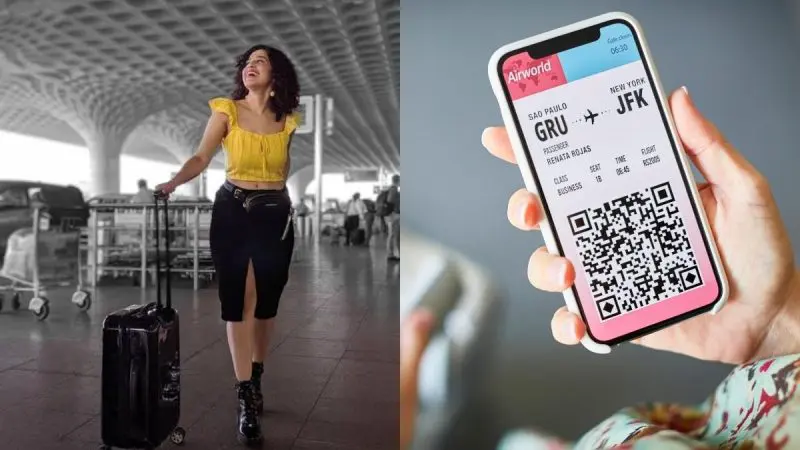
There is a frustrating exhaustion that only airports can produce; it is not the dramatic, backpacking-through-Europe exhaustion. This is the one where you have already stood in three queues before sunrise and paid ₹480 for a sandwich that somehow tastes like cardboard and regret. Still, some people move through airports with suspicious ease. They are not luckier than everyone else. They have simply figured out some airport hacks that make travelling feel less maddening. Frequent flyers rarely talk about these tricks loudly because once everybody knows them, the magic disappears a little. If you travel even twice a year, these airport hacks genuinely make a difference.
8 Airport Hacks That Make Travelling Feel Less Exhausting
1. Online Check-In
The difference between travellers who check in online and those who do not becomes visible almost immediately at the airport entrance. One group walks directly toward baggage drop counters, while the other is trapped in a line that is way too long.
Most airlines open online check-in around 24 to 48 hours before departure. Beyond saving time, it also improves your chances of getting decent seats before the middle-seat apocalypse begins. Nobody dreams about spending two hours politely fighting for elbow space between strangers.
Digital boarding passes are useful too, but experienced travellers know airline apps can betray you at the worst possible moment. Screenshots are safer!
Also Read: Last-Minute Airport Cab Stress? THIS Indian Airline Just Made Travel Smoother For Flyers
2. The Empty Water Bottle Trick

Airports sell water like it is luxury skincare. Carrying an empty reusable bottle through security and refilling it later sounds like a tiny hack until you realise how often travellers buy water during long journeys.
Cabin air is extremely dry. On long flights, dehydration quietly sneaks up on people, and suddenly everyone feels exhausted, irritable, or strangely headache-prone after landing. Frequent flyers often carry insulated bottles because hydration matters more during travel than most people realise.
Some airports now have refill stations near departure gates, though finding them occasionally feels like a side quest in a video game.
Also Read: What Is ‘Whycation’? The Travel Trend That’s Changing How We Plan Holidays In 2026
3. Dress Properly
Airport outfits require strategy. There is a reason seasoned travellers wear sneakers, oversized layers, and clothes with actual pockets instead of complicated outfits that need constant adjustment.
Security checks alone punish in an impractical fashion. Belts, knee-high boots, stacked jewellery, and difficult jackets; all of it slows things down. Slip-on shoes save an unreasonable amount of time, especially in crowded airports where security lines move with the energy of government paperwork.
Layers matter too because airports cannot decide what temperature they want to be. Boarding gates feel refrigerated, while aeroplanes randomly become warm enough to.
3. One Small Pouch
Every airport has at least one person desperately unpacking their entire backpack at security while holding up the line behind them. The easiest way to avoid this situation is to keep all essential items together in one pouch that stays accessible throughout the journey.
Passport, charging cables, lip balm, medication, a power bank, AirPods, a boarding pass, and sanitiser – all of it belongs in one place. Not scattered across five different bag compartments like a treasure hunt!
It sounds boringly simple, but this single habit removes a surprising amount of travel stress, especially during connecting flights, where people are already operating on two hours of sleep.
5. Never Trust Checked Luggage With Your Survival Essentials
Lost baggage stories used to sound rare, but now they sound normal.
Even major airlines occasionally send suitcases on accidental solo adventures to cities passengers have never even visited. That is why frequent travellers always pack essentials inside cabin bags, regardless of how reliable the airline appears.
A spare outfit, skincare basics, medicines, chargers, and important documents should stay with you. Long-haul travellers often carry what can only be described as tiny survival kits; these are moisturiser, snacks, socks, eye masks, chewing gum, and maybe even instant coffee sachets.
Nothing feels worse than landing in another country while your luggage remains spiritually committed to a different continent.
Also Read: What Is Anti-Itinerary Travel? Why More Travellers Are Ditching Planned Trips For This?
6. Boarding Early Is Not Always The Smartest Move
The second boarding announcements begin; something primal takes over airports. Suddenly, everybody stands up together despite being assigned boarding zones for a reason.
Unless overhead cabin space is genuinely limited, rushing immediately toward the boarding gate rarely improves anything. Usually, it just means standing awkwardly in a crowded aisle while somebody attempts to fit an enormous suitcase into a compartment.
Frequent flyers often board later on purpose. There is also something psychologically calming about remaining seated while everybody else participates in unnecessary gate chaos.
Also Read: 5 Countries Where Vegetarian Travellers From India Won’t Struggle For Good Food
7. Download Everything Before Leaving Home
Depending entirely on airport Wi-Fi is a dangerous game.
Experienced travellers download playlists, Netflix episodes, maps, hotel bookings, restaurant screenshots, and travel itineraries before leaving home because airports are unpredictable ecosystems. Delays happen, layovers stretch longer than expected, and Internet connections disappear without any explanation.
Offline maps become especially useful during international travel when local SIM cards stop working or roaming charges start behaving criminally.
People usually remember entertainment downloads. They forget practical things like hotel addresses, visa documents, transport details, or emergency contacts until they are standing outside an unfamiliar airport trying to reconnect to weak public Wi-Fi beside twenty equally stressed travellers.
8. Airport Cocktails Sound Better Than They Feel
Airports have successfully romanticised pre-flight drinking. Somewhere along the way, overpriced beer at 7 AM became part of the travel aesthetic!
Unfortunately, flights and alcohol are not particularly compatible. Cabin pressure and dry air intensify dehydration, which means alcohol hits harder during flights than it normally would. What begins as “vacation mode” often ends as exhaustion, headaches, bad sleep, and aggressive jet lag after landing.
Hydration changes travel experiences more than people expect. Water, electrolytes, and proper sleep before long-haul flights genuinely help travellers arrive feeling functional instead of half-conscious.
So, how many of these airport hacks did you already know?
Cover Image Courtesy: morsaimages/Canva Pro and Internal
FAQs
What are the best airport hacks for travellers?
Some of the best airport hacks include online check-in, carrying an empty water bottle, downloading documents offline, and packing essentials in cabin luggage.
Why do frequent flyers avoid boarding early?
Many frequent flyers board later to avoid unnecessary crowding and long waits inside the aircraft aisle.
Why should travellers carry an empty water bottle?
An empty bottle can be refilled after security, helping travellers stay hydrated without spending heavily on airport water.