
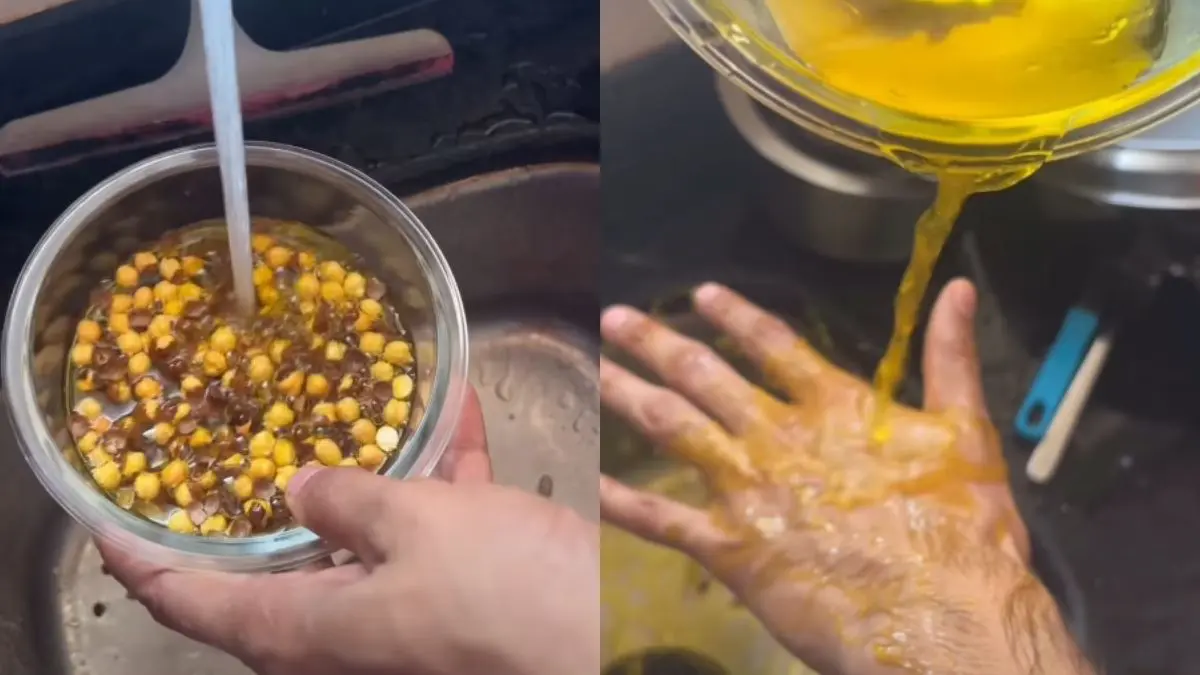
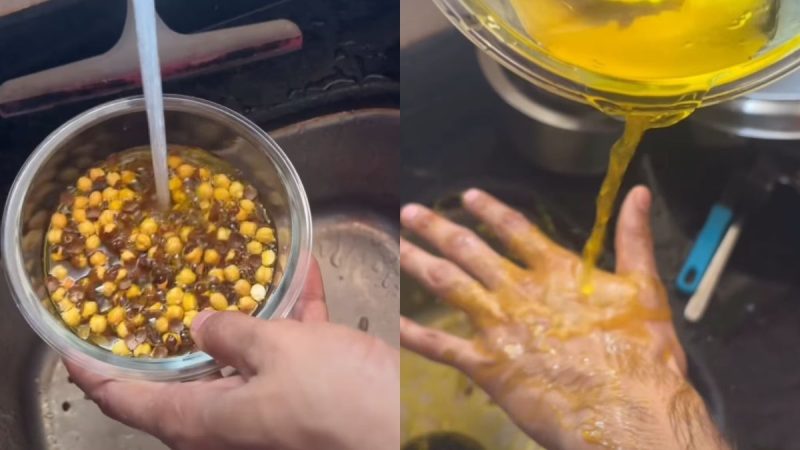
Recently, a video going viral on the internet showing yellow-coloured water apparently being washed off packaged chana has sparked growing concern online about food adulteration and the hidden dangers of artificial food dyes. Want to know more about it? Scroll down.
Viral Video Shows Dyed Chana Dal
View this post on Instagram
A clip that is going viral on the internet sparked public fears about whether or not harmful colouring substances are being added to everyday foods to enhance their appearance and freshness. The experts told Times Now that, while washing food may remove some surface residue, it may not fully remove harmful dyes that have already absorbed into the product. Doctors say some fake or non-permitted food colours may lead to health risks if consumed regularly over long periods.
Also Read: End Of An Era: Mumbai Bids Farewell To Mithibai Khau Galli, A 50-Year-Old Food Stall Hub
Food safety experts claim that some vendors may use colouring agents to make pulses, spices, snacks, or packaged foods look fresher, brighter, or more visually appealing. In the case of chana or pulses, yellow dyes may sometimes be added to enhance colour, to create a new or fresher appearance, and to mask poor quality or old stock. While approved food-grade colours exist, experts advise that illegal industrial dyes or non-food-grade chemicals are frequently misused because they are cheaper and more intense.
How To Identify, Health Implications & More
As per the news reports, washing may not always completely remove artificial colouring chemicals. Some dyes can go deep into food surfaces, stick chemically to the product, and leave behind residues even after rinsing. Health experts also warn that too much exposure to non-permitted or unsafe food dyes may possibly affect health over time.
Food safety experts advised consumers to remain careful if foods appear unnaturally bright, excessively glossy, too uniformly coloured, or stain their hands or water excessively during washing. In some cases, excessive colour release while soaking or rinsing may indicate adulteration.
The viral chana video highlights rising public concern around food adulteration in India, especially as social media increasingly exposes questionable food-handling practices. Experts also state that awareness is important, but panic should be avoided until products are thoroughly tested and verified by food safety authorities. Doctors point out that balanced diets, safe food sourcing, and educated consumer choices remain the best ways to minimise potential health risks linked to adulterated foods.
What are your thoughts about this? Let us know.
Cover Image Courtesy: Instagram/Unfiltered.haribros
For more such snackable content, interesting discoveries and the latest updates on food, travel and experiences in your city, download the Curly Tales App. Download HERE.FAQs
What is food dye made of?
Food coloring is made from either synthetic chemical dyes synthesised from petroleum or natural pigments extracted from plants, minerals, and insects.
Are food dyes unhealthy?
For most adults, artificial food colouring is not considered dangerous in the small amounts typically consumed, and regulatory bodies like the FDA classify them as safe.
What food dyes should you avoid?
Many health organizations and regulatory bodies recommend avoiding specific petroleum-based synthetic food dyes due to links to cancer, hyperactivity in children, and DNA damage.


